

20.3 C
Byron Shire
October 20, 2026

Where the rainforest meets the Cape: Inside the old-growth remnants of Hayters Hill

Latest News

Cinema: NAZA

A must-see, award-winning documentary investigating AI warfare in Gaza. Fresh from winning the Special Jury Prize at the 2026 Venice International Film Festival, NAZA, the latest documentary from Academy Award-winning filmmakers Yuval Abraham and Rachel Szor (No Other Land), examines artificial intelligence and surveillance in Israel’s military operations in Gaza.

Other News

Free Musicland talk in Byron

Local author Tricia Shantz will be talking about a seminal time and place in her new book Musicland: When the Music Came to Byron 1970–1995 at the Byron Bay Library on Thursday, 29 October at 3pm.

Police seize 22 e-bikes in Sydney

As part of a crackdown on e-bikes across the state, 22 illegal e-bikes have been seized following a NSW Police Force and Transport for NSW joint operation across southern Sydney and the Illawarra.

Reef-building corals face elevated risk of extinction

A new paper from Dr C. Isabel Núñez Lendo shows nearly half of reef-building corals face elevated relative risk of extinction.

Music overtones at Byron Bay International Film Festival

From the extraordinary life and legacy of Marianne Faithfull to the raw energy of Australia’s 1995 Summersault tour, a larrikin road trip through the Australian bush and the next generation of music video makers, music runs through this year’s Byron Bay International Film Festival. 

Mullumbimby Road to be temporarily closed

Byron Shire Council says Mullumbimby Road will be closed to outbound traffic for three days, except for buses and emergency vehicles, for three days from 16 to 18 November.

Countless Strokes: Hend brings his world indoors

If you’ve walked down Mullumbimby’s main street and stopped to admire the murals, chances are you’ve already seen the work of local artist and muralist Daniel Hend.

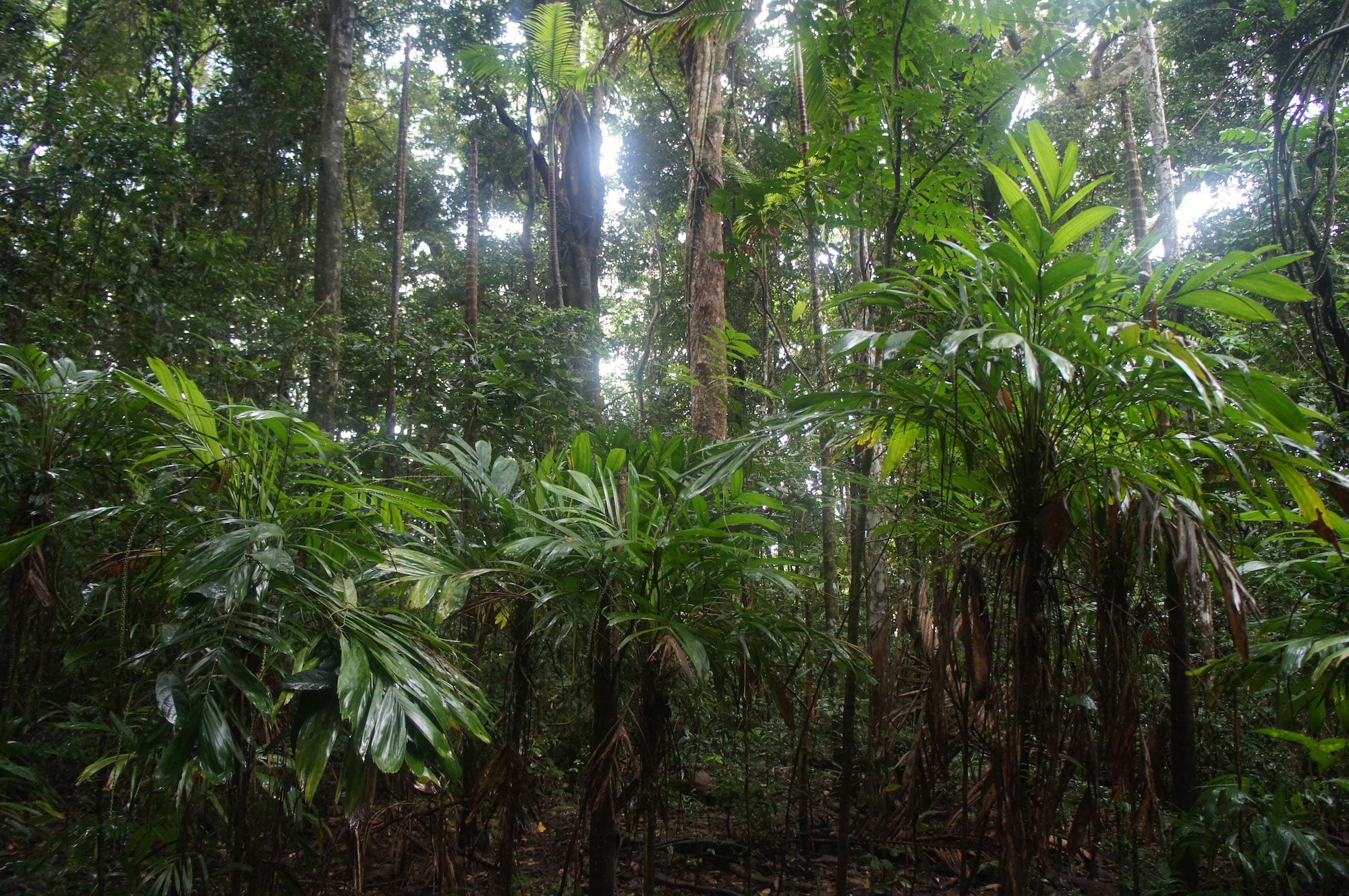
Part of Erica and Neil Holland’s Big Scrub remnant. Photos supplied

From the balcony of Neil and Erica Holland’s Hayters Hill home, visitors enjoy an uninterrupted view of Cape Byron Lighthouse and its coastal plains. It’s a breathtaking vista, punctuated by rolling green hills and the sparkling of the sun as it dances across the Bay.

On either side of the homestead sit ancient remnants of the Big Scrub rainforest, equally as breathtaking in their natural beauty. These remnants – one on the Hollands’ property and the other on what is now public land – are the closest patches of unspoilt lowland subtropical rainforest to Byron Bay. Their proximity to the wetland rainforest around Suffolk Park helps to form important stepping stones in the area’s recovering wildlife corridor.

Erica and Neil Holland
inside their Big Scrub remnant. Photos supplied

For this endangered ecosystem it was fortunate that ‘landcaring’ runs deep in the history of Hayters Hill. One of the first landowners along the winding ridge of Bangalow Road, JJ Hayter, chose to save an area of rainforest, contravening government mandates that the entirety of the land be cleared. His resolve saw a three-hectare area of the Big Scrub preserved. Through edge planting, this old-growth remnant has more than doubled in size, with Erica, herself a Hayter descendant, and Neil, continuing the family’s stewardship of the remnant. Recognising the ecological significance of the site, Big Scrub Landcare organised and funded 120 days of restoration work by professional bush regenerators over the past 20 years at a cost of $35,000.

A short distance down the road is Hayters Hill Nature Reserve, a sister to the Holland’s remnant. Also spared from clearing, this eight-hectare portion of land was originally held by the Hayter family and has since passed through several owners. The most recent private owner was a botanist who lived in a small hut in the Big Scrub rainforest remnant before passing the land on to NSW Parks and Wildlife Service in 1988.

There is a commonality between the plant species in each remnant, but with some notable differences. The coastal facing edge of the reserve is exposed to easterly winds, making it home to more dry rainforest species, such as the Thorny Yellowwood.
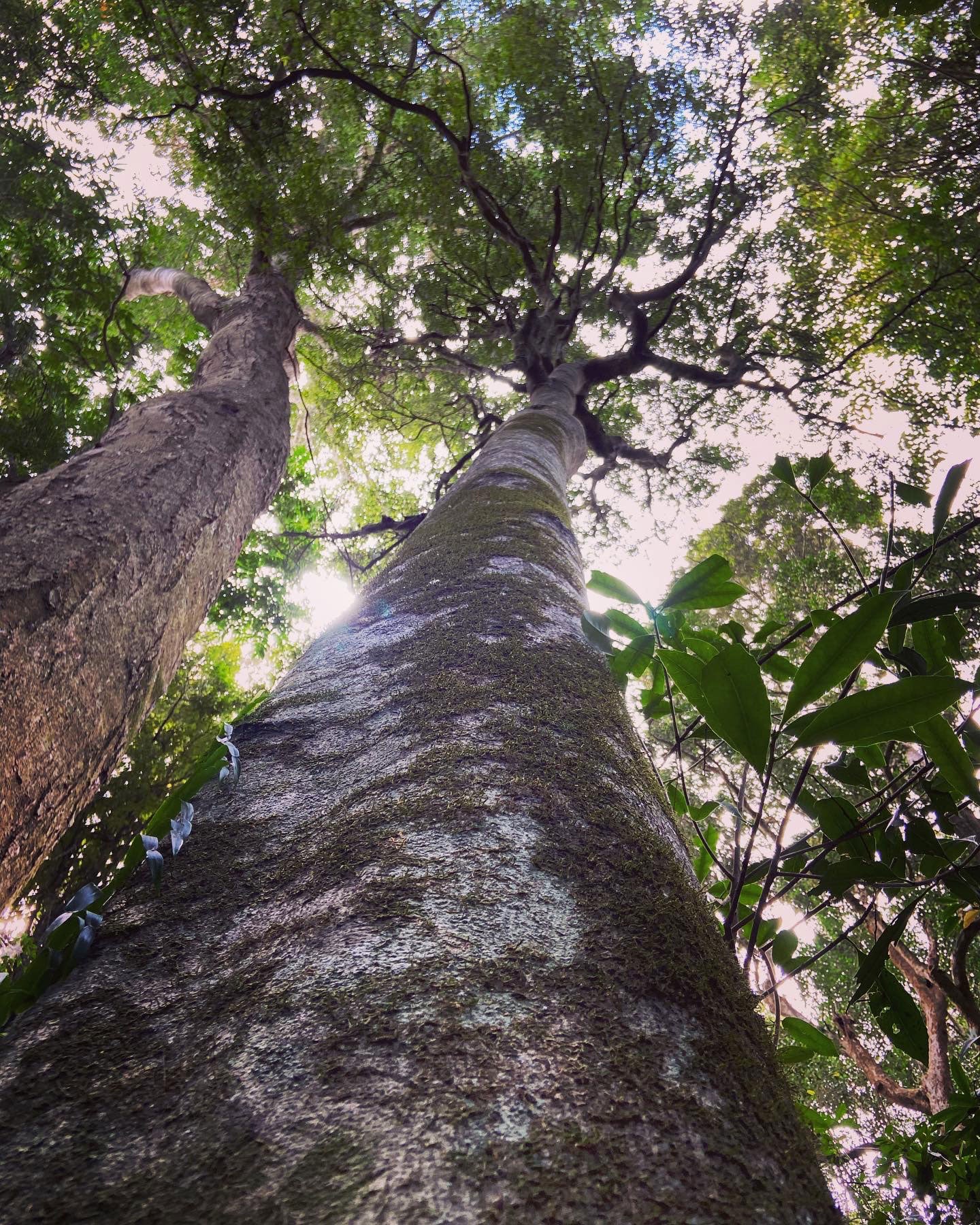
Part of Erica and Neil Holland’s Big Scrub remnant. Photos supplied

Significant stand of subtropical rainforest

Together the two remnants represent the most significant stand of subtropical rainforest between Bangalow and the Byron coast. The corridor, remarkable in the towering size of its old-growth specimens, is home to many important and threatened species, such as the Carronia vine, a woody climber and the host plant for the endangered Southern Pink Underwing Moth larvae. The larvae are a sight to behold with their distinctive heads decorated by white tribal-like markings. Higher up in the canopy you can see Coolamons and the rare Red Lilly Pilly, and hidden deep in the heart of the remnant sits a spectacular giant fig with root buttresses towering above head height and stretching well into the forest. 

As their interest in rainforest regeneration grew, Neil and Erica hosted the inaugural Big Scrub Landcare field day in 1993. A crowd of over 300 people visited the property to share knowledge about caring for land. Around that time Neil and Erica were exploring models of active reforestation. They initially planted out adjacent areas to the existing remnant with pioneer species, but their approach would change course successively over the years as the collective knowledge in the field matured.

Maintenance of the Holland’s remnant over the years has been a combination of their own efforts and an ongoing collaboration with Big Scrub Landcare. The invasive Madeira vine is now all-but eradicated from the property after decades of relentless weeding. Ongoing maintenance is needed, around twice a year, to keep this and other invasive species in check.

Neil and Erica are now allowing the gullies and steep banks on their grazing property to naturally regenerate, thanks to seed dispersal from nearby remnants. As native species continue to germinate, Neil and Erica are hopeful that inspiration will spread to nearby landholders.

A number of neighbours along Bangalow Road have also planted tens of thousands of trees, bolstering the Bangalow-Byron corridor even further. With two significant remnants and restored rainforest flourishing, it’s heartening to think that the forests of old may begin to extend all the way to the Cape once again.



For four decades The Echo has printed the stories some people loved, some people hated, and some pretended not to read. If you want us to keep telling the truth, the real truth, not the sugar-coated version. We’ll need your support to keep the presses rolling.


If you are a local business owner help us and in turn we help you. All The Echo asks for is advertising, not a free ride. It is every advert in The Echo and on www.echo.net.au, which creates the space for all the stories and coverage of community events, happenings and concerns.

If you are a reader you can become a sponsor of The Echo. Your support keeps the us independent.

Even a small one-off or regular donation from you will help keep the echo’s independent voice alive and strong.

Support Us

Become one of the supporters who helps keep independent, local journalism alive in the Byron Shire by contributing anything from as little as the cost of a coffee each month.

You're Wonderful, Thank you for supporting independent journalism in the Byron Shire

You’re supporting The Echo, thank you

Your contribution is keeping independent, local journalism alive in the Northern Rivers.

Because of supporters like you, we can keep every story free for everyone — no paywall, no exceptions. Your money goes directly to funding our newsroom of 40-odd local workers covering the stories that matter to this community.

Tell us what you think, give us your opinion

The Echo loves your letters and comments and is proud to provide a community forum on the issues that matter most to our readers and the people of the NSW north coast. So don’t be a passive reader, email us your epistles at editor@echo.net.au.

The letters deadline for The Echo is noon Friday. Letters longer than 200 words may be cut. The publication of letters is at the discretion of the letters editor. Please remember to include your full name, address and telephone number.

Online comments are no longer available.

Interview with Genevieve Clay-Smith, director of Boss Cat showing at the Byron Bay Film Festival

When Sonja (Olivia Hargroder) loses her mother without warning, the only steady presence left in her life is her grandmother, Doris. But Doris’s idea of stability means dismantling everything Sonja has built. For Sonja, who lives with Trisomy 21 (Down syndrome) and has spent her life fighting to be underestimated by no one, Doris’ plan feels less like protection and more like erasure. Directed by Genevieve Clay-Smith, Boss Cat is a vibrant, big-hearted Australian dramedy about independence, family and self-determination, anchored by a fearless lead performance.

Something for everyone at the Picture House

From Australian superstar musos, to brand new documentaries, to comedians at the top of their game, there really is something for everyone at the Brunswick Picture House.

Thirty-six unmissable films

The 2026 Russell Hobbs British Film Festival features an unmissable line up 36 films, including five retrospectives which will screen from 28 October to 29 November at Palace Byron Bay and Ballina Cinemas.

A timeless story of self-discovery

A husband with a promotion, two adorable children and a lovely new house. Nora thought she had it all. But did she? What was the discontent that was whispering to her in the shadows?