


Brought to you by Cosmos Magazine and The Echo
Climate change is driving temperature records in northern hemisphere, and that’s a warning sign down under.
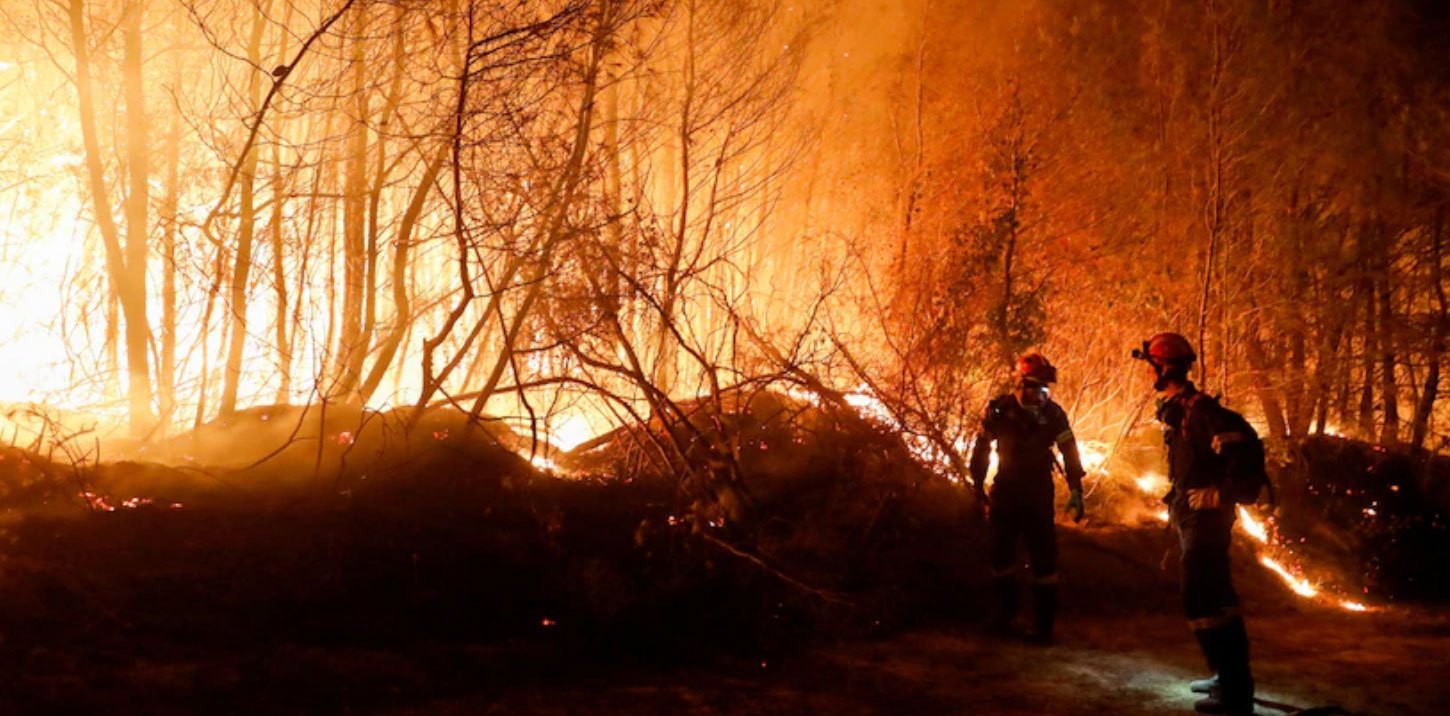
The UK’s hottest day on record has given local fire services their busiest day since World War II, wildfires blaze across the Mediterranean and July’s unprecedented European heatwave is yet another example of how climate change will challenge nations.
These challenges are expected to roll on in the short-term, with over a month left in what is considered the ‘meteorological summer’.
For Australia, experts say the tumbling hot weather records in Europe are a warning to a nation famous for its own sizzling summers.
Records shattered in Europe
The headlines coming out of the region paint a concerning picture.
A new record temperature for the UK – exceeding 40°C – has been reached at the same time the nation’s first ever ‘code red’ extreme heat warning was issued.
Cities along France’s western coast also saw a mass breaking of temperature records on Monday.
In some of these towns, the anomaly – or variation in temperature above the average – has exceeded 16°C.
The UK has seen some temperatures clear 20°C above the average.
And although some Britons have pointed to their nation’s 1976 heatwave as proof these temperatures are nothing new, meteorologists have swiftly pointed to the widespread nature of these excessive temperatures.
Eagle-eyed readers will note these present-day anomaly maps show a ‘redder’ globe to those of 46 years ago – the result of far hotter temperatures than average in most parts of the planet. Now that ominous red patch over Europe extends into Northern Africa – home of nations like Morocco and Algeria – which have also battled blazes along their coasts this week.
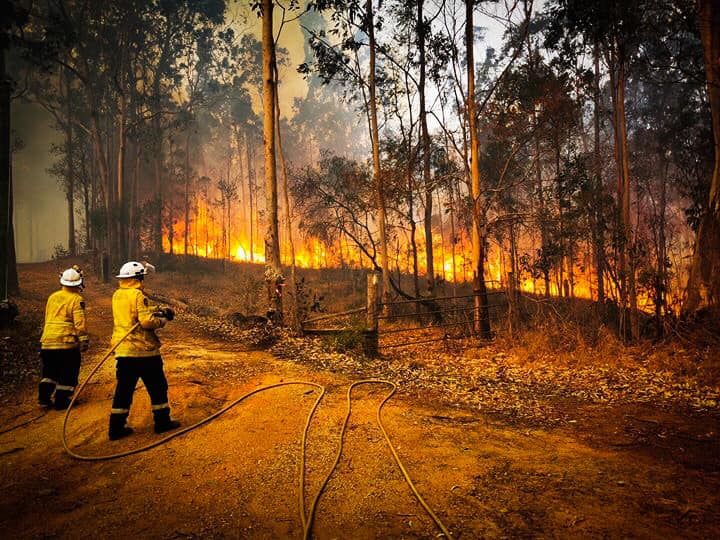
Although wildfires are known events in Mediterranean regions, the severity of fires blazing across Portugal, Spain, France, Italy and Greece is such that tens of thousands of people have been evacuated from homes and holiday areas.
These types of events have been predicted for some time, and the Intergovernmental Panel on Climate Change’s 2022 adaptation report emphasised heatwaves and wildfires would continue to impact human health, food security and ecosystem survival.
Although heatwaves and vegetation fires are nothing new in parts of Europe and Northern Africa, Dr Rachael Nolan, a researcher in fire ecology from Western Sydney University, says the impact of warming temperatures is creating fire-prone conditions in areas unaccustomed to them.
“In many places around the world we are seeing wildfires occurring in places that don’t usually see fire,” says Nolan.
“This is driven by climate change pushing up temperatures and drying out fuel. During heatwaves, high temperatures and low humidity causes vegetation to dry out, leaving areas primed for fire.
“Fires can then spread quickly when there is an ignition. This is what we are seeing in the UK at the moment.
“We are also seeing fires in the Mediterranean Basin, and although fires in this region are not unusual, they are also occurring at the moment due to the heatwave.”

The consequences for human health are many
“As is being witnessed, the UK’s building stock is not designed or built for heat,” says Professor Darryn McEvoy, a research professor in urban resilience and climate adaptation from RMIT.
Building materials like concrete are effective at retaining and amplifying heat in built-up areas – a phenomenon known as the urban heat island effect.
This can increase the likelihood of heat-related deaths and illnesses, which McEvoy says points to the need to modify towns and cities for the climate of the future.
“The heat impacting Europe re-emphasises the need to not only mitigate greenhouse gas emissions as a matter of urgency by reducing our dependence on fossil fuels and moving to ‘net zero’, but also to adapt our urban environments for what, inevitably, will be a hotter future,” McEvoy says.
Heat effects aside, urban areas are also more polluted that less densely populated ones.
This means atmospheric pollutants, particulate matter that degrades air quality and ozone formation from solar radiation are more likely to occur in periods of extreme heat. It’s why the risk of more severe weather events due to global warming is of concern to health authorities around the world.
“When a heatwave goes along with high levels of pollution it exacerbates respiratory, cardiovascular diseases and conditions especially in large urban spaces that are not adapted to cope with these high temperatures,” explains Maria Neira, Director of Environment and Health at the World Health Organisation.
“We have been alerting for a long time that climate change is severely affecting human health and therefore taking measures to reach the zero carbon and accelerating the transition to clean renewable sources of energy will be extremely important.”
Wildfires like those experienced by parts of Europe and the UK add another complication.
With heatwaves capable of exacerbating pollution effects, the release of more toxic substances from widespread vegetation burning increases the risks to human health.
Research released on Wednesday by Curtin and Murdoch universities, found a direct link between smoke exposures and attendance at emergency departments. Perth, Western Australia, where these universities are located, has endured several particularly damaging bushfire seasons in recent years.
Dr Adeleh Shirangi from Curtin’s School of Population Health led the research that found a 7% increase in emergency admissions.
The likelihood of hospitalisations was also higher for those over 60 years of age, from socioeconomic disadvantage and those with pre-existing heart and lung issues. For nations with increasingly ageing populations, this could present healthcare providers with a perfect storm as climate change’s impacts are felt in coming years.
“Bushfire smoke consists of a complex mix of particulate matter – PM – and gaseous pollutants such as carbon monoxide and ozone,” explains Shirangi.
“And the size of particulate matter that is in bushfire smoke is so small – 2.5 micrometres in diameter – which is about 50 times smaller than the thickness of a strand of human hair.
“When we inhale PM2.5, this tiny particulate matter is small enough to penetrate deep into the lungs and the bloodstream.
“This can lead us to have various, serious diseases affecting the heart, lungs and brain, and during bushfires, the levels of PM concentration in the air are significantly higher than regulatory air quality standards, so it’s become extremely unsafe.”
Northern hemisphere events are an advance warning for Australia
Just as Australia was stunned by consecutive years of record flooding events more often associated with rainy European winters, so has the northern hemisphere been unprepared for heatwaves that have long been part of the Australian psyche.
It’s that Australian ‘preparedness’ for heatwaves and bushfire events that may leave the UK and European nations exposed.
Tragic drownings of Britons retreating to lakes and streams for respite, as well as increased hospitalisations from heat stress and smoke inhalation, may become more common headlines in the coming years.
While more than three in four Australian households have air conditioning, just 1% of UK homes has a cooling system.
Just as Australia looks to the potential impacts of climate change on coastline and floodplain communities, so too will European nations need to consider what adaptations are needed to reduce the burden on an already challenged health system – something Dr Sharon Campbell, from the Menzies Institute for Medical Research at the University of Tasmania, describes as being caught in “a perfect storm of social, cultural and political factors”.
An adaptive response is important for already heat-prone nations like Australia. In January 2022, the mercury reached a continental record of 50.7°C in Onslow – a coastal town in Western Australia’s Pilbara region.
So although the global focus this week is on temperature records broken in the UK and France, Australia too must consider the impacts of hotter summers on its built-up areas, and high-fuel vegetation.
“These factors combine to make this [UK] event a human and environmental disaster,” says Campbell. “The UK has a health system already at breaking point, a government distracted by leadership battles, and an emergency-fatigued population just wanting to have a summer of fun.
“Driven by human-induced climate change, extreme and record-breaking temperatures have hit Australia, the United States and now Europe across successive summers.
“Australia needs to actively prepare for 50°C in major population centres like Western Sydney. This takes government leadership and community understanding.
“We have seen a shift to greater recognition of these risks with a recent change in federal government, and this needs to be urgently followed by greater investment in research, adaptation initiatives and education.”
This article was originally published on Cosmos Magazine and was written by Matthew Agius. Matthew Agius is a science writer for Cosmos Magazine.

 For four decades The Echo has printed the stories some people loved, some people hated, and some pretended not to read. If you want us to keep telling the truth, the real truth, not the sugar-coated version. We’ll need your support to keep the presses rolling.