


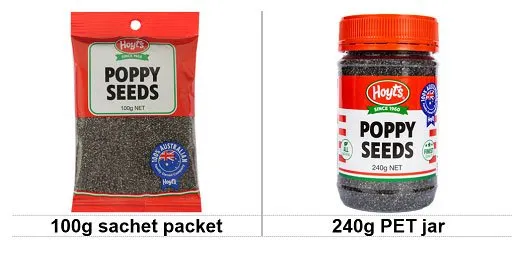
People are advised to check the poppy seeds in their kitchens following a nationwide recall of poppy seed products linked to poisoning.
‘NSW Health advises the recalled products are not safe to consume and people who have purchased these recalled batches of poppy seeds should throw them out or return them to the place of purchase for a full refund. A joint investigation with other states and territories and food safety authorities found the non-food grade poppy seeds have been sold as part of food grade products.’
Health warnings have been put out by state governments across Australia warning of risks such as muscle cramping, spasms, seizures, abnormal movements and cardiac arrests – from consuming poppy seeds that contain the alkaloid thebaine, for example in a tea.
Poppy seeds that contain thebaine are grown so that they can be used to synthetically make other opiates. It is the preferred starting material for the popular oxycodone for example.
According to The Conversation there have been ‘around 32 cases of poppy seed toxicity reported in Australia over the past month, all in adults’.
Standard poppy seeds used for food consumption in, for example cakes and bread etc, are not dangerous. However, the thebaine poppy seeds that have entered the food chain are strains that are prohibited from entering food supply chain. These poppy seeds can cause ‘breathing difficulty, breathing more rapidly than normal, muscle spasms and unconsciousness’ according to Food Standards Australia New Zealand (FSANZ).
Recall
Currently five brands of poppy seeds are on recall by FSANZ. They are: Hoyts Food Manufacturing – Hoyts Poppy Seeds, Gaganis Bros Imported Food Wholesalers – Gaganis Premium Australian Poppy Seed, East West Foods Wholesale – Poppy Seeds, Basfoods International – Royal Fields Poppy Seeds, and Eumarrah – Eumarrah Poppy Seeds.
According to The Conversation ‘Thebaine can build up in the body if you ingest it several times over the same day.’
How these poppy seeds have entered the food chain has yet to be determined. NSW Health is working with the NSW Food Authority, as well as other jurisdictions, to investigate the issue further.
The NSW Poisons Information Centre can be contacted 24/7 on 13 11 26 and can provide more information about poisons and what to do in suspected cases of poppy seed poisoning.
 For four decades The Echo has printed the stories some people loved, some people hated, and some pretended not to read. If you want us to keep telling the truth, the real truth, not the sugar-coated version. We’ll need your support to keep the presses rolling.


