


NSW election candidates make their case for improving poor education standards

With Labor think tank, The McKell Institute, outlining a sharp decrease in literacy and numeracy skills and underfunding throughout state-run schools, NSW Labor have launched a education plan to create a $400 million Education Future Fund, as well as establishing a permanent and ongoing literacy and numeracy tutoring program.
While local Greens MP, Tamara Smith, says a pay rise is needed to incentivise and retain teachers, Nationals candidate, Josh Booyens, has mocked Labor’s plan as a ‘magic beanstalk’ and accuses federal Labor of not providing the NSW Liberal–Nationals government adequate funding for NSW schools.
Ballina Labor candidate and Lismore high school teacher, Andrew Broadley, said in Monday’s press release that his party’s fund and program will ‘end the underfunding of public schools’, and ‘ensure that NSW reaches 75 per cent of its Schooling Resource Standard (SRS) by 2025 – two years earlier than the Liberal-National government. This would take NewNSW Schools funding to 95 per cent of the SRS’.

Broadley says a report released by the McKell Institute in December 2022 ‘showed that NSW public school students are not getting the investment they need’.
‘The report also confirmed that NSW is going backwards when it comes to education outcomes’.
The McKell Institute said on Monday that the state’s ‘alarming deterioration in literacy and numeracy standards will worsen, unless the state government matches the opposition’s commitment to reach 100 per cent of the schooling resource standard (SRS).
McKell Institute executive director, Michael Buckland, said, ‘In research released last year, the McKell Institute found that the average NSW public school student is currently underfunded by $1,550 to $1,629 every year’.
‘Our economy relies on skills and knowledge, without which we are doomed to falling prosperity and declining living standards. The NSW [Liberal-Nationals] government has unfortunately overseen the state’s decline in literacy and numeracy against other jurisdictions in our region and around the world. Fully funding our schools should not be a partisan issue and we urge the Government to match Labor’s commitment’.
According to www.mckellinstitute.org.au, The McKell Institute is named after former NSW Labor Premier and Australian Governor–General, Sir William John McKell (1891–1985).
Improve pay and conditions: Greens
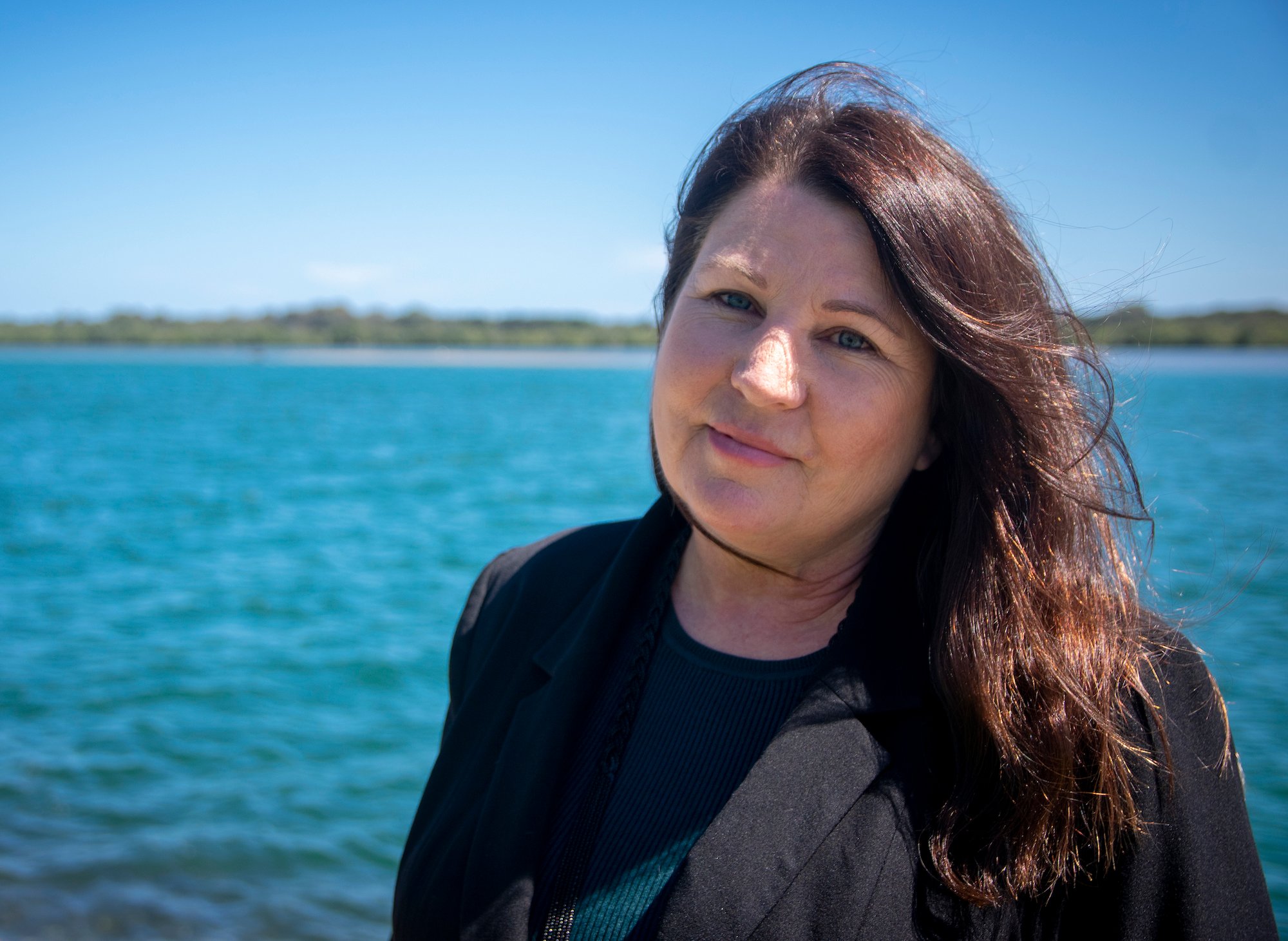
Ms Smith told The Echo, ‘As the Greens NSW Education spokesperson, and as an educator and Member of the NSW Teachers Federation for over 20 years, I can say that Labor’s announcement disappointingly falls well short of the mark.’
‘We need to attract 11,000 new public-school teachers in NSW over the next decade, and retain current teachers who are leaving the profession in droves. The Gallop Inquiry made it patently clear that only through improving pay and conditions, and adequately resourcing students in every public school will we be able to turn around the chronic teacher shortage.”
‘Only the Greens are offering an immediate pay rise for teachers (15 per cent in line with the Gallop recommendations), more time to teach, and 100 per cent of the resourcing required for every student in every public school in NSW. Labor’s announcement will see a generation of teachers and students left behind.’
NSW Labor believes in ‘magic money pot’, says Nats hopeful

Nationals candidate, Josh Booyens, told The Echo, ‘Labor’s announcement on a $400m Education Futures Fund seems to be a magic money pot that they want to fund an endless list of things from’.
‘While we set out plans that are fully funded, Labor fail to set out any details.
‘Labor’s plans are not realistic, are not honest and are going to cost NSW families.
‘So far, Labor have promised that $400m over four years – $100m per year – will deliver an untold number of teachers; An untold number of school counsellors; and a permanent tutoring program (which they have set at a max. of $50m per year, compared to the $250m the NSW Governement has invested this year alone.
‘A five per cent uplift in the Schooling Resource Standard (which would actually cost approx. $750m per year); An acceleration of NSW’s transition to funding NSW public schools at 75 per cent of the SRS from 2027 to 2025 (which would cost at least $600 million)
‘Either that $400m is accompanied by a magic beanstalk or Labor has no idea what they’re talking about when it comes to schools and school funding.
‘You can’t trust these guys with the economy – on Monday alone they essentially committed to more than $1B per year in additional school funding from the state’s coffers, and that doesn’t even cover their promise to get rid of the Wages Policy and negotiate tailored deals for their union mates.
‘NSW can’t afford Labor in government – and Labor can’t afford their own policies at this rate!
‘The Labor announcement on school funding is nothing more than a headline and does little to actually get schools to 75 per cent SRS by 2025. Under the Coalition, NSW public schools are on a trajectory to 75 per cent by 2027 with year-on-year uplifts and supports to schools to invest this funding in students.
Labor also claimed this “Education Future Fund” would deliver “full funding for public schools” – an additional five per cent of funding to reach the 100 per cent SRS. In reality, this would cost about $750m per annum, or $3B over the next four years. Their $400m Fund is a drop in the ocean… not least because it seems to be funding another four commitments made by Labor on Monday!
The NSW Government has already been topping up school funding, while Labor is letting their Federal mates off the hook. It is also their Federal Labor mates who have delayed negotiation of the National Schools Reform Agreement by another year.
‘The NSW Government made it clear months ago our expectation is that schools should be fully funded. NSW is, and will continue to, do more than its share. But the Federal Labor Government needs to cough up the rest of the funding – something they’ve now delayed for another year.
‘The NSW Liberal and Nationals Government led the way in introducing small group tutoring in response to COVID-19 lockdowns in 2021, and have extended it into 2022 and 2023 as well. Our commitments to date: 2021: $337m; 2022: $383m (noting that $80m underspend was reallocated for Term 1 2023) and 2023: Additional $173m to make it $253m for the year.
‘The NSW government have invested almost $900 million in small group tutoring, for the benefit of more than 350,000 students. Under the current approach, all schools whether they are primary, central, or secondary, receive a tutoring allocation. Labor’s cost cutting program will only be able to support 18,000 students – what a poor outcome for students across NSW.
‘We have already made it clear that we will be embedding tutoring as a permanent part of NSW schooling. I am committed to seeing tutoring embedded in the upcoming National School Reform Agreement, as recommended by the Grattan Institute in [Tuesday’s] report.
‘Throughout the day, Labor kept changing their policy. Initially they said that the focus of their reduced tutoring program would be year 10 students, short-changing all other year groups and all primary school students. Later in the day, Chris Minns posted that they would make tutoring free for “all primary and high schools” – with $200m over four years?? It just doesn’t add up. If Labor leader Chris Minns can’t get a simple tutoring program costed right, what hope does the economy have?’
 For four decades The Echo has printed the stories some people loved, some people hated, and some pretended not to read. If you want us to keep telling the truth, the real truth, not the sugar-coated version. We’ll need your support to keep the presses rolling.


