



The first meeting of the new Byron Council term was barely an hour old when the realities of politics and power quietly made their presence known in the Council chamber.
Collaboration and partnership had been recurring themes in the introductory speeches by the new councillor crop. There was even a song about building bridges.
But when it came time to vote for a deputy mayor, it became clear that this Council term would have its fair share of political and personal division.
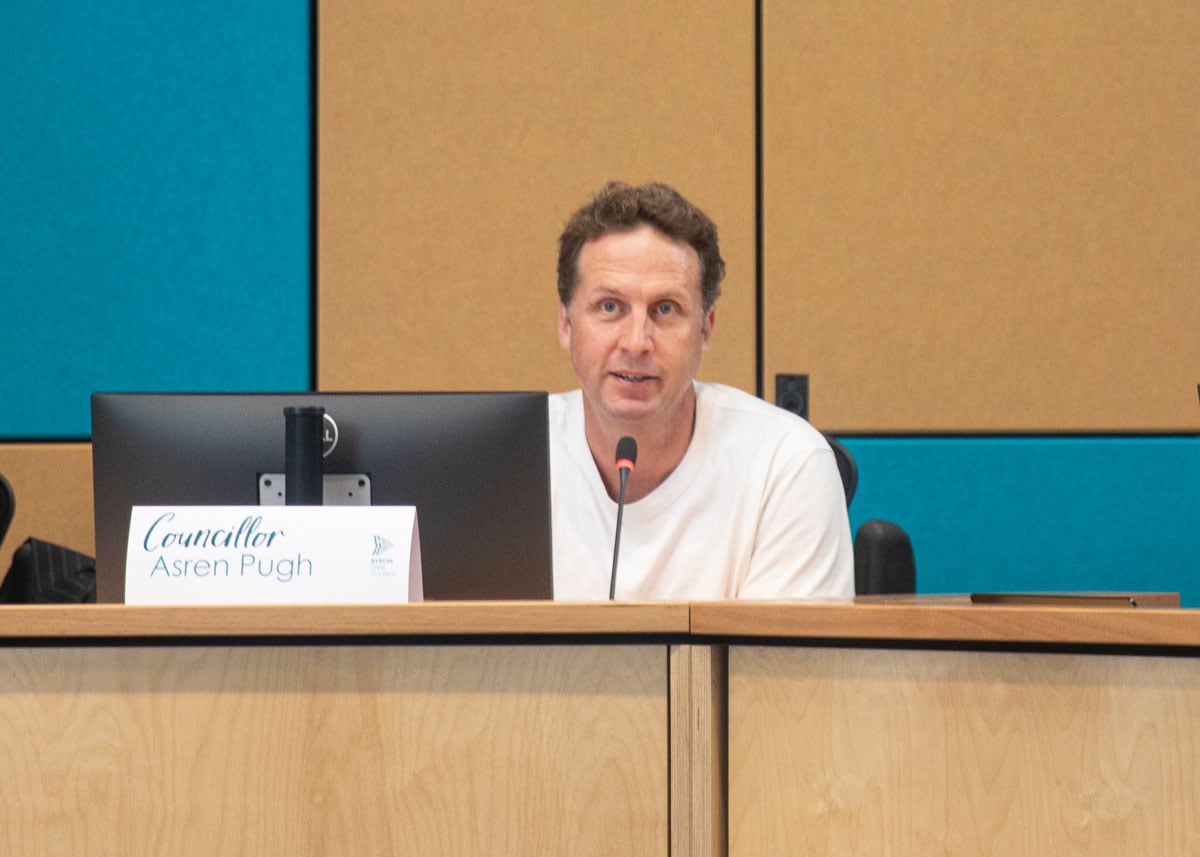
Two candidates for deputy mayor
There were two candidates for deputy mayor: Labor councillor Asren Pugh who finished just behind The Greens’ Sarah Ndiaye in the mayoral election, and Independent Cr Jack Dods who had been elected to Council for the first time.

During the process of choosing a deputy mayor, which included speeches from both candidates, it emerged that Cr Dods had not intended to stand until receiving encouragement from the newly-elected mayor.
‘I put my name forward with some trepidation for this given that it is my first Council meeting ever,’ Cr Dods said in his speech.
‘I was encouraged by Mayor Ndiaye to step into the role as Sarah and I have had a strong working relationship over the last six years.
‘I’m not privy to anything in terms of the relationship that Mayor Ndiaye and Cr Pugh have, but I think it’s probably not in the best place in the moment, given the perceived tension that took place during the campaign, and their dealings during the last Council term.’
‘The symbiosis that needs to occur between mayor and deputy mayor, I think that may not be the best position for Cr Pugh.’
Support for Dods
Further evidence of Mayor Ndiaye’s support for Cr Dods could be seen when she attempted to make a speech endorsing his candidacy.
This speech was terminated a few minutes in when it was pointed out that it was in breach of meeting protocol.
When the conch was handed to Cr Pugh it became even clearer that no love was lost between him and Cr Ndiaye.
After initially saying that electing him as deputy mayor would be an opportunity to ‘build bridges’, Cr Pugh decided to point out that Mayor Ndiaye had only received 35 per cent of the primary vote.
‘Over 65 per cent of the people in this shire didn’t vote for the current mayor,’ he said.
‘I want to make sure that the rest of those voters feel represented.
‘We need to work together as a Council and the best way to do that is to work together from the start.’
Dods elected five to four
But Cr Pugh’s speech wasn’t enough to get him over the line. Cr Dods was elected deputy mayor by five votes to four.
The significance of this vote was not lost on long-term observers of Council.
With Mayor Ndiaye and her Greens team holding four of the nine seats on Council, they only need one vote from the remaining five councillors to secure a majority on any matter that comes before Council.
With Cr Dods locked in as deputy mayor, their position as the dominant Council block appears to have been strengthened.
However, as previous councillor groups have shown, councillors are not required to vote along party lines, and these blocks can break down over time allowing new alliances to form.
Water future
The Greens secured another small but significant additional win when Mayor Ndiaye and fellow Green Cr Elia Hauge were elected as representatives to Rous County Council (RCC).
This is significant because RCC is the body responsible for virtually all of the region’s mains water supply and makes major decisions that affect the entire Northern Rivers.
Both Cr Ndiaye and Cr Hauge are opponents of plans to build a massive dam in Dunoon, and oppose Byron Council’s previous decision to close Mullum’s local water supply at Lavertys Gap in favour of the Rous supply.
 For four decades The Echo has printed the stories some people loved, some people hated, and some pretended not to read. If you want us to keep telling the truth, the real truth, not the sugar-coated version. We’ll need your support to keep the presses rolling.


