


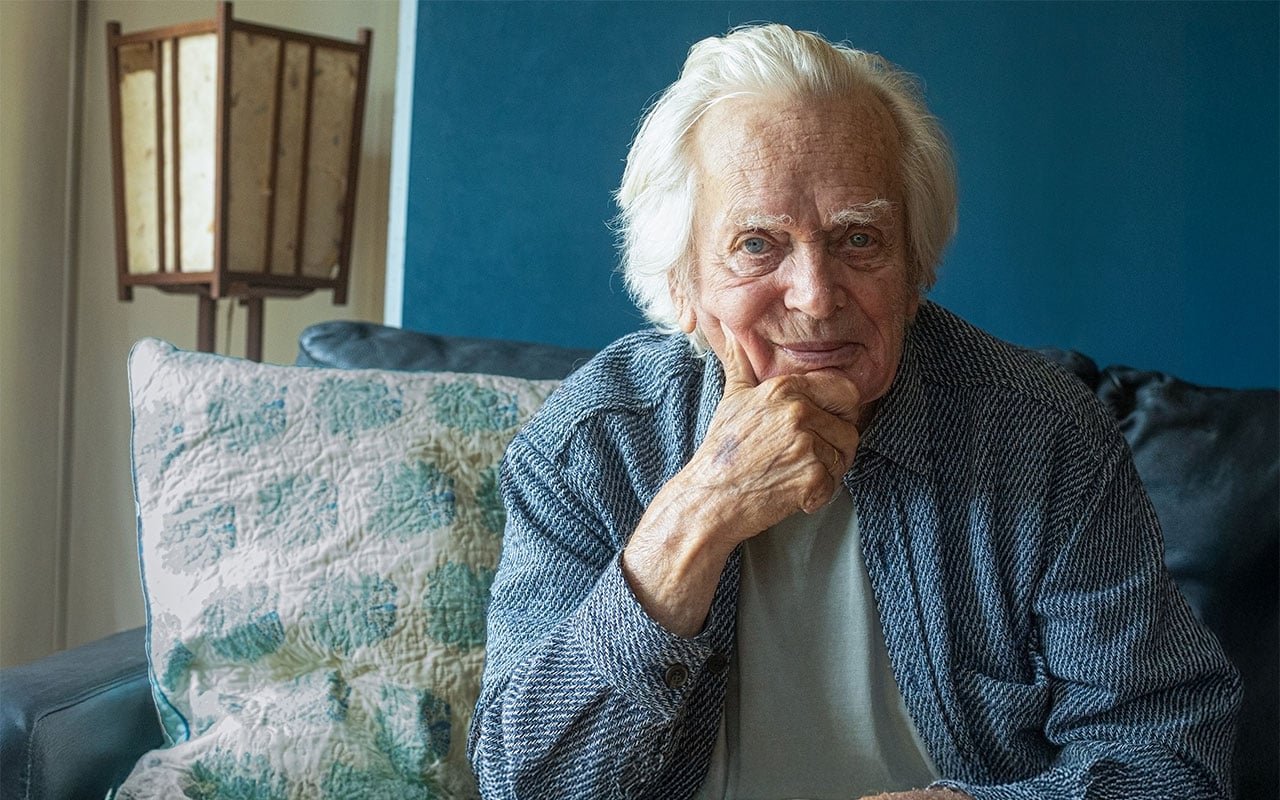
Richard Mordaunt’s: Brushes with Fame
Two screenings in April will give movie-lovers a one-off chance to revisit films by renowned Byron filmmaker Richard Mordaunt, whose groundbreaking works explore community activism, art, and civil rights.
This special event offers a rare opportunity to experience his critically-acclaimed films, introduced by the filmmaker himself and followed by insightful Q&A sessions.
A pioneer in documentary filmmaking, Mordaunt studied at the London Film School in 1964, drawing inspiration from the French New Wave before founding Lusia Films in London. Using the first silent Éclair camera in the UK, he created films that resonated globally, capturing humanity’s resilience, creativity, and pursuit of justice, leaving an indelible mark on cinema.
Seven spoke to Richard Mordaunt at his home in Suffolk Park on the weekend to find out more about his long and winding road.
Can we go back to the start?
I spent my life making films about people telling their story. I think I started in 1964 and it was in a center for heroin addicts and it’s always been a bit like that.
In those days there were no silent cameras. We actually bought the first Eclair (1960 Eclair NPR). The new Eclair and the Nagra (portable audio recorder), gave me a life in films.
And after that, we made a film about David Hockney. And after that, The Animals got a hold of me – Eric Burdon and I went to Poland, we went to Auschwitz, and we looked at the horrors, and he sang, ‘I’ve got to get out of this place’. So we were tracking along that sort of path. Somebody saw the film on Eric – it was Otis Redding’s manager. He said, ‘come and film Otis!’ so I went and did that. So from almost knowing nothing about actually filming as a photographer, I did a lot.
And after Otis, I went to Ireland because it was in such a mess, I made another film called Ireland Behind The Wire, and I made six films in the UK.
My new partner, who was Australian, brought me out here in 1978 and it was a wonderful time to come. The Whitlam era was making creative people think about what they were doing, and this new Australia was appearing – creatively everything was changing.
After a period of working and supporting the emerging fine arts in Mullum you went back to films?
Yes, I went back to making films again, and David Bradbury arrived, and we made Battle For Byron. David is absolutely, through-and-through, an activist. I’m not an activist, and I can’t pretend that I am, but I do have human qualities which are needed for activism.
And then after that, the ABC commissioned me to make a film following seven artists doing work for the Archibald, Brushes with Fame, and it’s a great film – there’s a lot of art-making which I find very inspirational – and then a film about Salvatore Zofrea. Salvatore is a great friend. I took up a lot of his time, and he was marvelous. After the Archibald film, I found that I’d gotten to know a lot of artists, and so I made several films for the ABC.
Now I look back on this pathway which I followed, and I do sort of understand how one bit led to the next. And I think living up here in Byron all this time has taken people like David Bradbury, myself, it’s taken us away from the centre of filmmaking, which we probably needed to be taken away from…
Audiences will gain unique insights into Richard Mordaunt’s creative process, experiences, and the powerful stories behind his iconic works, at the Byron Theatre on the last weekend in April.
There will be four films screened over two sessions, each with an interval.
Session 1: Friday, April 25 at 6pm features Battle for Byron and Salvatore Zofrea: Master of Light.
Session 2: Saturday, April 26 at 1pm features Otis Redding and the Battle for Civil Rights and Brushes with Fame.
All of the films are rated G and run for approximately 60 minutes. Don’t miss this unique celebration of cinematic artistry – tickets from byroncentre.com.au.
 For four decades The Echo has printed the stories some people loved, some people hated, and some pretended not to read. If you want us to keep telling the truth, the real truth, not the sugar-coated version. We’ll need your support to keep the presses rolling.


