

13.8 C
Byron Shire
June 27, 2026

New Great Barrier Reef report confirms worst annual coral declines on record

Latest News

Casino Suspension Bridge opens

Minister For Small Business, Recovery and North Coast Janelle Saffin joined Mayor Robert Mustow and Member for Page Kevin Hogan to officially opening the Casino Suspension Bridge today (Saturday).

Other News

Savour The Tweed returns, 22 October

Food and drink event, Savour The Tweed, returns to excite tastebuds this spring, from Wednesday 22 October to Sunday 26 October.

Mullum CWA raises $900 for Cancer Council

Each year Mullumbimby CWA supports the Cancer Council with a Biggest Morning Tea fundraiser. This year they decided to change things up a bit and have a soup lunch and raffles.

BSC moves closer to special rate rise

Byron Shire Council has moved a step closer to seeking a special rate rise, unanimously endorsing a community engagement program that will form a key part of any future application to increase rates above the state-imposed cap.

When it comes to real estate, everyone can use an advocate

With 45 years combined experience across both sales and property management, husband and wife team Mark and Michelle Errichiello have recently moved to the Northern Rivers and teamed up with Byron Property Search to provide advocacy services for people looking to buy or sell across the region.

Schools Roadshow heads to Lismore

The Rivers Secondary College Lismore High Campus will host 80 principals and public school leaders from across the North Coast and New England on Friday 26 June as part of the 2026 Schools Roadshow.

Ballina big band back with a blast

The Ballina Concert Band will perform a fun-packed set of jazz, blues and New Orleans favourites at a free gig at the Cherry Street Sports Club in Ballina, this Sunday, 28 June, from 2pm to 3pm.

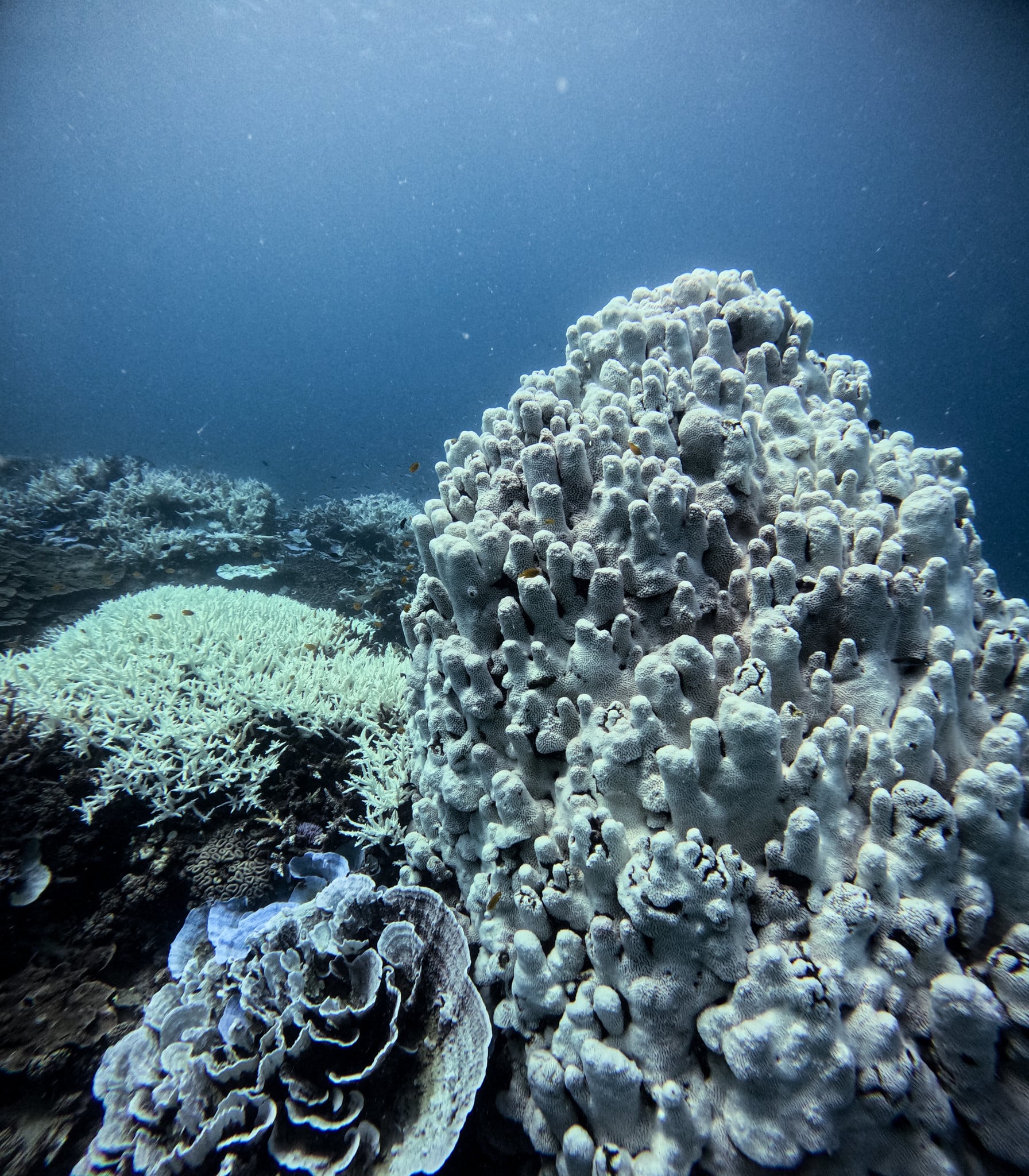
Great Barrier Reef coral bleaching. AMCS

The choices the Australian government makes in the next 12 months will decide the Great Barrier Reef’s fate, say the Australian Marine Conservation Society, following the release of the Long Term Monitoring Program report today by the Australian Institute of Marine Science.

According to the AIMS report, the Great Barrier Reef has suffered the largest annual declines in coral cover in two of its three regions since monitoring began in 1986.

Coral cover plummeted by about a quarter in the northern region (Cape York to Cooktown), almost 14 per cent in the central region (Cooktown to Proserpine), and nearly a third in the southern region (Proserpine to Gladstone), the largest annual decline ever recorded there.

Coral bleaching on Heron Island, 2024. Photo CoralWatch

For the first time, substantial bleaching impacts were recorded in the southern Reef, showing that almost the entire system has been hit hard, not just isolated areas.

The Reef has now endured five mass bleaching events since 2016 – including back‑to‑back events in 2024 and 2025 – a clear sign that climate change is overwhelming the Reef’s ability to recover.

This devastating update comes just days after the Climate Change Authority warned that the Reef cannot survive without urgent climate action. It also comes as the Australian Government decides its 2035 emissions reduction targets – with a 90 per cent cut critical to protecting the Reef.

UNESCO has given Australia until February 2026 to improve Reef protection policies or risk a World Heritage ‘In Danger’ listing.

The Australian Marine Conservation Society (AMCS) is urging the federal government to:

  • Commit to at least a 90% cut in emissions by 2035.
  • End approvals for new coal and gas projects.
  • Tackle local threats including water pollution, deforestation in reef catchments and coral harvest.
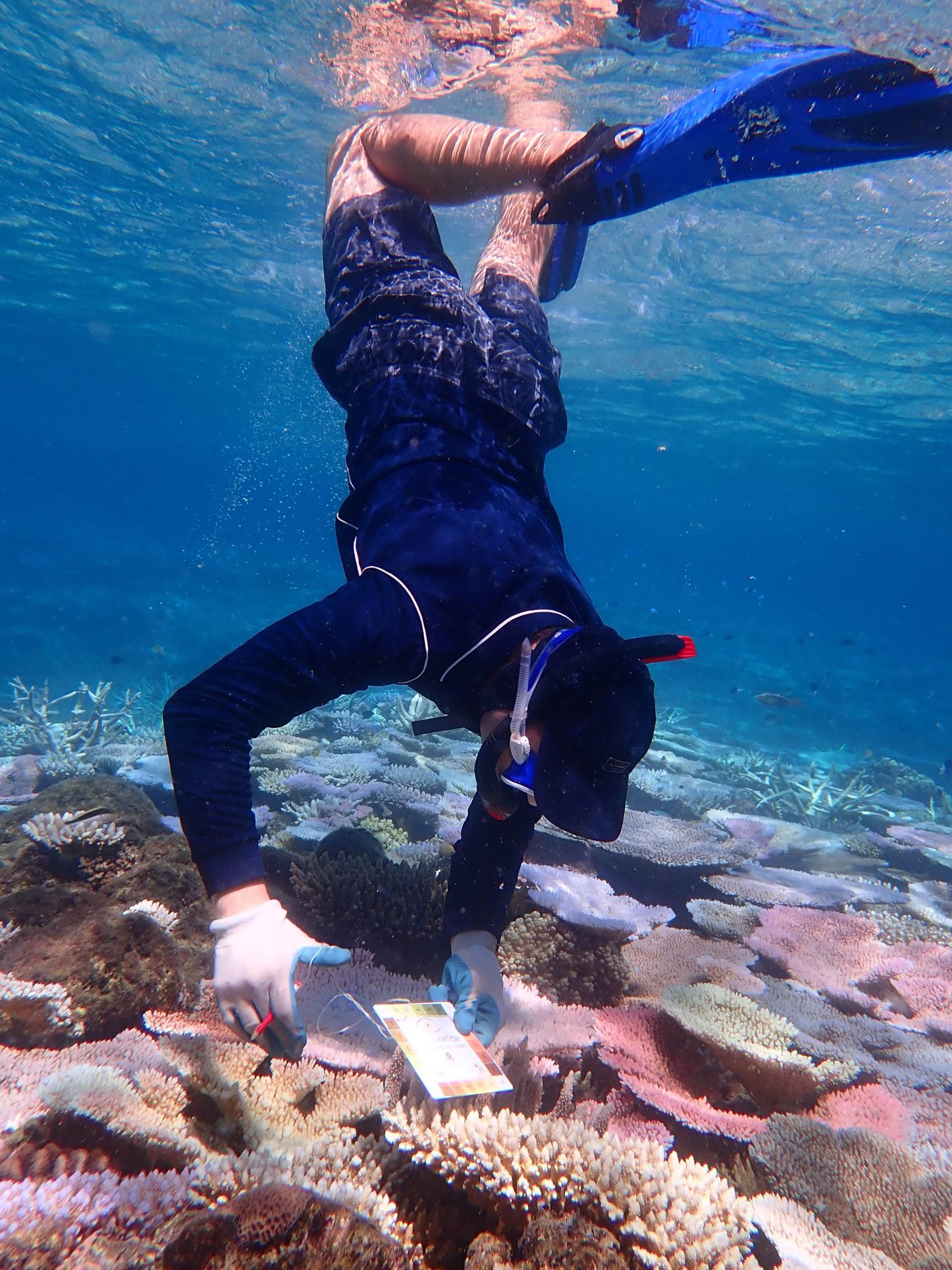
Coral bleaching on Lizard Island in 2024. Photo Coral Watch

Devastating

Australian Marine Conservation Society (AMCS) Great Barrier Reef Campaigns Manager Dr Lissa Schindler said, ‘For those of us who dived on the Reef during the 2024 bleaching event, we knew it was devastating. Now the data confirms just how bad it was.

‘The most alarming finding is the pattern – the Reef is lurching from record highs to record lows – a hallmark of an ecosystem in crisis.

‘As custodians of the Reef and one of the wealthiest nations on Earth, Australia has both the responsibility and the ability to lead on climate action.

‘Yet, we remain among the world’s highest per capita carbon polluters, and we’re still approving new coal and gas projects. That must stop,’ said Dr Schindler.

‘The Federal government is currently setting its 2035 climate targets – a decision that will define the future of the Great Barrier Reef and Australia’s role in the unfolding climate crisis. Australia must commit to an emissions reduction of 90 per cent by 2035, in line with the science to give our Reef a chance for the future.

A green sea turtle at Fitzroy island off Cairns, swimming over bleached and dead corals covered in algae. Flooding from cyclone. AMCS

‘They must also commit to addressing local threats like reducing water pollution, phasing out coral harvest for the aquarium trade, and finalising the gill net fishing ban by 2027.

‘The Reef’s future is still in our hands, but the choices Australia makes in the next 12 months will decide its fate,’ said Dr Schindler.

‘We must act now – for the Reef and for future generations.’



For four decades The Echo has printed the stories some people loved, some people hated, and some pretended not to read. If you want us to keep telling the truth, the real truth, not the sugar-coated version. We’ll need your support to keep the presses rolling.

If you are a local business owner help us and in turn we help you. All The Echo asks for is advertising, not a free ride. It is every advert in The Echo and on www.echo.net.au, which creates the space for all the stories and coverage of community events, happenings and concerns.

If you are a reader you can become a sponsor of The Echo. Your support keeps the us independent.

Even a small one-off or regular donation from you will help keep the echo’s independent voice alive and strong.

Support Us

Become one of the supporters who helps keep independent, local journalism alive in the Byron Shire by contributing anything from as little as the cost of a coffee each month.

You're Wonderful, Thank you for supporting independent journalism in the Byron Shire

You’re supporting The Echo, thank you

Your contribution is keeping independent, local journalism alive in the Northern Rivers.

Because of supporters like you, we can keep every story free for everyone — no paywall, no exceptions. Your money goes directly to funding our newsroom of 40-odd local workers covering the stories that matter to this community.

Tell us what you think, give us your opinion

The Echo loves your letters and comments and is proud to provide a community forum on the issues that matter most to our readers and the people of the NSW north coast. So don’t be a passive reader, email us your epistles at editor@echo.net.au.

The letters deadline for The Echo is noon Friday. Letters longer than 200 words may be cut. The publication of letters is at the discretion of the letters editor. Please remember to include your full name, address and telephone number.

Online comments are no longer available.

Byron’s Winter Whales raise $43,000

The Byron Bay Winter Whales (BBWW) took to the ocean for the 39th time this year on the first Sunday of May and raised $43,000 for local organisations and charities.

When it comes to real estate, everyone can use an advocate

With 45 years combined experience across both sales and property management, husband and wife team Mark and Michelle Errichiello have recently moved to the Northern Rivers and teamed up with Byron Property Search to provide advocacy services for people looking to buy or sell across the region.

Savour The Tweed returns, 22 October

Food and drink event, Savour The Tweed, returns to excite tastebuds this spring, from Wednesday 22 October to Sunday 26 October.

Conservationists welcome carbon credit scheme to protect forests

Today’s release of the government’s proposed Improved Native Forest Method, which allows governments to claim carbon credits in return for stopping logging has been welcomed by the North East Forest Alliance and North Coast Environment Council as "providing a way to end native forest logging on public land".

