



Having overcome numerous challenges in the past, the former mayor of Lismore, Jenny Dowell, is currently facing a major health crisis. She sat down with The Echo to reflect on the changes she’s seen across the rainbow region, and consider the future.
This is the second part of a two part feature. You can read part one of this extended interview with Jenny Dowell here, in which she reflects on local government and other issues.
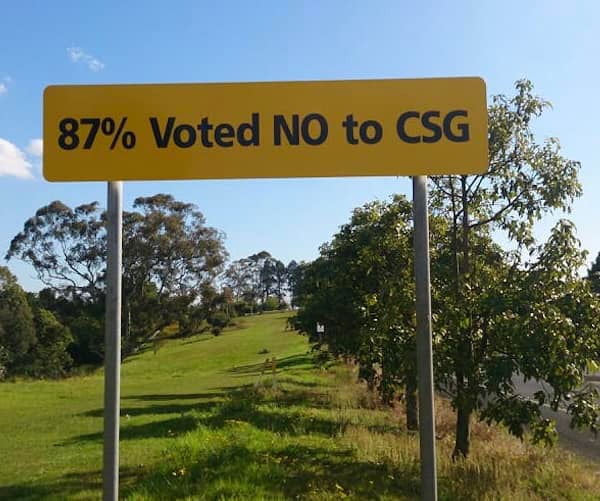
You mentioned the destruction of the gasfield-free signs across the region by Lismore City Council, who ignored the results of what was a very rigorous process, involving thousands of people, in favour of the wishes of a few right-wing councillors.
This seems to be part of something that happens with the right generally, not just here, but around the world, where history that’s awkward to their worldview is just dismantled and removed.
We’ve also seen it recently with the hostility towards the museum here in Lismore. It seems quite pathological, and Orwellian. What do you make of it?
Jenny Dowell: ‘I think I also see that… particularly in this Council, the rhetoric is often about pro-business. I hear the councillors saying, “We’re here for the ratepayers.” Now, one or two of the councillors, when I first joined Lismore Council, used to say “we’re here for ratepayers”, and I would always counteract by saying “we’re here for everyone. Everyone.”
‘Renters are paying through their rent, towards the rates. Children, people in social housing, whatever, are still using our services. We’re there for everyone. But this move towards – to my mind, for some of the councillors – it’s, “we’re there for our mates.” And that’s appalling to me.
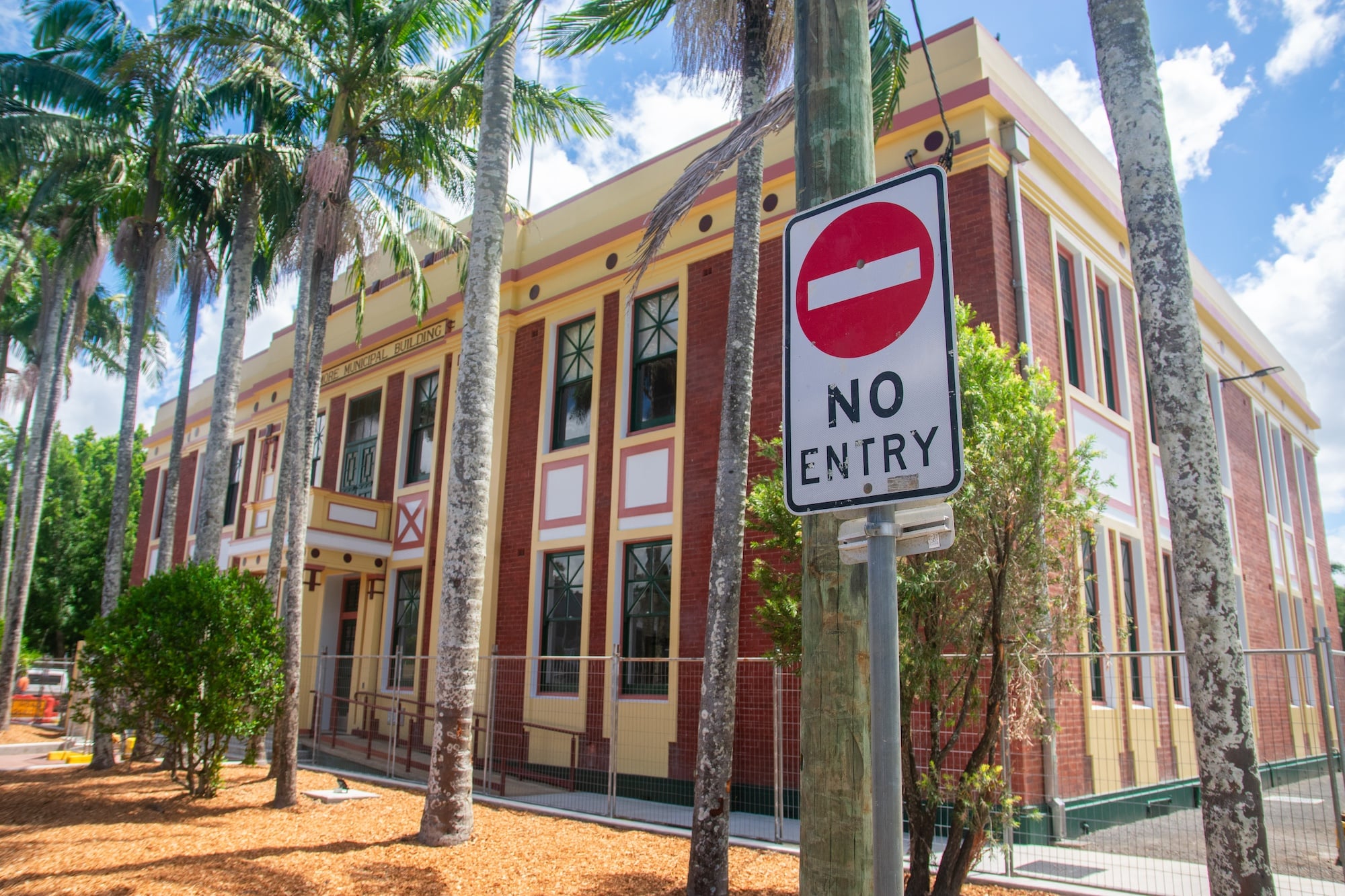
‘This attitude often goes with an anti-arts stance, but they wouldn’t dare touch the library, because if any Council asks their residents, what do you value most? The library always comes out really high, so they wouldn’t touch that. But the Historical Society and the museum is an easy target. They’re all volunteers.
‘Many of the councillors would have barely, if ever, been to the museum. They don’t value history, as you say, and they look at that lovely building and think, oh, we’d like this for us. You know, we will move back in here.’
Even after the official signage was installed!
‘Yes, and even after the grant came to restore it to make it even better for the display. So it’s appalling.
‘I think, frankly, if we hadn’t got the money for the art gallery during the time when I was mayor, if it had come up now, I don’t know if we would have got it.’
Speaking of the art gallery, you’ve been a great supporter of the Lismore Regional Gallery, and all the usual people said the new gallery would be a disaster. Of course, they were all proved wrong. It’s been highly successful by any measure. Is it too successful now for them to destroy it?

‘I don’t know, I think there’s been a push to charge an entry fee. There will always be a push to reduce the budget.
‘There is talk now about having another cultural centre somewhere out of flood, say in 30 years time, possibly for a new library, museum, gallery. That’s there, but I think there’ll be councillors, possibly, who haven’t even visited the art gallery.
‘The perception is that extreme right wing views, conservative views, pro-business, whatever, is that arts are leftie stuff. They’re not our people. So if they’re not our people, we don’t have to spend money on them. We don’t have to pay attention to them.’
Is that how it was when you first came here? Is this simply a regression back to the good old boys National Party way of the past, or is there something new happening?
‘I think there’s something new happening. There’s elements on this Council now that are more conservative than even way back on my first term of Lismore Council.’
Have these attempts to dismantle your legacy affected your health?
‘No, no, and I don’t take that stuff personally. I don’t see it as dismantling my legacy. I think there’s certainly councillors who think I was probably the worst mayor that Lismore has ever had, and they will do whatever they can. But I don’t think that’s a general view. So no, it doesn’t affect me.’
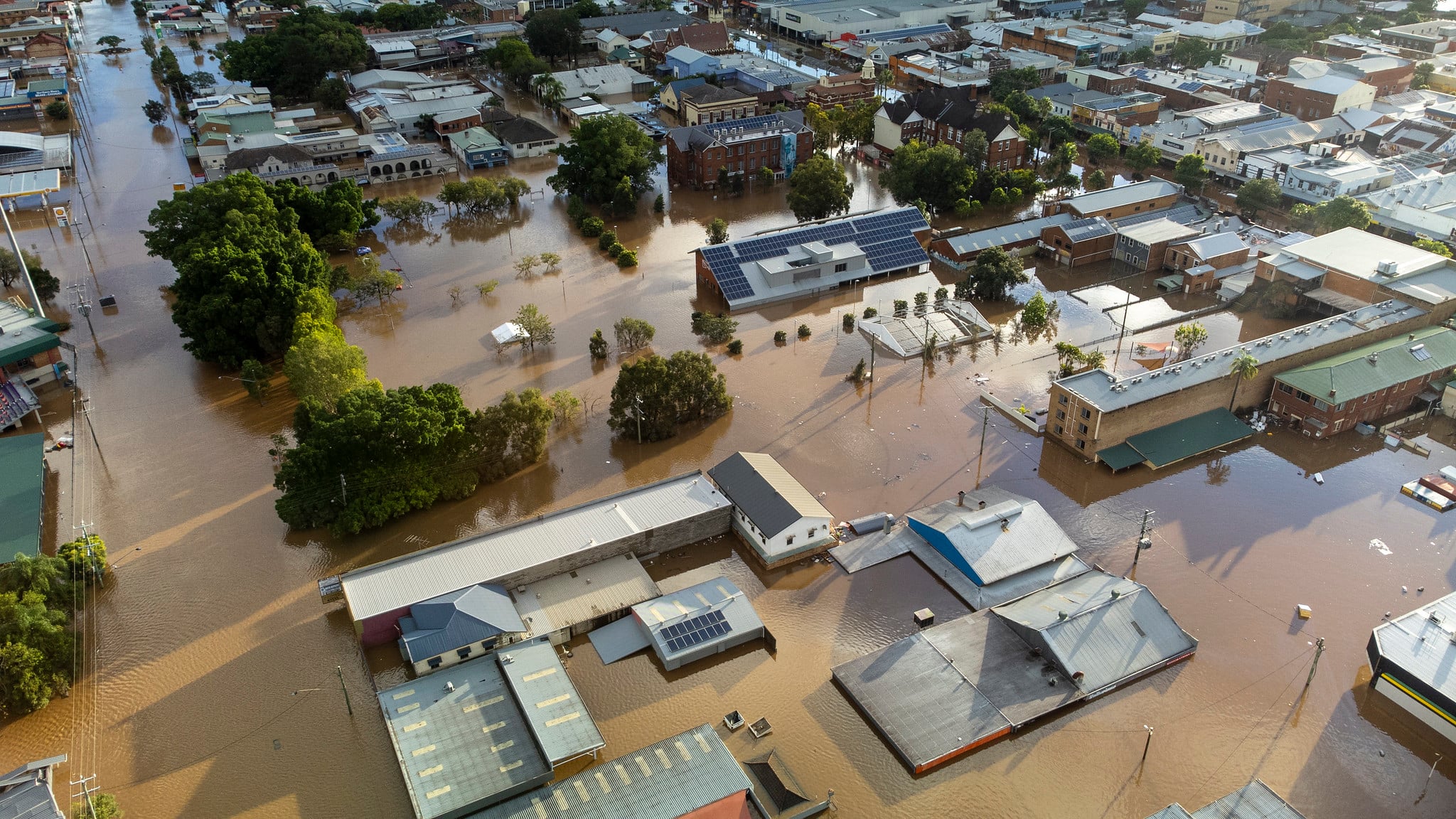
And you’re still here in Lismore. Obviously, the city has had some very heavy blows recently. How are you feeling about Lismore’s future at the moment?
‘I’m an optimistic person by nature, and I’m optimistic about Lismore. What really worries me is that we don’t know what, particularly, the CBD, North and South Lismore is going to look like. There’s no vision for what’s going to happen when those houses disappear.
‘For example, is it going to be urban agriculture? Is it going to be forestry? Is it going to be light industrial? Is it going to be parkland? Is it going to be sporting facilities? Is it going to be weed-infested blocks that don’t bring in rates, but Council is having to look after? To my mind, there’s no clear vision of what this city is going to look like, and that worries the hell out of me.
‘The people are resilient, though that word is overused. The people have had so many blows, and yes, one person falls by the wayside for a little while, but others will come to the fore, until those people feel that they can step up again. Together, we will go forward. But I really think that we need a clear view of what Lismore will look like, because otherwise…
‘I go walking early on a Sunday morning, six o’clock with a group of people. And we would walk, you know, eight km. We would walk around North Lismore, South Lismore, and back, to meet in the CBD again. These are people who’ve been here for generations, some of these women I walk with, and they don’t know what it’s going to look like – we all fear that.
‘I really worry about people who loved their community and decided to stay and resist a buyback; others whose neighbors got the buyback and they didn’t. So the division that’s potential in the community really worries me. I worry more about the people than I do about other physical stuff. I worry about the people.

‘The CBD itself, Keen Street’s doing pretty well. The stuff that’s happened more recently about anti-social behavior, drug and alcohol, mental health issues, is really a concern, because it’s a cyclical thing. If people don’t feel safe in the CBD, then they tell people about what they see, they don’t go, and that snowballs, and lots of people don’t go.
‘I look at the CBD and see what I assume are illicit tobacco shops that are popping up around the big empty spaces where the chain stores were and are no longer there. So I worry from that point of view about the CBD, but I think the buildings are there, the business is there, there’s still a role for our CBD.
‘Many of the businesses have built back very sensibly, with hose-it-out spaces and so on. One of the things I’m proudest of is how the Conservatorium led the way on that, and what it’s done inside to make it more flood-resistant, using the extra money that’s come in, the grants and so on.
‘I want to see North Lismore Plateau developed, Richmond River Campus developed up there, and some good housing. I think people who come from that side of the river, many of them want to stay on that side of the river, but they want to be safe. So to me, North Lismore gives that opportunity to balance physically the development of Lismore, with safety on the hill over there.’

What about the court cases ongoing about that development, and the concerns of Widjabul Wia-bal people?
‘From what I gather, there was some smallish things that needed to be attended to by the developers. There was always, from my time, a respect for Aboriginal heritage there. And the group that I was working with, the Aboriginal reference group when I was on Council, was fully supportive of the development there. It’s changed a bit now.’
So do you think there’s a way to integrate the Aboriginal heritage on the hill with new development?
‘Absolutely. More consultation, more communication is the answer to everything. Two way communication is absolutely essential. So I’d like to see that happening. Some of the other developments that are around, whether it’s the Crawford [East Lismore] land or whatever, I think are really good.’
What about the new developments proposed for Goonellabah, above Tucki Tucki Creek? Are you concerned about the platypus habitat?
‘I walk in the Birdwing Butterfly Reserve and the Tucki Tucki Creek area quite a lot. And when that development on Holland Street was happening years ago you could see the effects in the creek, the runoff and whatever else, but it’s stabilised now because of all the planting that volunteers and others have done.
‘So it’s about being sensitive and doing things really well, not letting developers cut corners, over-develop or not look after the runoff. It’s also important not to encroach on agricultural land, we need to stick to good boundaries for that, and protect agriculture.’
I wanted to ask about women in local government. Obviously we need more women’s voices, but there are pressures against them getting involved. How can that situation be improved?
‘When I was first on Lismore Council, about 28 per cent of women were councillors, and there were councils throughout the state with no women. We’ve gone to the high 30s. Still not enough, and some of the women are terrible targets. We’ve seen that at our previous Council and this current Council – the women are shocking targets.
‘The code of conduct and some of the rules around councils allow mostly men perpetrators to get away with so much of that stuff. But I think more women have to put their hands up, and more women have to be there as networks of support for those women. But it’s awfully hard, and not just our council. Men need to help the women too.’

What about the attacks using social media? How did you deal with that?
‘I was lucky in a way that social media was not as toxic then. You can’t do it now, but I’ve maintained my personal page on social media as my only page. I restricted my friends. I still have about 5,000.
‘There were people I would never accept as friends on social media. There were pages I would never look at, and people would send me a DM and say, “Have you seen what so and so is saying about you?” I’d say, “No, I haven’t looked, I won’t look. I don’t want you to tell me, and I don’t want you to send me a screenshot.”
‘So for my mind, ignorance was my self protection. I didn’t want to know. And there are certainly pages I will never look at. Otherwise you could spend your whole time being drawn down those rabbit holes or trying to counteract misinformation.’
But your approach wasn’t to get off social media. You still say happy birthday to people online every day. You somehow found a middle path.
‘Yes, and if someone was constantly attacking me and and they were a friend, I would give them a warning directly, a DM to say, “Look, drop that stuff. Or I’ll mute or delete your comment”. And if they’d persist, I said, “I’m unfriending you. I’m not going to allow this stuff”. Not just because sometimes it might have been hurtful for me, but it put off good people from making comments on other things.
‘Otherwise they would think, I’m not going to go there. You’ll just get attacked. So I put boundaries around and I strongly suggest to other women that they place boundaries too.’

I remember during the gas fight, there was this very broad coalition, which was very inspiring for all of us, but which has now fractured again. Can you ever see something that will bring Lismore together again, considering the floods didn’t appear to do that, and many of the old activists are no longer here?
‘I would hope another Council. There will be elections in 2028, I don’t know what might happen, but I hope we would get a progressive Council next time, because a progressive Council looks beyond economic numbers. They look towards social cohesion. That’s a broad statement, but I think generally progressive councils, socially aware councils, look towards bringing people together.
‘During the floods, people were fighting for their very survival. They didn’t have time to work as a collective, though of course there were lots of people who helped others who were affected by the floods.
‘There was the Tinnie Army, the Koori Mail, the kitchen, Resilient Lismore; all those groups that have come together and all the other good stuff that’s happening out of that. But I think for some people, it was like the tsunami of exhaustion. When you’re fighting for your very existence it’s about myself, my family, whatever – I can’t get involved in anything else.
‘And yes, a lot of the artistic community that would have led, and were heavily involved in Bentley, have either gone or they’ve had to leave where they were. Some of them are now up around the Goonellabah area. It’s about physical safety.’

Do you see what happened in Lismore as a microcosm of what the world’s facing with climate change? So many business-oriented people appear to have their heads in the sand, and seem unable to accept the science.
‘From their point of view, businesses are a bit like households. They want their little world to survive and do okay. They’re looking with blinkers on I guess, at their situation, with not the luxury of time or energy to look more broadly. So I can see from their point of view as well, but clearly we’ve got a lot of climate change denial happening.’
During Bentley I remember having conversations with National Party-oriented people who were genuinely confused about why anyone would try to protect other people living a valley or two away. It was okay to go to the other side of the world and fight at Gallipoli, but to defend your neighbouring valley or the people downstream, they found that incomprehensible.
‘It’s the “me”, in the worst, narrowest view. It’s the “me” versus “we”. It’s the collective view of society, what’s right for all of us, versus me, what’s in it for me? I’m not saying all National Party people are like that.
‘We saw some wonderful friendships [during the gas fight]. I remember farmer Bruce Shearman and Len Martin the greenie hippie scientist, with their arms around each other at Goolmangar Hall. There’s some of the visions that stay with me, these unlikely friendships, people who wouldn’t even have spoken to each other before came together.’

And that’s also part of the magic of Lismore and the Northern Rivers more generally, isn’t it, with very different kinds of people rubbing up against each other and getting something from the interaction. Is that fraying now?
‘I’d like to think it’s still there. It might be a bit threadbare, but it hasn’t frayed yet, and hopefully it won’t. I think we’ve got a lot to be thankful for from the Aquarius Festival all those years ago, which brought lots of people here with the values that changed Nimbin, but also changed Lismore itself.
‘We talk about the flood being destructive, but some of the other stuff that’s been destructive is what’s happened at Southern Cross University with the reduction in its roles in the arts; music and visual arts especially. That’s added to the threadbare nature of the cloth, but other things have stepped in. Look at the Serpentine Gallery, and the rise of TAFE, where they’re trying to step into the hole that’s left by Southern Cross in that space.’
‘I’m still optimistic!’
Nine years ago, one of Jenny Dowell’s last official functions as mayor was to launch Cloudcatcher Media’s film ‘Secrets and Sawdust’ at Lismore Council Chambers. Local bard Luke Vassella surprised her with a specially written song on the night, which can be seen below:
 For four decades The Echo has printed the stories some people loved, some people hated, and some pretended not to read. If you want us to keep telling the truth, the real truth, not the sugar-coated version. We’ll need your support to keep the presses rolling.


