


Okay. Let’s be frank. We’ve all got long lists of things to worry about.
Big Tech’s AI-slop increasingly sloshing into our souls. A burning planet stealing our kids’ futures. For millions, the unaffordable cost of finding a decent place to live.
Yet on all these fronts, as our Shire rolls into another summer, there are glimmers of hope. And in each case, collective political action is transforming dark worry into the possibility of a brighter future.
It seems appropriate, again, to quote the late great Welsh thinker Raymond Williams. ‘To be truly radical is to make hope possible, not despair convincing.’
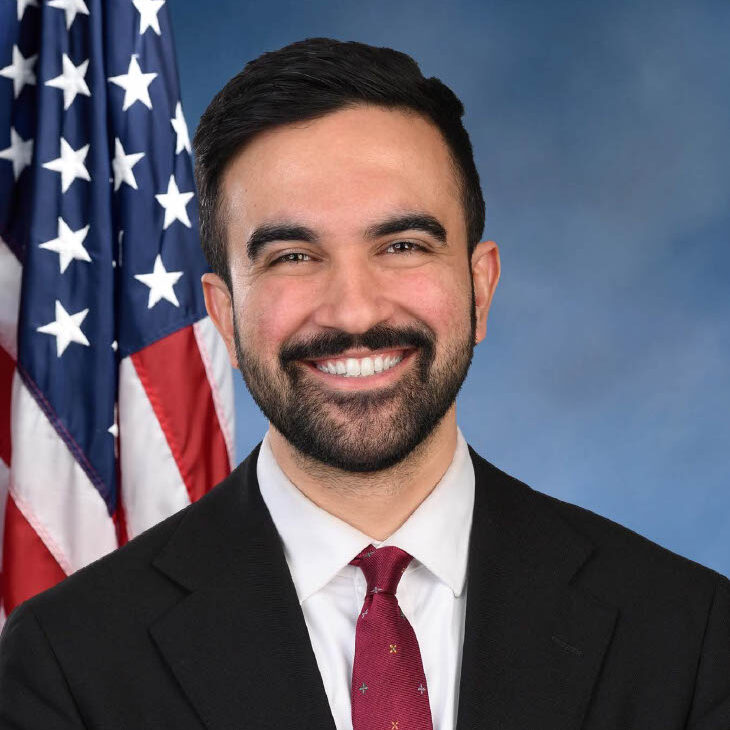 Mayor Mamdani
As every Echo reader would know, a radical 34-year-old Muslim democratic socialist was last month elected mayor of one of the world’s most powerful cities.
Zohran Mamdani’s astounding win in New York didn’t result from people whinging and wishing from the comfort of their loungerooms. It was the cumulative success of a grassroots campaign, involving 100,000 volunteers knocking on over a million doors, with messages of hope.
As other recent campaigns have found, speaking to people directly can help short-circuit the misinformation, division, and hate driven by social media algorithms, allowing a chance for common sense and connection.
Despite – or perhaps because of – billionaires strongly backing his opponents and Trump trashing him, Mamdani won a whopping 50 per cent of votes in New York.
More optimistically, among voters under the age of 30, Mamdani won almost 80 per cent. Yep, that’s four out of five Gen Z voters.
The campaign’s success was based on commitments to make living more affordable, including housing, as well as sophisticated use of online video.
Mamdani’s Hollywood good looks didn’t hurt his chances of winning either, or the fact his mother, Mira Nair, is a successful film director.
Her award-winning films include Salaam Bombay, Mississippi Masala and Monsoon Wedding. One of her most recent – Queen of Katwe – follows a young chess prodigy from the slums of Uganda. Zohran helped with the soundtrack, which featured one of his rap songs, and in the film’s credits, he can be seen jumping around playfully.
The world is changing, 80 per cent of young New York voters wanted a radical rapper to be mayor.
Back home, recently released analysis shows almost 70 per cent of people under age 30 voted for Labor or the Greens in this year’s federal election, confirming a long-term trend of younger Australians deserting the coalition.
Green-Labor ceasefire
Which brings us to what many will see as another sign of hope: Labor and the Greens joining together last week to pass long-overdue environmental laws.
The Greens won important changes to the draft laws, including moving more quickly to phase out native forest logging, and moving more slowly to approve new coal and gas.
The final version fell far short of what the Greens and environment movement wanted, and the science demands. Yet the deal signalled a potential shift away from the bitter hostility that characterised the Green-Labor relationship during so much of the last parliament.
The passing of the new laws also relegated the fossil-fuelled right to even further political irrelevance, if that was possible. But of course, with support from the flat-earth fanaticism in some parts of the old media, and the algorithms favouring misinformation in some parts of the new media, a Farage-style far-right may yet rise here.
Regulating tech
And speaking of tech titans, is it not possible to take some hope from the coming implementation of Australia’s world-first under 16s social media ban?
No doubt the new laws have loopholes you can drive trucks through, and kids across Australia will circumvent them. There’s also no doubt elements of the tech industry will use this as an opportunity to hoover up even more personal data to keep the fires of surveillance capitalism burning.
But at the very least, the new rules are part of a growing push by governments to assert some authority over the corporate cowboys from Silicon Valley.
Long-term campaigners for more affordable living will be celebrating Mamdani’s resounding victory in New York. Environment movements will chalk up a small but hopeful win with the passing of new environment laws in Australia. And might the social media ban be one tiny step towards taming an out-of-control Big Tech that’s recklessly redefining what it means to be human?
A year ago, I wrote about Stanford psychologist Dr Jamil Zaki’s book, Hope for Cynics, which argues activism can be good for us, and our communities.
‘It actually is hope – the sense that things could improve in the future – mixed with fury, that inspires people to fight for progress,’ Zaki wrote, ‘even when victory seems well out of reach.’
Dr Ray Moynihan is an academic and community volunteer.
 For four decades The Echo has printed the stories some people loved, some people hated, and some pretended not to read. If you want us to keep telling the truth, the real truth, not the sugar-coated version. We’ll need your support to keep the presses rolling.


