


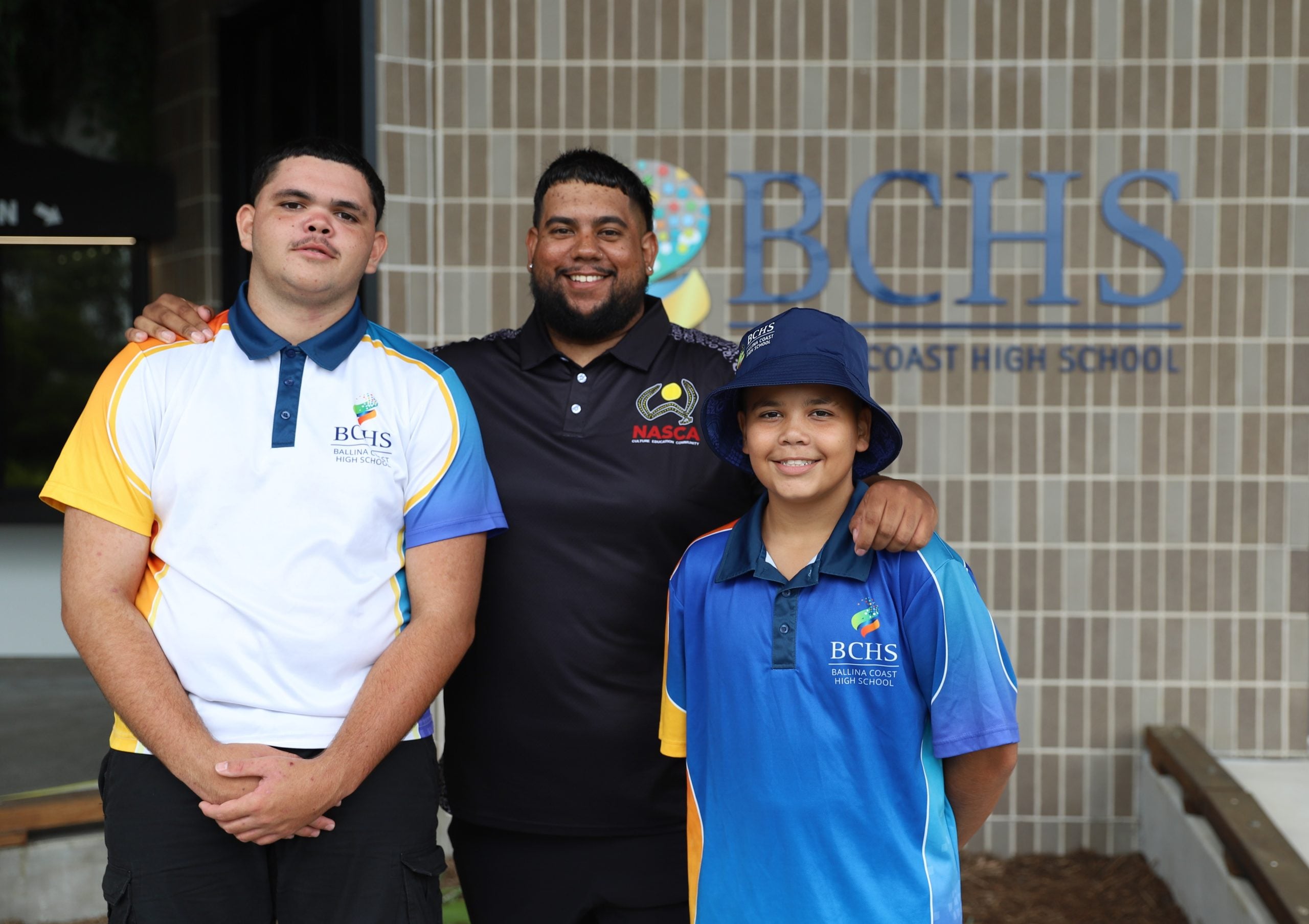
The launch of the Young Men’s Academy (YMA) at Ballina Coast High School is set to empower young Aboriginal and Torres Strait Islander men to be the best they can be, according to NASCA, an Indigenous-led organisation with over thirty years experience, following the local success of their Young Women’s Academy.
The Echo was there for the launch of the latest 12 month pilot program, which will provide equitable, culturally grounded support at school for 50 young men, offering dedicated mentorship, cultural pride, and tools to improve school engagement, confidence and long-term resilience, guided by local Elders.
This is the first program of its kind for young men in Australia.
YMA Team Leader Abbey Orcher says NASCA works mainly with young women around Australia, with Ballina’s pilot program being an ‘immense success’, having assisted 75 students over its first year.

Wrapround service
She described the program as a ‘wraparound service that uses culture to get our kids through the door. Essentially, rather than walk in front of them or behind them, we’re walking right alongside them every step of the way to get them over that retention line.’
The Indigenous non-profit organisation NASCA was founded in 1995 by Ngarabal man, change-maker and rugby league champion David Liddiard. Initially there was a focus on sports, which has widened since to include broader education and cultural goals.
There are now 21 Young Women’s Academies across NSW, along with activities in primary schools interstate, with volunteers going into nine communities across the Northern Territory.
Originally from Bourke, Abbey Orcher has been working with NASCA for five years. ‘I’ve always wanted to work with youth, and I guess be somebody that I needed when I was younger.’
She says the young men’s academy will include assistance with food, transport and whatever else is needed to help people be successful at school. ‘We run afternoon activities, camps – absolutely anything that supports them getting over that line.’

NASCA is supported by corporate and tax-deductible donations, and is getting great results, with almost 100 per cent of participants graduating in recent years, a massive improvement on graduation rates without NASCA.
Absolutely amazing
NASCA CEO Alison Bentick told The Echo the outcomes in Ballina’s first year with the women’s program were ‘absolutely amazing’.
‘I think there’s something like a 66 per cent drop in suspensions last year,’ she said. ‘We thought, why can’t we have that for the young men? So this particular site is our first Young Men’s Academy.’
She says there are 76 enrolments of young First Nations boys at Ballina Coast High, with 50 places in the program at this stage. ‘However, NASCAR are keen to engage all 76 where we can. We’ll over-staff and make sure that they’ve all got the opportunity to participate, because everyone deserves a good education and to have that support.
‘Our programs are about education, so that means bums on seats in class, getting support to do assessments, and engaging local cultural content to keep the kids up to the level that they need,’ said Ms Bentick.

‘That might mean getting out and cutting coolamons or it could be doing language or learning about their traditional lands and who their people are. It’s very much an educational focus.’
Numbers speak for themselves
Alison Bentick says the numbers of students graduating year 12 under the program speak for themselves.
‘We’ve got a recipe that’s actually working for the young First Nations kids, to get through school, complete school, and transition through a pathway into employment, university or further education.’
According to Ms Bentick, ‘This program doesn’t work unless we have a strong connection with our community. Our staff are generally from the local area. They have lived experiences, so they can relate to our kids really well. They also are very well connected with the broader Aboriginal community.
‘It’s about working with them to ensure that we’re working to their strengths, and building on those strengths, so they know that whatever pathway they choose to take, they’ve got us to support them to get there.

‘A lot of kids, they lack confidence. They come to high school and they think, “Oh, I can’t do that.” Well, we say you can do that, and we will help you do that.’
Ms Bentick is very positive about the future for NASCA. ‘Who knows what the horizon is? It could be into other states and territories.
‘We have a very active board of very busy people, and they’re all First Nation Australians of Aboriginal and Torres Strait Islander descent. They’re very passionate about our young kids having an education and having a great start.
‘We plan around what their aspirations are, what they want to be, and then we navigate how we get there together.’

Rest of Australia watching
Aaron McDonald is Ballina Coast High School’s deputy principal in charge of Aboriginal education. ‘I’m very privileged to be here as part of the pilot programs,’ he said.
‘The outcomes we’ve achieved already have been fantastic.’
Mr McDonald has two of his ex-students involved as NASCA team leaders. ‘That makes me feel good, as an old teacher.’
Do you think the rest of Australia is watching? ‘Yes, If we can replicate the outcomes that the girls’ program has delivered, that will be a big thing for Ballina, and a really great thing for our school. And I can see it being a great thing for NASCA. This could go Australia-wide, you never know.’
One of the mentors at YMA is Isaijha Donovan.
Can you tell us what this means to you? ‘I wish I had something like this when I was at school, and I’m excited to be the lead for the boys and get them through school,’ he said.

Mr Donovan said he would be one of those looking after the whole group for the pilot year. ‘We’ll mix in and get around the boys and be there wherever they need us to be.’
As a rugby league enthusiast, he says he will be there ‘for the boys who love their sport as well’.
Unique partnership
Ballina Coast High School’s principal Peter Howes told the Echo the school was privileged to have such an incredible program. ‘To have the support from Nasca and the partnership with them is something quite unique.
‘Last year, the dynamic shift with the girls and their identity and their sense of belonging and their attendance was incredible in a 12 month period. To lend this to the boys is amazing. Let’s see what it develops into. We’re all part of one big mob, aren’t we?’
How did this come to happen at Ballina? Did you reach out to NASCA, or did they reach out to you?
‘It was a bit of both. I kept saying, “Look, you know, we really need something for these boys. What are we going to do?” You know, our young men need something here in Ballina, we want to hear their voice and what they’ve got to say.
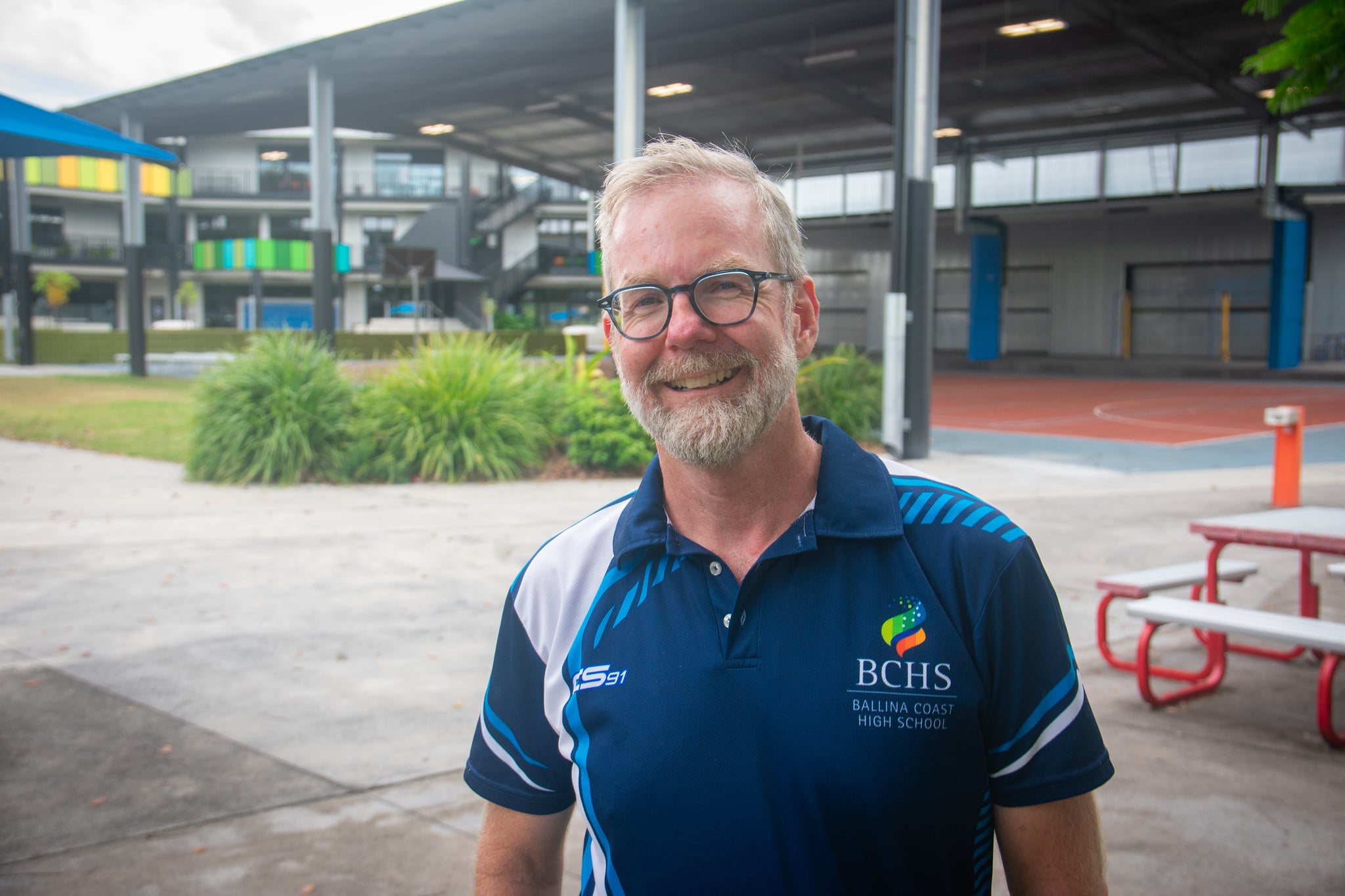
‘But until NASCA there was no real mechanism that we could find. We said this is a place we can try and pilot this program.’
Closing the Gap
School attendance and related issues have been a key part of Closing the Gap. As Mr Howes says, ‘Traditionally it’s been a massive, complex problem. But when you begin to see the impact of the program that Nasca brings, doing it hand in glove with the school, the kids suddenly are finding a place where they really belong.
‘They’ve got a voice and they have their identity, and they’ve got that cultural support as well as their learning support, so they get to walk both worlds. It’s incredibly rich and important.
‘With the girls, over 12 months we’ve seen a massive improvement in their attendance and their behaviour data and their completion of assessments, and that’s just in one year. So imagine that journey over a six year life cycle in the school?

‘We’re not just looking for completion rates around HSC, but just that sense of cultural pride, academic success – so much untapped potential.’
And is it a two way thing with the Indigenous kids and the rest of the school population?
‘Yes, and we are learning as we go from the oldest living culture in the world,’ said Mr Howes.
‘Why wouldn’t we be leaning into that and thinking in new ways about how we do education? There’s so much richness there that we’ve overlooked for hundreds of years.’
With Ballina Coast High School leading the way in this collaboration witth NASCA, The Echo will be checking in on this exciting project in another twelve months.
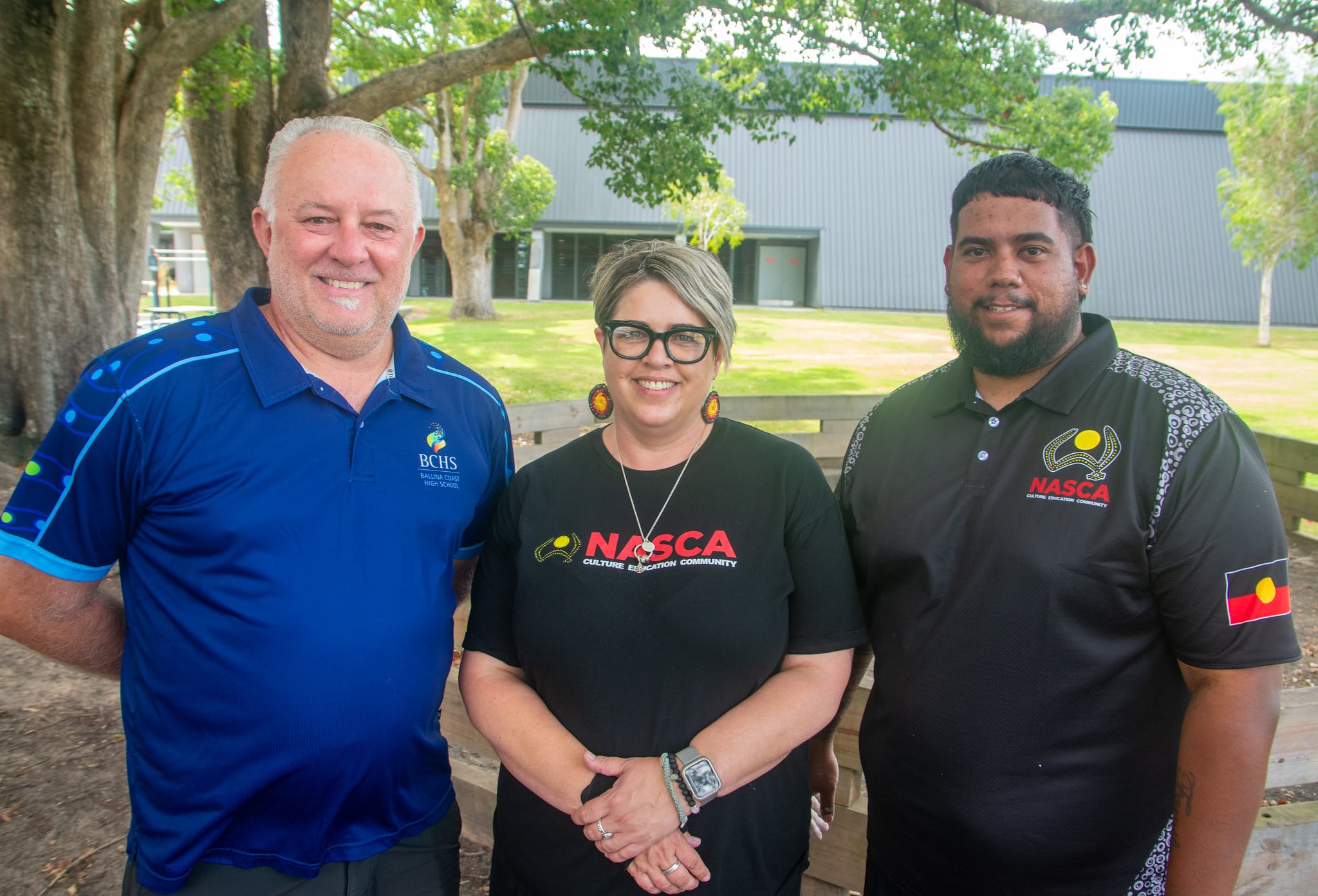
More photos from the launch:




 For four decades The Echo has printed the stories some people loved, some people hated, and some pretended not to read. If you want us to keep telling the truth, the real truth, not the sugar-coated version. We’ll need your support to keep the presses rolling.