


Never one to miss an opportunity to meet over coffee, I eagerly accepted an invitation to celebrate B Corp Month in March. Eagerly.
Then I realised I should do a little homework first – slightly less eagerly.
First things first: the ‘B’ in B Corp stands for ‘benefit for all.’ The idea is that businesses balance purpose and profit, considering the impacts of their decisions on workers, customers, communities and the environment.
B Corp certification
To achieve certification, companies go through a rigorous process overseen by the global non-profit B Lab.
Businesses must assess, and publicly report on how they operate – from governance and worker wellbeing to environmental practices and community impact. It is not a once-off exercise either. To keep the certification, companies must repeat the process every three years.
It was a bit of an eye-opener to see this level of scrutiny applied voluntarily by private companies.
Accredited Byron Shire businesses
Several businesses in the Byron Shire have already taken the step:
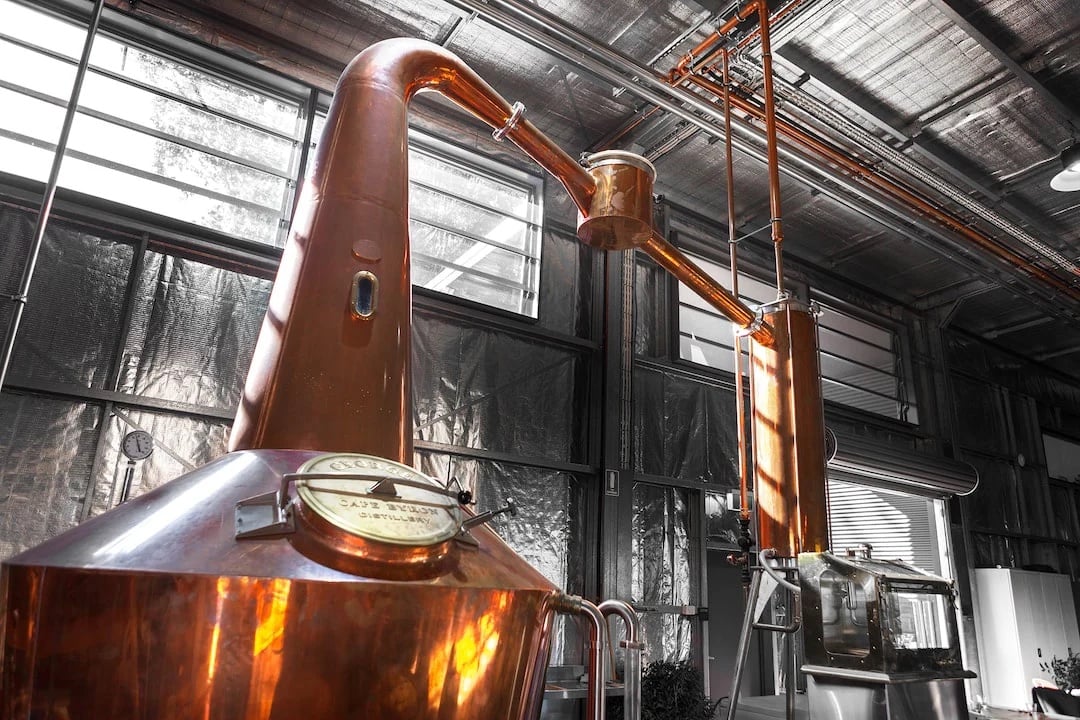
- Cape Byron Distillery, best known for Brookie’s Gin, became a certified B Corp in 2022.
- Stone & Wood Brewing was one of the early Australian breweries to gain certification.
- Sienna Byron Bay, a sustainable nail-polish brand, has been certified since 2019.
- Summerland Bank is another well-known regional example.
Local biz among highest per capita
At first glance, it might seem like there are only a handful of B Corps locally. But in fact, towns such as Byron Bay, Mullumbimby and Ballina have one of the highest concentrations of B Corps per capita in Australia.
That raises an interesting question: why here?
Part of the answer lies in the Northern Rivers’ long tradition of community enterprise, environmental awareness and locally-driven initiatives. Long before ‘purpose-driven business’ became fashionable, people here were already experimenting with new ways of balancing economic activity with environmental responsibility.
In many ways, B Corp certification simply formalises something that has been happening organically in this region for decades.
But the movement has not been without criticism.
Last year, some commentators argued that the B Corp assessment was too vague and insufficiently regulated, and that the standards were not high enough. B Lab was already working toward releasing a new set of standards, which opened for recertification on March 11. In an atmosphere of increasing social and environmental volatility, the new standards are designed to support the community to continue stepping up, while also offering B Corps a future-proofing framework.
That is probably healthy. If the idea is to hold companies to higher standards, the framework itself needs to keep evolving.
As Australia moves through the energy transition – shifting from fossil fuels to renewable energy, electrification and decentralised energy systems – regional communities will play an increasingly important role. Rooftop solar, community batteries, local micro-grids and new forms of energy sharing are already reshaping how energy is produced and used.
These changes are not just technological. They are economic and social as well.
The transition creates opportunities for local ownership, new business models and community participation in the energy system.
Regional economies like the Northern Rivers can become places where innovation happens – where businesses, households and community organisations work together to build resilient local systems.
In that context, the values behind B Corp; transparency, accountability, and balancing profit with wider community benefit, feel particularly relevant.
Certification itself may not be the end goal. But the conversation it encourages about what businesses are for, who they serve, and how they contribute to their communities is an important one.
And in a region already thinking seriously about climate action, community resilience and the future economy, that conversation is likely to keep growing.
So perhaps the real question is not whether every business should become a B Corp. It is whether more businesses, certified or not – are willing to operate as if community benefit matters just as much as profit.
Better Business Monthly Coffee Catch-up
The Better Business Monthly Coffee Catch-up for the Northern Rivers community organised by the B Local Northern Rivers team ([email protected]), brings together B Corps and B-curious businesses, and anyone interested in making business better for people and planet. You’ll find great people like Willem Overbosch from SDG Align, who helps organisations turn sustainability into practical action.
Anne Stuart, PhD is Adjunct Research Fellow, Griffith University.
 For four decades The Echo has printed the stories some people loved, some people hated, and some pretended not to read. If you want us to keep telling the truth, the real truth, not the sugar-coated version. We’ll need your support to keep the presses rolling.


