



A draft NSW government transport blueprint has warned that deep ‘transport disadvantage’ is leaving many North Coast residents struggling to access jobs, healthcare, and education without a private vehicle, widening the divide between those who can afford to drive and those who cannot.
The Draft North Coast Strategic Regional Integrated Transport Plan, released by Transport for NSW (TfNSW) for public exhibition, paints a stark picture of a region heavily reliant on cars, with around 93 per cent of residents currently commuting by private vehicle.
Poor public transport options
The report identifies Aboriginal communities, young people, older residents, and isolated rural towns as being disproportionately affected by poor public transport and limited travel options, warning that transport inequality is contributing to broader social and economic disadvantage across the region.
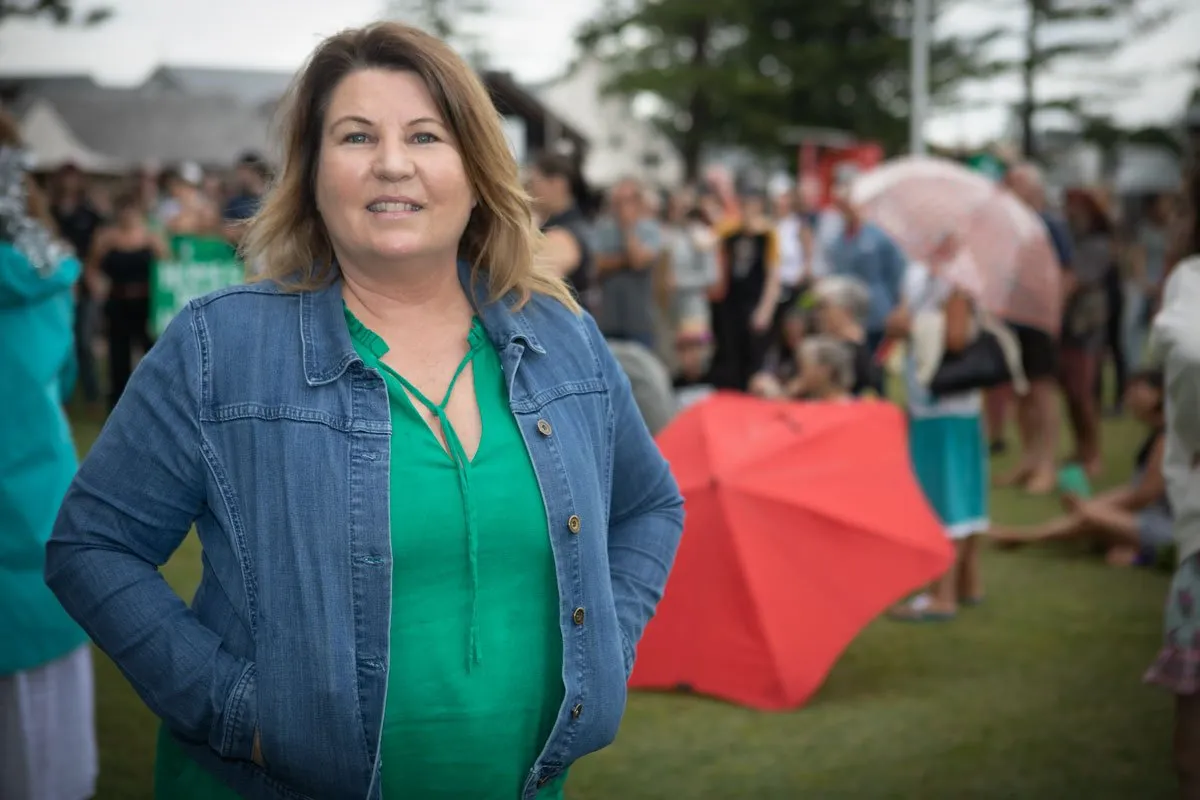
Ballina MP Tamara Smith said the problems outlined in the report reflected long-standing transport failures across the Northern Rivers.
‘On the Easter weekend we got a glimpse of how things could be in terms of public transport in our region because we got some of the Bluesfest money,’ Ms Smith said.
‘What we saw over Easter was just gorgeous. We had much more regular bus services across the region. But it’s not viable the rest of the time without that additional funding support.’
Ms Smith said poor public transport was particularly affecting young people, low-income residents, and Aboriginal communities, including those struggling to obtain a driver licence under NSW’s mandatory supervised driving requirements.
She said she had experienced the region’s transport shortcomings firsthand while raising her daughter in the Northern Rivers.
‘There were no buses. No options other than carpooling,’ she said.
Unrealistic bus travel times
The Greens MP also described carrying out her own ‘experiment’ by catching a commuter bus from Suffolk Park to Southern Cross University, a journey she said took one hour and 25 minutes compared to around 30 minutes by car.
‘There’s a lack of understanding on the part of the government about what would make the difference,’ Ms Smith said.
‘We are not being looked after in the way that we should.’
The government blueprint outlines a 20-year vision for transport across the North Coast, stretching from Tweed Heads to Port Macquarie, with a stronger emphasis on integrated public transport, walking and cycling infrastructure, climate resilience, and reducing dependence on private cars.
The strategy comes as Byron Shire Council prepares to publicly exhibit its own draft Byron Shire Integrated Transport Plan, which is intended to align with the broader regional blueprint.
A report to Byron Council’s Transport and Infrastructure Advisory Committee said the new local plan had been developed in response to ‘significant growth pressures, evolving government policies on climate and transport, and changing community expectations.’
The Byron plan proposes expanded public transport services, on-demand buses, regional cycle links, and upgrades to emergency access routes, while also identifying investigations into traffic improvements on Ewingsdale Road, Bangalow Road, and Mullumbimby Road.
More investment needed for change
Ms Smith welcomed the release of the draft regional strategy, but questioned whether it contained the scale of investment needed to significantly improve transport in the region.
‘I welcome any investment. It’s great to see that the government is looking into it but I don’t see anything that’s a game changer,’ she said.
‘We have a great transport minister in Jenny Aitchison, but I would just say, “Come and catch a bus around here and see what it’s like”.’
Ms Smith said even relatively modest improvements in weekend bus services between villages could have a major impact for both locals and visitors.
‘Our community would love it, and what a gift it would be for our young people and also to tourists,’ she said.
The state government is now calling on North Coast communities to have their say on the plan.
Community members can view the plan and provide feedback until Sunday, 14 June 2026 at www.haveyoursay.nsw.gov.au/sritp/north-coast.
 For four decades The Echo has printed the stories some people loved, some people hated, and some pretended not to read. If you want us to keep telling the truth, the real truth, not the sugar-coated version. We’ll need your support to keep the presses rolling.


