



This year’s Byron Writers Festival witnessed a remarkable lecture from the legendary and much-loved journalist Kerry O’Brien, now a Northern Rivers local, on ‘Lessons From History’.
It was standing room only, with more listeners outside beneath umbrellas, for the 2026 Thea Astley Address, which honours the prolific, multiple award-winning author’s memory.
As host Richard Flanagan reminded the audience at the Jonson Street Stage, Kerry O’Brien’s working life mirrored an extraordinary period of Australian history. ‘By his retirement in 2015, free-to-air television had begun its decline into the increasing irrelevance it now occupies in our culture, but over that half century in which politics and TV went hand in hand, Kerry became the guide to power that people trusted…
‘It was in his holding the dun-coloured party hacks and blathering blimps of power to account night after night on The 7.30 Report that endeared him and thrilled the nation and reminded us of what was right and what was wrong, what we should expect of our politicians, and where they had failed us.’
Richard Flanagan noted that following his retirement from television, Kerry O’Brien had spent the best part of 2023 explaining the Voice around the country in the lead-up to the referendum, together with Thomas Mayo, alas to no avail.
He suggested that what had always set Kerry’s work apart was his unusual moral clarity. ‘It was this quality, too often absent in journalism, coupled to his immense experience, his journalism spanning the dying years of Menzies conservatism and the hope of Whitlam, through to the dying years of the Labor Party as a progressive force, that allowed Kerry to expose the truth.’
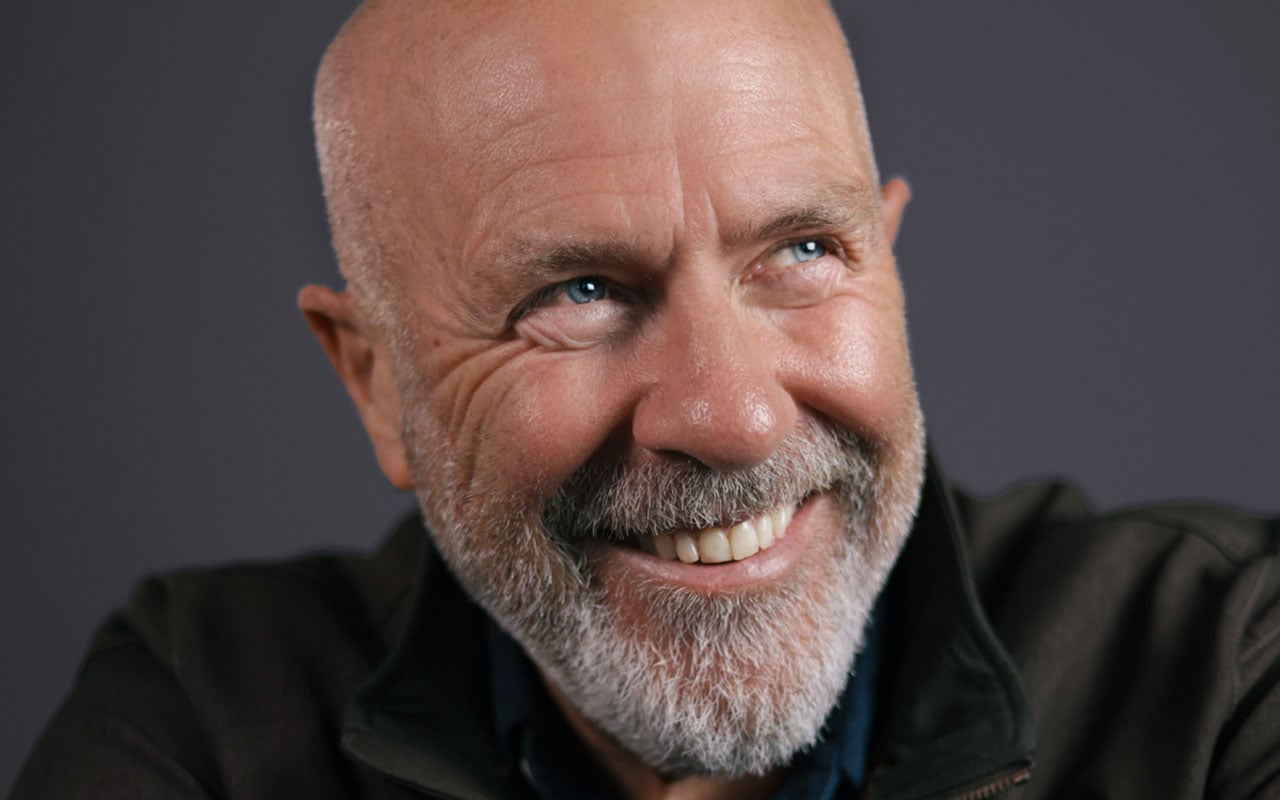
Mr Flanagan described the lecture the audience was about to hear as a cry from Kerry O’Brien’s heart. ‘He is looking at the profound historic changes that have reshaped the world in the last fifty years and weathered our country…
‘[This] is a great roar of rage and defiance about our world and where it is and where it needs to go. And it is all anchored in the experience of his remarkable life.’
Walking on stilts
Kerry O’Brien began his address humbled by this introduction, saying ‘I feel like I’m walking on stilts, and thank you also to the wonderful Jessica, Alice, and her team for inviting me to deliver this lecture, and congratulations to one of Australia’s great festivals for the enduring cultural and intellectual gift it has given this region for an uninterrupted thirty years.’
He said Thea Astley’s importance in Australian literature, quite apart from a style that challenged the norms of her time, ‘was that of a talented, evocative, and perceptive female writer through the second half of the last century, who didn’t mince her words in speaking truth that much of Australia was trying to ignore.
‘She was drawn to outsiders in small communities, but there were big recurring themes around racism and prejudice, greed and hypocrisy, the dominion of men, and the failure of institutions.
‘There’s a particular fury in the way she wrote about injustice. Thea Ashley once told an aspiring young writer, “To be a writer has nothing to do with pen and paper. To be a writer, you have to have the eyes to see about you what others don’t see, the ears to hear what’s not said, but most importantly, the bloody heart to cope with the immensity of it all.”
‘And having the bloody heart to cope with the immensity of it all is what I want to talk about today.’
Mr O’Brien spoke about the profound impact of digitisation, and the other great disruptor of the last fifty years, ‘inelegantly identified as neoliberalism… The ideology that has driven and coerced government as we once knew it to make itself smaller, privatise its services, nobble the trade unions – which have been one of humanity’s great civilising forces – and cede the dominant role in determining the kind of society we want to be to the free market and the alleged freedom of the individual, rather than the imperative of the common good.’
As for those who continue to argue that the digital revolution will create more jobs than it wipes out, and make our lives better, Kerry O’Brien said, ‘A: they’re engaging in guesswork, not facts. And B: the machinery of the industrial revolution never threatened to replicate, even replace human intelligence.
‘Analogies between the printing press and the explosion of social media on the internet can only be taken so far. The impact of the printing press evolved over centuries. Social media has been rapid, personalised, global, more accessible, largely ungoverned, and is far more widely open to toxic manipulation and the perpetration of evil.’
He suggested that democracy was being fundamentally corrupted before our eyes, and the government response over time has ‘often been acquiescent, often inconsistent, and often inadequate. The world has always been subject to change, but never this quickly, this intensely…’
‘Have we really reached the point in our democracies where people are driven to vote for a Trump, a Farage, or a Hanson, all using the same shallow right-wing populist formula: fear, prejudice, playing loose with the truth, and resentment? Too many people, driven by frustration, powerlessness, and blind anger, just want to punish mainstream politicians, even if they’re going to blow themselves up in the process.’
Mr O’Brien said this wasn’t like the Cuban Missile Crisis or a global financial crisis. ‘It’s about the accumulated coincidence of things that have come together over a long period to undermine and seriously weaken our capacity to resolve the very existential policy challenges we’re facing.’

Digital revolution
Kerry O’Brien said that while neoliberalism might have ‘crept up on us’ here in Australia, he had been reporting on the digital transformation since 1972, when he did a five part series on where computers were taking society.
‘The one element from that series that I have never forgotten was the concern expressed by a Sydney sociologist who had been a computer programmer that the human capacity to foresee and plan effectively over time for the societal impact of computers, not least on the future of work, would be woefully inadequate, that we could end up with a global workforce divided between the workers with jobs who would come to resent the many more drones, who in turn would have more time on their hands, whether they liked it or not; that those who controlled the technology would hold the reins of power.
‘How has it worked out so far? The echo of those words has stayed with me across the decades of constant and intense change.’
‘No one wants to be a Jeremiah about this extraordinary period of evolution. It has already delivered massive benefits, but there wasn’t just the opportunity, but a deep responsibility for governments, even back then, to sustain some mechanism for ongoing intelligent vigilance about where digitisation was heading, and engaging the public in exploring ways to ensure we directed and controlled the technology, rather than have it control us.’
He noted that in the intervening years, big tech in America has pretty much had its way. ‘And what do we have now? A handful of ridiculously wealthy, often arrogant tech oligarchs ruling the roost, monetising our privacy, stealing our creative output… Not everyone’s a villain in this game, of course, but self-interest is writ large.’
Friedman and Hayek
Kerry O’Brien then moved on to the devastating legacy of two economists, Friedrich Hayek and Milton Friedman, whose ideas were sponsored initially by a handful of extremely rich and powerful American men, and then adopted by the most dominant and influential politicians of their era, Ronald Reagan and Margaret Thatcher.
‘It was called neoliberalism, but was really just a dressed-up version of the old laissez-faire capitalism. Give us, the people of money and power… a free hand to make ourselves richer, with as little regulation as possible, sitting on trade unions, no bleeding heart politicians to get in the way, and magically everyone will benefit.
‘Their idea of democracy largely meant democracy for them. Their idea of freedom meant freedom for them. When they railed against elites, they meant the elites who didn’t agree with them, not the elitism they practiced themselves. State welfare was anathema to their idea of democracy because they said it would inevitably lead to communism.
‘Their formula: shrink government, cut services, sell off public assets, wage war on unions, support private schools over public, indeed, narrow the frame for what public schools taught to better serve corporate interests, deregulate the economy, and ideally, with some lip service to competition, let the market rip.’
Mr O’Brien talked about observing the ugly excesses of the free market, and Reagan in particular, when he was working in the USA as a foreign correspondent in the 1980s.
‘I was genuinely shocked to hear the hostility and the personal invective Reagan directed at America’s public school system, and in particular at its teachers. Like Trump, decades later, he too wanted to completely dismantle the federal Department of Education. He also played the race card in the way he sought to claim widespread welfare fraud to assist his justification for big cuts to welfare programs.’
Take no prisoners
As Hayek and Friedman’s ideas took root around the world, Kerry O’Brien said he became very familiar with the ‘take no prisoners’ version of neoliberalism as it became the system of government in Britain under Margaret Thatcher, influencing Australia in turn.
‘This was a prime minister who declared there was no such thing as society, there were only individual men and women whose job it was to look after themselves. A Guardian graph on household poverty under Thatcher showed an increase from 13 per cent of households to 22 per cent. That’s more than one in five households in poverty.
‘In 1988… I interviewed Thatcher on a visit to Australia about the impact of their ideological footprint on Britain. As the policies of the past eight years had sunk in, England had developed a sharp economic and social divide between north and south, with the south flourishing as the center of a new information economy, and the north sinking into a deep trough with the brutal decline of traditional manufacturing job losses.’

As Mr O’Brien remembered, Margaret Thatcher walked out of this interview when she ‘denied the undeniable about the north-south divide.’
He next spoke about the influence of the ultra-conservative think tank The Heritage Foundation on the USA, which has influenced and even written American government policy, from Reagan right up to Trump, and the Koch brothers, two industrialist billionaires who have arguably exercised more political power than any elected politician in modern history.
‘One strategy that’s been enhanced through the decades in America is called astroturfing, likened to a fake lawn or synthetic grass on a tennis court, referring to campaigns or movements falsely presented as spontaneous grassroots groundswell to influence policy debates.’ He talked about the role of this technique in spawning the Tea Party during the Obama era, pushing the Republican Party even further to the right.
‘With the help of AI today, fake identities can be manufactured by the tens of thousands. It’s instructive how much neoliberal agendas have been driven over the decades by the exercise of private power and money – what George Monbiot calls the invisible doctrine, and what the progressive economist Joseph Stiglitz describes as a jungle where only power matters. Is that us?’
‘The great irony in the way neoliberalism was perpetuated globally is that it wasn’t another conservative government that was next to pick up the baton from Reagan and Thatcher, it was Bob Hawke and Paul Keating here in Australia.’
Kerry O’Brien then went on to dissect in detail where that led, from housing to education, gambling and back to technology, despairing at the malaise of Labor despite their massive majority.
Progressive independence, and independents
So what are the chances Australia could reverse this trend and breathe fresh life into its democracy? Where does hope lie?
Mr O’Brien suggested we could take heart in the fact that we are not American – not yet. ‘We have been moving down the American road since the war. We’ve had overwhelming exposure to American culture through film, television, books, and music, to the narratives America has constructed about itself. Our mainstream political parties have borrowed shamelessly from theirs, but we are not America.
‘We may have turned our back on the idea of a republic and signed up to war, but we still have some chance of forging our own path in our own region in our own way. Unlike America, the structure of our democracy is more robust. We have compulsory voting, which has made it so much harder to corrupt our electoral system. We have a principle of one vote, one value in this country, no matter how humble the circumstance of the voter, which rules out gerrymanders.
‘Our electoral commission is an independent statutory authority, which seriously reduces the scope for political interference. But these things are nothing to be smug about. They are not enshrined in the Constitution, they were legislated, and they can be undone.’
As for the media, Kerry O’Brien said we should ‘look hard at the people and organisations that attack the ABC and SBS. Call out their motives. Don’t give up on the politicians. Don’t rely on them, but don’t give up on them. And when they let us down, don’t underestimate our capacity within communities to change the landscape for ourselves.
‘That’s how the Greens were born. That’s how Cathy McGowan led a community revolt in the Victorian regional seat of Indi after 74 years of Liberal National representation, initially through something as humble and basic as a series of kitchen table conversations, and went to Canberra as an independent. That’s how Zali Steggall led a revolt against Tony Abbott’s extreme evangelistic strand of liberalism in the Sydney lower North Shore seat of Warringah, and is now in her third term, increasing her majority each time.
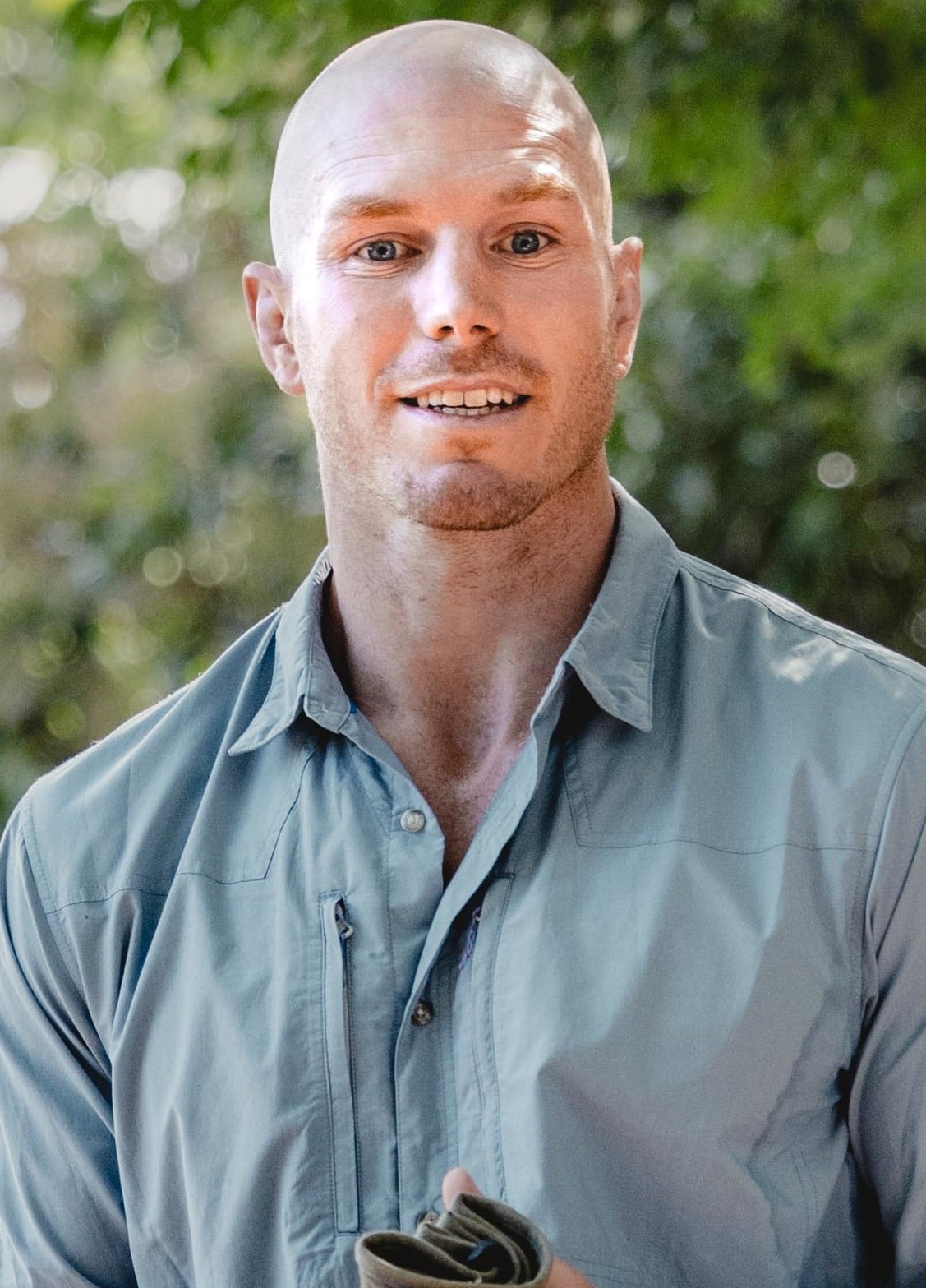
‘That’s how David Pocock, a born leader with clearly articulated values around integrity in public office, took on both major parties in the ACT, backed by more than 1,000 volunteers, becoming the first independent to win an ACT Senate seat in its near 50-year history, and is now in his second term with an increased majority. That’s also why we now have the teals.
‘Australia is on the way to entrenching a multi-party system of government. It is possible to change the system if it’s not working…
‘I refuse point blank to believe that we have no hope,’ he said. ‘I think it would be utterly tragic if we surrendered to a sense of defeatism. I think defeatism is just about the worst enemy of all.
‘I now have eight grandchildren. Two have been born in the last four years. I revel in their existence, but I think it’s shallow in the extreme for people of the generations represented in this room to say, “I have faith in our children to fix it, or in our grandchildren to fix it. The problem is here and now, and it is here and now that we should be fixing it.
I believe the spirit is in us to do it,’ said Kerry O’Brien, concluding his speech. ‘We just have to find it.’
 For four decades The Echo has printed the stories some people loved, some people hated, and some pretended not to read. If you want us to keep telling the truth, the real truth, not the sugar-coated version. We’ll need your support to keep the presses rolling.


