


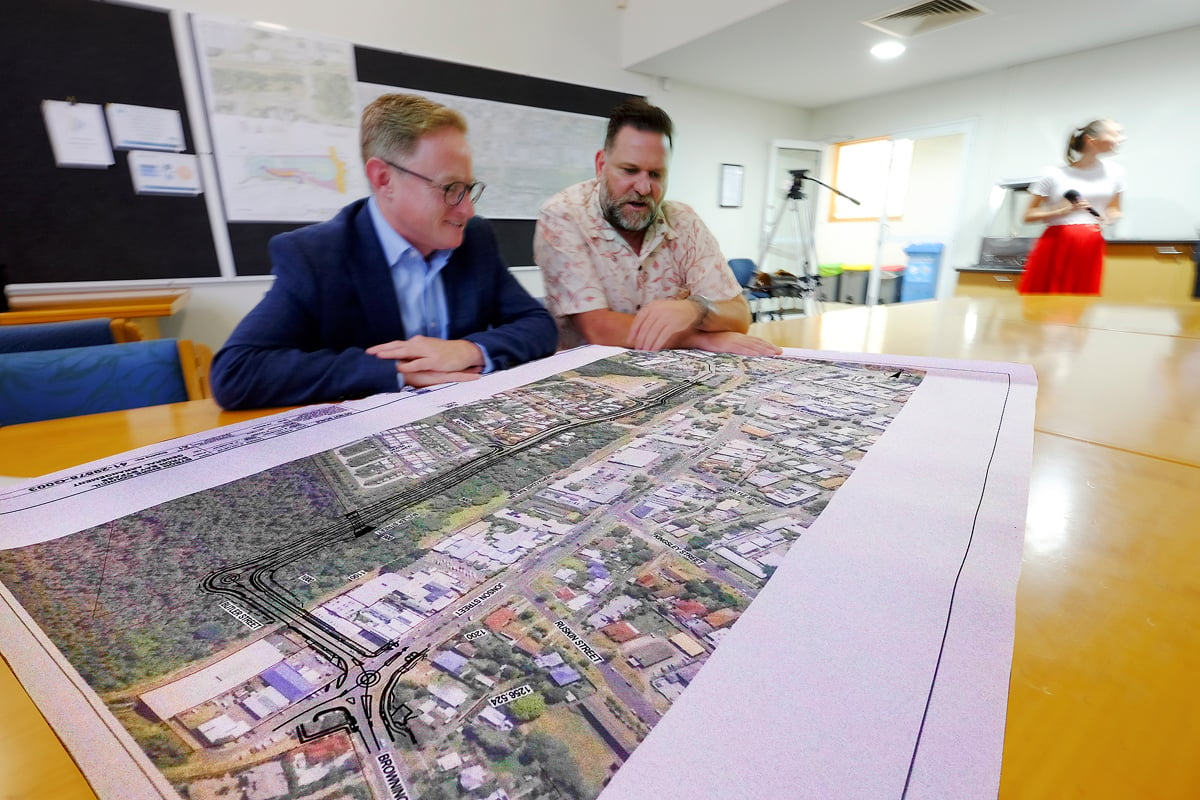
The recent Byron bypass funding announcement by the NSW Nationals was enthusiastically embraced by Greens mayor Simon Richardson, despite it being estimated to only alleviate traffic by around 20 per cent.
Yet closer examination of the Biodiversity Offsets Scheme that Council plans use to clear native vegetation at the southern end of Butler Street for the project has been criticised by legal public interest NGO, the NSW Environmental Defenders Office (EDO).
The Biodiversity Offsets Scheme is defined under the Biodiversity Conservation Act 2016. That Act and others like it were examined by the NSW EDO before being introduced on August 25, 2017 by the NSW Liberal-National Coalition.
The laws replaced the previous BioBanking Scheme and other Acts, including the Native Vegetation Act 2003 and the Environmental Outcomes Assessment Methodology (EOAM).
That EOAM, according to the EDO, was ‘world class.’
Now there are ‘self-assessable codes, exemptions and discretionary clearing,’ according to EDO.
According to the office of environment and heritage’s (OEH) website, ‘The [Biodiversity Conservation Act 2016] is a key pillar of the NSW government’s framework for biodiversity assessment and management, together with the land management framework established in the Local Land Services Act 2013 (as amended by the Local Land Services Amendment Act 2016).’
‘The Biodiversity Conservation Act 2016, together with the Biodiversity Conservation Regulation 2017, outlines the framework for addressing impacts on biodiversity from development and clearing. It establishes a framework to avoid, minimise, and offset impacts on biodiversity from development through the Biodiversity Offsets Scheme.’
So how does it work?
According to OEH’s website, a proponent wishing to apply for the Biodiversity Offsets Scheme ‘must retain an accredited assessor’ and then apply the Biodiversity Assessment Method (BAM) to the proposal.
‘After applying the BAM, the accredited person will prepare a Biodiversity Assessment Report (BAR) that sets out how the proponent has applied steps to avoid and minimise impacts on biodiversity, and setting out the number and type of ecosystem and species credits required to offset residual impacts of the activity on biodiversity (‘credit obligation’). In the application for the development or clearing, the proponent can propose to meet the credit obligation using the variation rules rather than the like-for-like rules. The proponent must demonstrate that they have been unable to find like-for-like after completing required reasonable steps. The proponent may also seek to use “biodiversity conservation actions” as an alternative to retiring credits.’
Yet an analysis by the NSW EDO was critical of the Biodiversity Offsets Scheme methodology and its potential to ensure ecological safeguards.
Problematic
In their 2016 submission prior to the environmental law overhaul, the NSW EDO said, ‘The proposed scheme is heavily reliant on “offsetting” biodiversity impacts (by managing other areas for biodiversity) rather than preventing the impacts, and adopts the standards of the problematic Major Projects Offsets Policy.’
‘The Biodiversity Assessment Methodology (BAM) is therefore significantly weakened; for example, direct “like-for-like” offsetting requirements are relaxed and can be circumvented.
‘The option to pay money in lieu of an actual offset will result in net loss of certain threatened species and communities. Offset areas and set-asides may be further offset later on rather than actually protected in perpetuity.’
‘The proposed regime places almost complete reliance on political, budgetary decisions (which may be short term) to achieve biodiversity gains, rather than on protections in the Bill to prevent continued biodiversity decline.
‘The NSW government has been unable to estimate how much landclearing will occur under the new relaxed system – in particular, how much clearing will occur under the new self-assessable codes.’
 For four decades The Echo has printed the stories some people loved, some people hated, and some pretended not to read. If you want us to keep telling the truth, the real truth, not the sugar-coated version. We’ll need your support to keep the presses rolling.