



With heavy rain falling across the Northern Rivers this week, the risks faced by people living in floodplain areas are again coming into focus.
This week Echonetdaily spoke to Dr Nathan Kesteven, President of Whian Whian Landcare, about the potential of the Northern Rivers Watershed Initiative to mitigate flooding and also improve the health of local rivers.
He explained that the initiative has been in the works since the Lismore floods of 2017, when Landcare teamed up with Rous County Council and Southern Cross University to seek money from the Snowy Hydro Fund to support a catchment-wide rehabilitation scheme.
One year later, the result was a detailed discussion paper, published by Rous, of the Northern Rivers Watershed Initiative.
Dr Kesteven said the Initiative was ‘designed to rehabilitate the Richmond catchment, but also the Tweed and Brunswick to some degree, with the aim of both mitigating flood peaks and flood damage, and at the same time rehabilitate the health of the river, all the way from the top of the catchment to the very bottom.’
What works and what doesn’t?
At their last meeting Rous County Council voted unanimously to put $5,000 towards the next stage of the scheme (plus $2,000 from local Landcare groups), to conduct a literature review via SCU. This will be conducted by Dr Mitchell Kirby.

‘It’s to look at what’s been done in other places, to see what works, and to learn what effect you can get from nature-based flood mitigation works,’ said Dr Kesteven.
‘That means things like riparian restoration (tree-planting on banks and waterways), wetland restoration, and small-scale engineering works, which could include putting in contour banks, small dams, and removal of hard fixtures which could affect the flow of the water.
‘The main aim of it is to reduce the peaks of floods,’ he said. ‘Tree-planting along rivers and streams is one of the biggest things, because that slows the water, and slowing the water is what decreases the flood peak. A 10-15% reduction could be enough to not overtop the Lismore Levee, for example.’
The literature review is going to start soon, and should be completed in a few months.
Lismore floodplain risk

Meanwhile, Lismore City Council is currently seeking feedback on its Lismore Floodplain Risk Management Study.
Dr Kesteven and others involved with the Watershed Initiative would like the public to ask the Lismore Floodplain Committee to seriously consider natural floodplain mitigation works as an option, ‘because that’s going to give us the best value for money.’
Submissions close at midnight on 13 January 2021 via this link.
Local Landcare groups are requesting respondents to answer ‘Supportive’ to question 2, recommendation 3; and ‘I agree’ to question 4: ‘I support the further investigation of nature-based flood mitigation solutions in the catchments above Lismore.
Dr Kesteven said, ‘Now that the Dunoon Dam has been stopped for the moment, there may be a chance to work with community groups to push for the Watershed Initiative, to make it come to fruition.
‘The budget is looking like it will cost $120m, but the vast bulk of the money will go to local landowners and local people to do work on the ground, which is much better than paying some construction company to build a concrete wall.’
He says there is support from local MPs Tamara Smith and Janelle Saffin so far, with broad-based support from councils across the area, from Kyogle to Ballina.
The view from Rous County Council
Rous Chair Keith Williams is also an enthusiastic supporter of the Northern Rivers Watershed Initiative.
He described it as ‘a plan to re-engineer the way we think about flooding and water within the whole Northern Rivers, but specifically within the Wilsons/Richmond system.
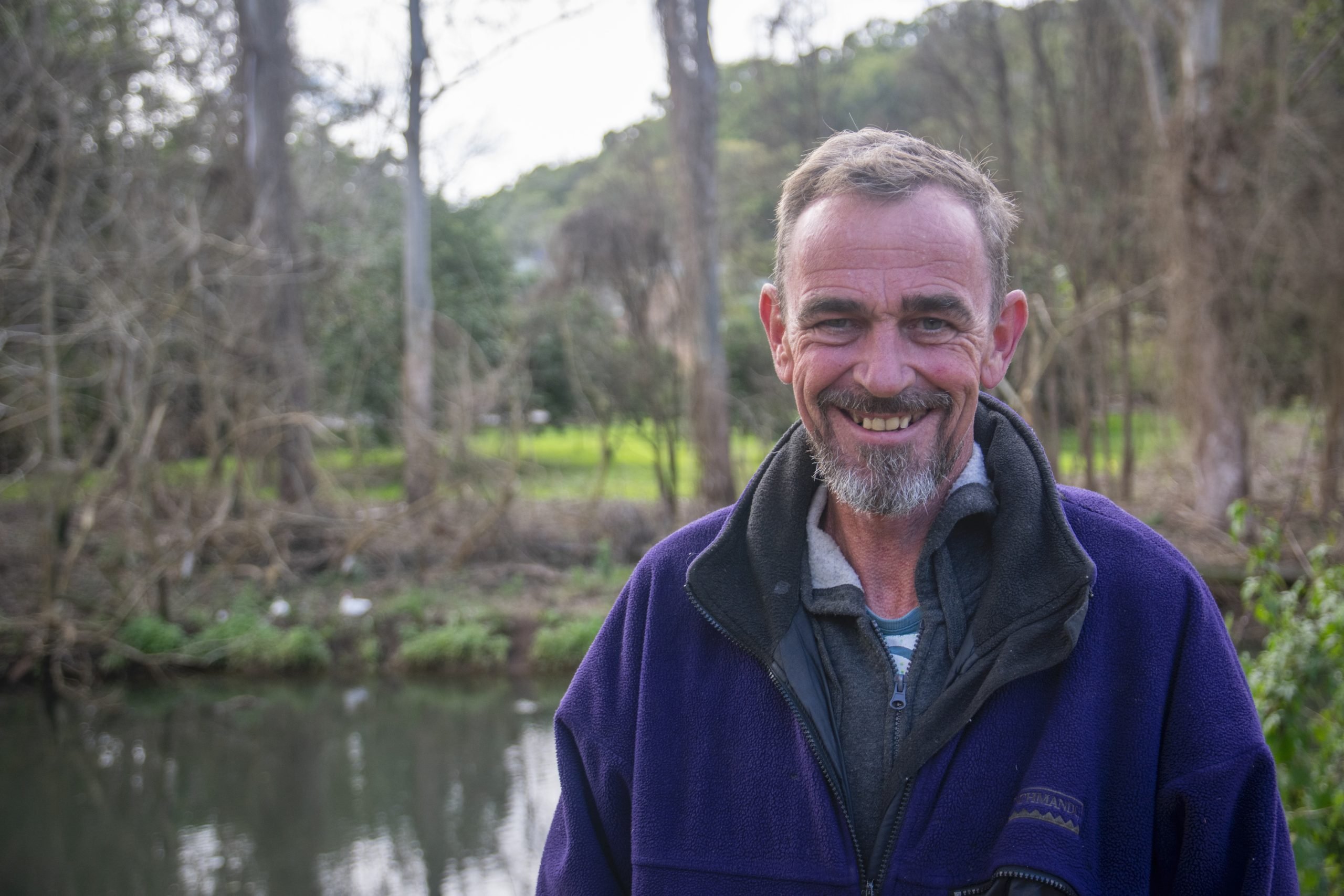
‘At the moment our whole system is designed to get water out of places as fast as we can, and get it downstream somewhere else. It ends up not working,’ he told Echonetdaily.
‘There’s some good work coming out internationally now about natural flood mitigation; being able to quantify what the effects of being able to restore natural vegetation on creek banks does, re-establishing wetlands, those kinds of things.
‘There’s some work particularly in Europe now about how you can measure that, and the resulting flood immunity benefit,’ said Mr Williams.
‘So when we start talking about flooding in Lismore, which is a major issue, 2017 $300m worth of flood damage… People go all right, let’s build a big channel around the outside of Lismore, and there’s some work happening now, an $8 million project, just to clean up an existing flood channel and improve it.
‘But then there’s the idea to build a $200m version of a channel further out, that’s even bigger, that’ll divert all that water that’s coming from the northwest and hitting Lismore. And that won’t work – the pinch point’s further down the river, and it will just rush the water further south, and it will build back up and still flood.’
Doing things differently
Chair Keith Williams said, ‘The idea with this is we approach water differently, so we start talking about soils, we start talking about carbon in soils, we start talking about water storage in soils, we start talking about contour banks on farms, and vegetating them; slowing water down within the catchment.

‘The whole idea becomes retain water in the catchment, respond to climate change by retaining water in the catchment. You don’t deal with climate change and the risk of flood by just getting the water away quickly, because you just dry out the catchment more.’
He said that while there has been a focus on the west of the catchment and Kyogle, ‘Two thirds of Byron Shire is actually part of the Wilsons River system.
‘Most people don’t realise it’s only Brunswick River and Belongil and Tallows that are actually flowing out to sea. The rest are all flowing west and are all part of this system.
‘The idea here is that we can improve river health, deal with flooding issues on the floodplain, and start to inoculate from impacts of climate change, that’s the Watershed Initiative.’
Time to step up
Chair Williams said that with unanimous support from Rous and the Joint Organisation of local councils, it’s now time for support at a state level ‘to really fix the river’.

According to Dr Nathan Kesteven, ‘The Catchment Initiative is potentially amazing. It’s a chance to do something on a catchment-wide scale, that’s never been done before.
‘You would offer landowners fencing off creeks, and tree-planting, for free, rather than them having to contribute to it, so that’s a really important thing.
‘A lot of people baulk at it if they’re expecting to do the work, or they’re too busy, or they’re not into it, but in this case people would come in and do the work properly, and add watering points for stock and so on,’ he said.
‘This is the kind of thing that Landcare does very well on small scale, but to take it across the whole catchment and rehabilitate what was once an amazing eco-system. We could end up with clean water in the Wilson River, like it used to be.’
 For four decades The Echo has printed the stories some people loved, some people hated, and some pretended not to read. If you want us to keep telling the truth, the real truth, not the sugar-coated version. We’ll need your support to keep the presses rolling.