

13.2 C
Byron Shire
August 29, 2026

Native forest logging increases fire risk

Latest News

Greens urged to back pathway to end native forest logging

Some of NSW’s most respected and long-standing forest campaigners and scientists have today urged the Greens not to support the Nationals' attempt to disallow the Improved Native Forest Management (INFM) method.

Other News

Rail trail future

The Northern Rivers Rail Trail (NRRT) represents one of the most exciting opportunities our region has seen in decades....

Ballina Council makes decision on Ross Lane

With the absence of all four of its progressive councillors for various reasons, Ballina Council pushed ahead with its agenda at yesterday's monthly meeting, including a decision which is likely to close Ross Lane for months while the road is upgraded.

Brisbane band awake in Byron

Don’t let the name fool you – Vancouver Sleep Clinic (VSC), who are returning for their first Australian show in half a decade, are not Canadian!

Editorial – Drug-checking saves lives

No-one would tolerate killing six teenagers with methanol-laced alcohol in Australia, as occurred recently in Laos. But in Australia, you can’t check your drugs to see if they’re safe.

Artist attempts the impossible at Lismore gallery

How do you grab hold of a horizon? Artist Lottie Consalvo has decided to have a crack.

Safer roads for North Coast

Richmond MP Justine Elliot has announced that the Albanese government is delivering more than $4.6 million in federal funding from the 2026-27 Black Spot Program to improve road safety at four sites across the North Coast.

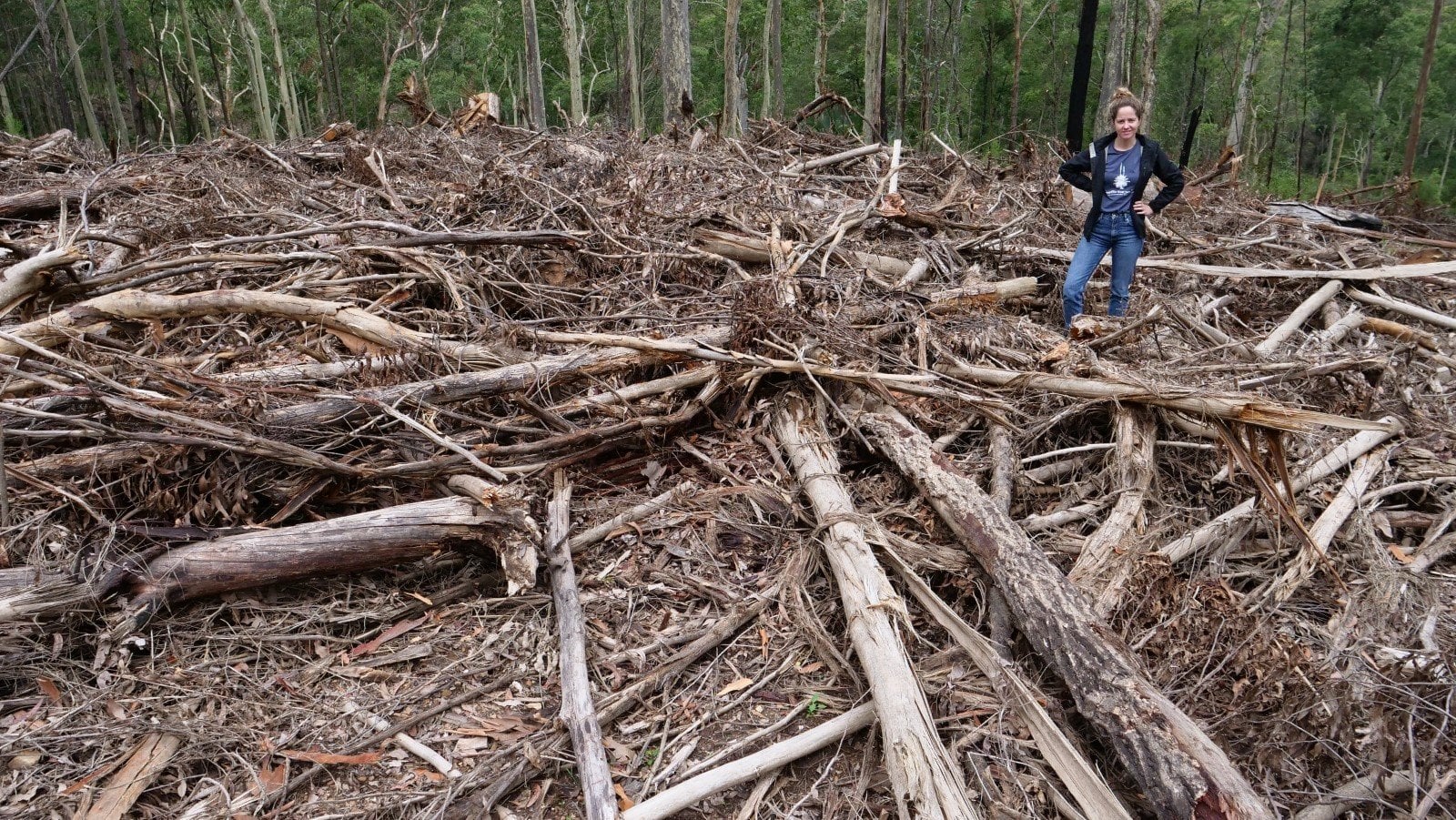
NCC CEO Jacqui Mumford demonstrating the huge amount of dry, flammable wood left by after logging has taken place. Photo supplied.

With fire season well and truly here, the Nature Conservation Council of NSW has today urged members of the NSW Parliament to prioritise safety and security by ending the fire risk being caused by native forest logging.

NCC CEO Jacqui Mumford said, ‘Across NSW state forest is being logged to the edge of towns. This is dramatically increasing the bushfire risk these communities face and should be stopped as a matter of priority.

‘Right now logging is occurring within within 6km of Lansdowne (mid-north coast), 15km of Batemans Bay (south coast) and there are plans to log forest right on the border of Nambucca Heads (mid north coast) within the next 6 months,’ she said.

‘Operations have just been completed in forests 4km from Bulahdelah (mid-north coast) and 5km from Ourimbah (central coast). We are calling on members of the NSW Parliament to take an important step to protect the community and the environment from the risk of bushfires by ending native forest logging.’

Dying out the forests – Logged forests have a dramatic reduction in canopy coverage and non-eucalypt species, creating creates a much more flammable section of forest. Photo David Gallan.

Research unequivocal

The NCC says extensive, peer reviewed research has found that logged forest was more likely to have burnt, and at a higher severity, during the 2019-20 bushfires than unlogged forests.

Logging produces forests that are more likely to burn because:

  • It increased the amount of sunlight and wind that can enter and dry out the soil and understory. This promotes the growth of more drought-tolerant and fire prone species such a eucalypts.
  • Less than 40 per cent of a logged tree is removed from a site – the rest is left on the ground or in piles that dry out and increase the severity and impact of a fire.
  • The vegetation that regrows after logging has substantially more flammable branches close to the ground, creating a vertical ladder of fuel which will allow all available vegetation to burn, and at a higher temperature.
  • The crown fires that occur due to this vertical ladder are much more difficult to control, spread more quickly, and embers are much more easily transported by wind to start new spot fires.
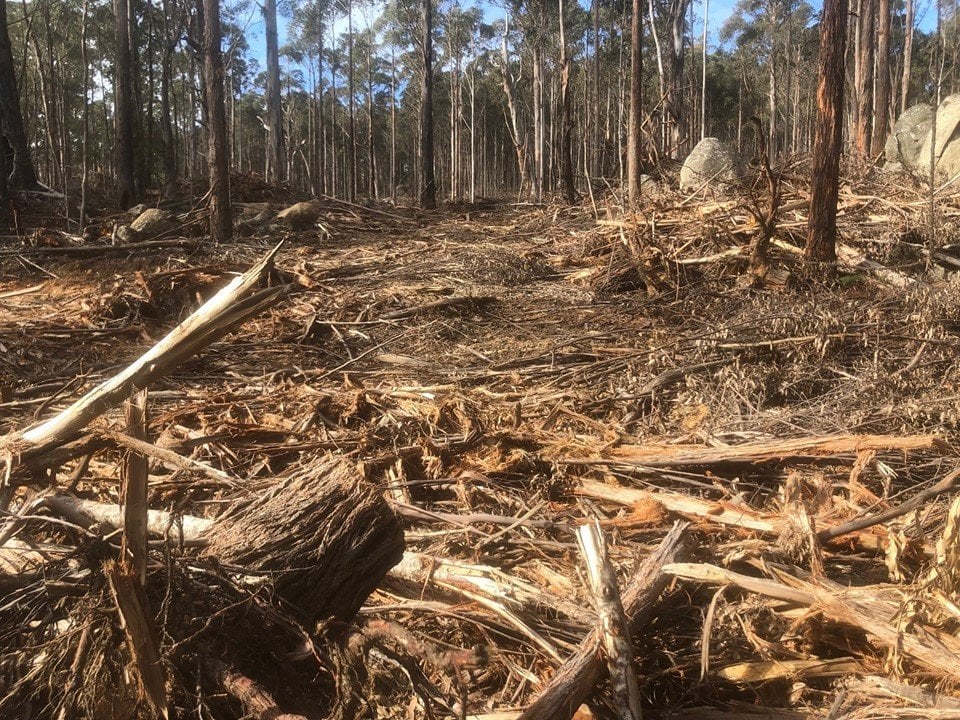
The leftover timber after a forest has been logged. Photo supplied.

Logging makes bushfires worse

In a review of the literature Professor David Lindenmayer concluded, ‘Native forest logging makes bushfires worse – and to say otherwise ignores the facts.

‘Every empirical analysis so far shows logging eucalypt forests makes them far more likely to experience crown fire,’ he said.

‘Research shows forests became dramatically less likely to burn when they mature after a few decades. Mature forests are also less likely to carry fire into the tree tops.’

NCC CEO Jacqui Mumford added, ‘With the extreme fire risk we are experiencing as we enter a period of El Nino drought, we need to do everything we can to increase safety and security and reduce bushfires.

‘All the evidence we have shows that disturbed, younger forests that have been logged are more likely to burn, and do so more intensely. In contrast, older, undisturbed forests are shadier, wetter, and have taller trees leading them to be less likely to burn, and when they do they burn slower and cooler.’



For four decades The Echo has printed the stories some people loved, some people hated, and some pretended not to read. If you want us to keep telling the truth, the real truth, not the sugar-coated version. We’ll need your support to keep the presses rolling.

If you are a local business owner help us and in turn we help you. All The Echo asks for is advertising, not a free ride. It is every advert in The Echo and on www.echo.net.au, which creates the space for all the stories and coverage of community events, happenings and concerns.

If you are a reader you can become a sponsor of The Echo. Your support keeps the us independent.

Even a small one-off or regular donation from you will help keep the echo’s independent voice alive and strong.

Support Us

Become one of the supporters who helps keep independent, local journalism alive in the Byron Shire by contributing anything from as little as the cost of a coffee each month.

You're Wonderful, Thank you for supporting independent journalism in the Byron Shire

You’re supporting The Echo, thank you

Your contribution is keeping independent, local journalism alive in the Northern Rivers.

Because of supporters like you, we can keep every story free for everyone — no paywall, no exceptions. Your money goes directly to funding our newsroom of 40-odd local workers covering the stories that matter to this community.

Tell us what you think, give us your opinion

The Echo loves your letters and comments and is proud to provide a community forum on the issues that matter most to our readers and the people of the NSW north coast. So don’t be a passive reader, email us your epistles at editor@echo.net.au.

The letters deadline for The Echo is noon Friday. Letters longer than 200 words may be cut. The publication of letters is at the discretion of the letters editor. Please remember to include your full name, address and telephone number.

Online comments are no longer available.

Ballina Council makes decision on Ross Lane

With the absence of all four of its progressive councillors for various reasons, Ballina Council pushed ahead with its agenda at yesterday's monthly meeting, including a decision which is likely to close Ross Lane for months while the road is upgraded.

Mullumbimby puts new governance models first, and now wants to build it

Imagine Northern Rivers says Mullumbimby is the only community across the region to rank new models of governance and decision-making as the number one element of its preferred future, and last week locals gathered to work out how to make it real.

Appeal to locate man missing from Broadwater

Police are appealing for public assistance to help locate a local missing man.

Katie Milne responds to Tweed’s draft housing and employment strategy

The former mayor of Tweed Shire Council, Kate Milne, has shared her submission to Tweed's Draft Growth Management Housing & Employment Strategy.

