

20.3 C
Byron Shire
October 20, 2026

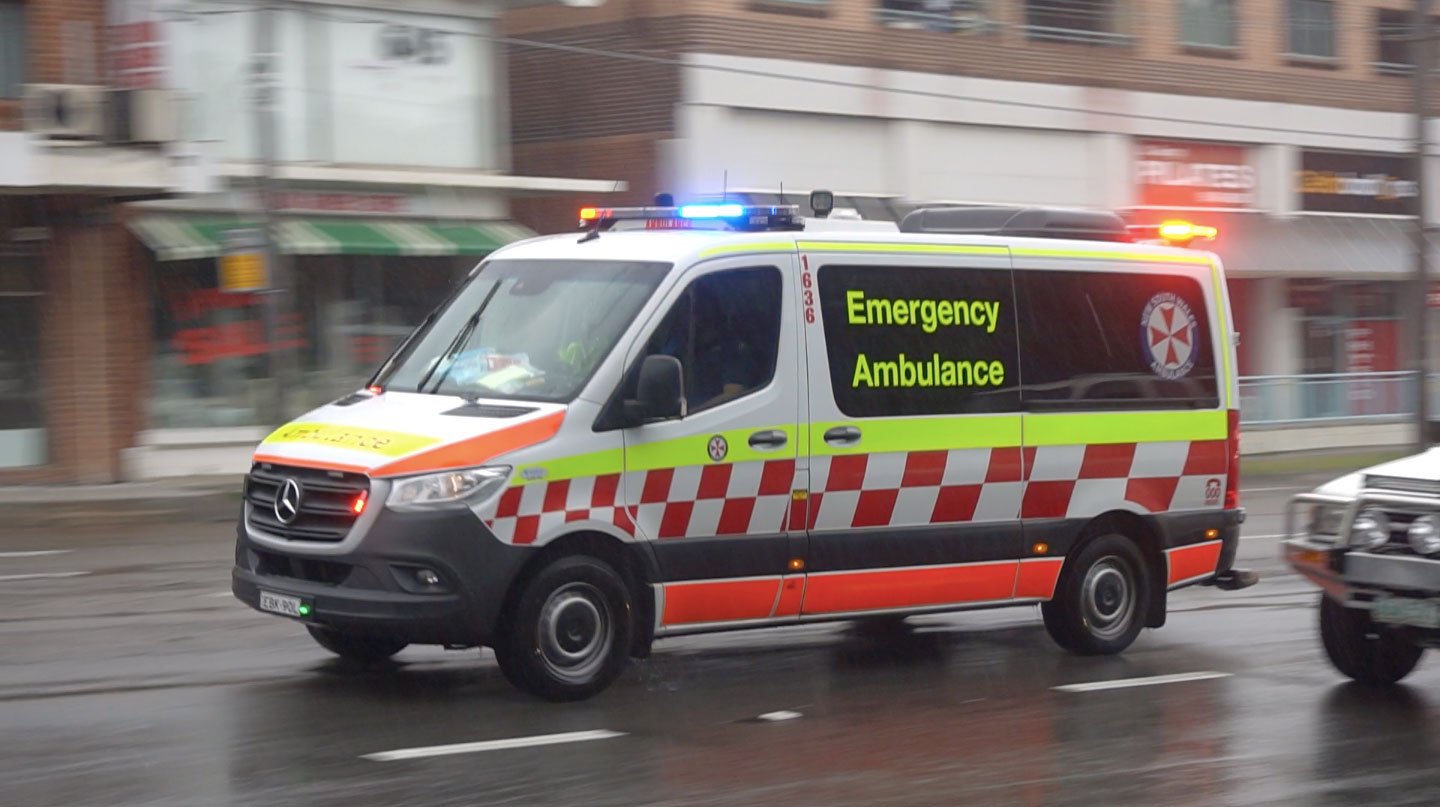
Report reveals dangerous pressure on NSW ambulance services

Latest News

Cinema: NAZA

A must-see, award-winning documentary investigating AI warfare in Gaza. Fresh from winning the Special Jury Prize at the 2026 Venice International Film Festival, NAZA, the latest documentary from Academy Award-winning filmmakers Yuval Abraham and Rachel Szor (No Other Land), examines artificial intelligence and surveillance in Israel’s military operations in Gaza.

Other News

People’s Choice Awards announced for Lismore sculpture show

Over 500 visitors came to see the wonderful recycled and natural sculptural works at the Lismore Rainforest Botanic Gardens, in the ReCreate Sculpture Exhibition.

AI growing up quick

We are exactly at the point where we lose control of the AI, and it will try to hide...

Bruns residents and Reflections struggle to find common ground

Brunswick Heads residents called on their local MP Tamara Smith for a meeting to discuss the fences that Reflections Holiday Parks have erected around the park area where the community planted native cypress pines commemorating the Battle of Lone Pine in WWI, which has been utilised by the community for over 60 years for recreation.

McAuleys estate changes approved, but pet ban and cycle path stay

Developers have secured approval for changes to a contentious Myocum subdivision, but requirements banning pets and providing a cycle path and vehicle turnaround will remain.

Mayor Sharon Cadwallader announces bid for state seat of Ballina 

Ballina Mayor Sharon Cadwallader will contest the state seat of Ballina as an independent, arguing that local ratepayers are carrying costs that should be met by the NSW government.

Tobias Moran sues police over Simone Strobel murder prosecution

Tobias Moran has launched legal action against NSW Police for malicious prosecution over the withdrawn charge that he murdered his girlfriend, German backpacker Simone Strobel, in Lismore in 2005.

Worrying data about pressure on NSW ambulance service revealed by new BHI report.

The latest Bureau of Health Information (BHI) Quarterly Health Report paints a stark picture of ambulance and emergency services in NSW.

Despite paramedics going above and beyond to serve their communities, the report exposes systemic failures that are leaving patients waiting longer and frontline workers struggling under immense pressure.

Data shows the pressure on NSW ambulance services has never been greater. This quarter alone, paramedics responded to 385,873 incidents, marking a 6.2 per cent increase compared to the same period last year. But as demand soars, response times are falling behind – leaving patients waiting longer for life-saving care.

Life-threatening P1A cases saw a staggering 45.8 per cent surge, yet only 63.9 per cent were reached within the critical 10-minute benchmark, a drop of 2.5 percentage points. For P1 emergencies, median response times climbed to 13.7 minutes, up from 12.9 minutes the previous year.

Alarmingly, 1 in 10 of those cases waited over 32 minutes, a delay that can have dire consequences for patient outcomes.

Cracks widening

Australian Paramedics Association NSW Secretary Brendan McIlveen said, ‘Paramedics are doing everything they can, but the numbers show the cracks in the system are widening. Every delay is not just a statistic – it’s a patient waiting in pain, and it’s a paramedic pushed to their limit.’

Emergency departments across NSW are buckling under relentless demand, leaving patients and paramedics caught in the fallout. This quarter alone saw 787,590 attendances– a 2.1 per cent increase from the same period last year.

Fewer than 61.3 per cent of patients began treatment on time, the lowest rate ever recorded since the Bureau of Health Information began tracking this data. For Triage 2 (emergency) cases, just 49.2 per cent of patients received care within the recommended 10 minutes, a sharp 5.4 percentage point drop compared to last year.

‘The impact on patients is devastating,’ said Mr Mcllveen. ‘Paramedics are stuck waiting with patients outside overcrowded EDs, unable to respond to new emergencies in the community. It’s a vicious cycle that leaves everyone worse off.

‘Too often, paramedics are forced to take lower-priority cases to hospital while critical emergencies are delayed,’ he said. ‘A review of the triage system is essential to ensure the right care reaches the right patient at the right time.’

In the regions

The BHI report shows that rural and regional NSW also continue to suffer from chronic under-resourcing. Data shows median response times for P1 emergencies in rural areas rose to 13.9 minutes, compared to 8.3 minutes in urban centers for P1A cases.

‘Our rural communities are being left behind,’ said Mr Mcllveen. ‘Paramedics in these areas are stretched thin, and patients are paying the price. This disparity is unacceptable and must be addressed with targeted investment.’

The Australian Paramedics Association (NSW) is advocating for systematic reforms that are long required to address growing pressure on paramedics and emergency services.

They say that increasing the paramedic workforce is essential to meet rising demand and prevent burnout. The triage system also needs urgent reform, allowing clinical expertise to guide decisions and ensure the most critical patients are prioritised.

‘Our paramedics are committed to their patients, but they need support,’ Mr Mcllveen said. ‘This isn’t just about statistics—it’s about saving lives and ensuring every community has access to timely, quality care.’

The APA says every delayed ambulance or overcrowded ED impacts real people – patients left waiting, families in distress, and paramedics unable to provide the care they’re trained to deliver. The organisation says the BHI report is a call to action for policymakers, health administrators, and communities to work together for a better, fairer system.



For four decades The Echo has printed the stories some people loved, some people hated, and some pretended not to read. If you want us to keep telling the truth, the real truth, not the sugar-coated version. We’ll need your support to keep the presses rolling.


If you are a local business owner help us and in turn we help you. All The Echo asks for is advertising, not a free ride. It is every advert in The Echo and on www.echo.net.au, which creates the space for all the stories and coverage of community events, happenings and concerns.

If you are a reader you can become a sponsor of The Echo. Your support keeps the us independent.

Even a small one-off or regular donation from you will help keep the echo’s independent voice alive and strong.

Support Us

Become one of the supporters who helps keep independent, local journalism alive in the Byron Shire by contributing anything from as little as the cost of a coffee each month.

You're Wonderful, Thank you for supporting independent journalism in the Byron Shire

You’re supporting The Echo, thank you

Your contribution is keeping independent, local journalism alive in the Northern Rivers.

Because of supporters like you, we can keep every story free for everyone — no paywall, no exceptions. Your money goes directly to funding our newsroom of 40-odd local workers covering the stories that matter to this community.

Tell us what you think, give us your opinion

The Echo loves your letters and comments and is proud to provide a community forum on the issues that matter most to our readers and the people of the NSW north coast. So don’t be a passive reader, email us your epistles at editor@echo.net.au.

The letters deadline for The Echo is noon Friday. Letters longer than 200 words may be cut. The publication of letters is at the discretion of the letters editor. Please remember to include your full name, address and telephone number.

Online comments are no longer available.

Interview with Genevieve Clay-Smith, director of Boss Cat showing at the Byron Bay Film Festival

When Sonja (Olivia Hargroder) loses her mother without warning, the only steady presence left in her life is her grandmother, Doris. But Doris’s idea of stability means dismantling everything Sonja has built. For Sonja, who lives with Trisomy 21 (Down syndrome) and has spent her life fighting to be underestimated by no one, Doris’ plan feels less like protection and more like erasure. Directed by Genevieve Clay-Smith, Boss Cat is a vibrant, big-hearted Australian dramedy about independence, family and self-determination, anchored by a fearless lead performance.

Something for everyone at the Picture House

From Australian superstar musos, to brand new documentaries, to comedians at the top of their game, there really is something for everyone at the Brunswick Picture House.

Thirty-six unmissable films

The 2026 Russell Hobbs British Film Festival features an unmissable line up 36 films, including five retrospectives which will screen from 28 October to 29 November at Palace Byron Bay and Ballina Cinemas.

A timeless story of self-discovery

A husband with a promotion, two adorable children and a lovely new house. Nora thought she had it all. But did she? What was the discontent that was whispering to her in the shadows?
