


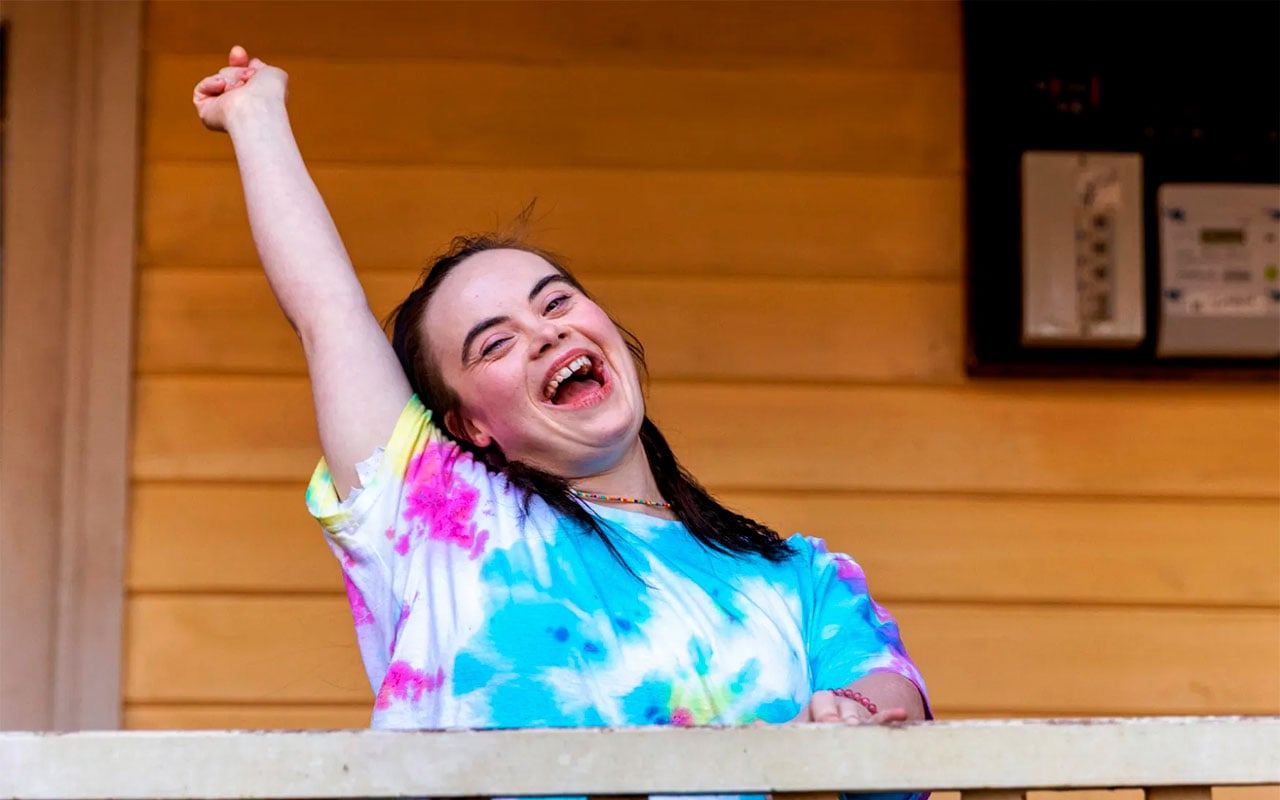
Boss Cat at BBFF
When Sonja (Olivia Hargroder) loses her mother without warning, the only steady presence left in her life is her grandmother, Doris. But Doris’s idea of stability means dismantling everything Sonja has built.
For Sonja, who lives with Trisomy 21 (Down syndrome) and has spent her life fighting to be underestimated by no one, Doris’ plan feels less like protection and more like erasure.
Directed by Genevieve Clay-Smith, Boss Cat is a vibrant, big-hearted Australian dramedy about independence, family and self-determination, anchored by a fearless lead performance.
Seven spoke to Clay-Smith about the upcoming screening at the Byron Bay Film Festival.
Where did the story come from?
About 13 years ago, I was teaching filmmaking workshops through Bus Stop Films to people with disability. At the end of one class, a student with Down syndrome performed a tap dance. Everyone joined in, and I felt uplifted by her joy and the way it brought people together.
At the same time, I was studying directing for my master’s degree at the Australian Film, Television and Radio School. My short film was about a young Sudanese refugee expressing post-traumatic stress through krump, a street dance style that can help people channel difficult emotions in a positive way. I started wondering what might happen if those two characters met: what they might teach each other and how their friendship could develop. That idea became the starting point for the friendship between Sonya and Hakim in Boss Cat.
The film took 13 years to make. When did production actually begin?
The project took a long time to develop, but production itself moved quickly. We began pre-production in May 2025, finished shooting in early August, and delivered the film around December. So, after all those years of development, we premiered roughly a year after starting the shoot.
Did you picture a particular actor as Sonya during all those years of development?
I had a very clear sense of who Sonya was, and I trusted that I would find the right actor. I met Olivia about six years before the shoot at a Bus Stop Films launch in Brisbane. When I first saw her, I had a strong instinct that she might be Sonya, but I didn’t offer her the role then. I later worked with her on a short film and saw more of her ability, but I still wanted to run a proper audition process.
We received around 30 self-tapes, then narrowed the field to in-person auditions. Olivia was one of two finalists. She showed unusual professionalism for someone who hadn’t yet carried a lead role on a feature: she stayed positive through repeated takes, responded well to direction, and could adjust her performance. Since Sonya carries so much of the film, getting the casting right early was important. We also wanted to show potential investors that we had found someone capable of carrying the role.
As writer, director and producer, did you have someone to challenge you when things might not work?
I understood that the budget was finite. We had $5 million, which was a significant amount, but the film’s locations, dance numbers and stunts made it a stretch; I felt it could have been a $10 million film. The producing team would look at what I wanted to achieve and work out whether it was possible, or whether we needed another approach.
When I felt something was essential to the story, I made the case for it and explained why. I wanted the team to know that I was willing to compromise, so that when I pushed back, it was because I believed something genuinely mattered. One important scene in the climax was only half-shot. There was a lot of discussion about whether, and how, we could return for pickups, but when everyone saw the footage in the edit, it became clear we needed to finish it. We had to balance the creative vision with the budget – and leave money for marketing, so people could actually discover the film. It was a rigorous process, but we came through it without any hard feelings.
Did you have a hand in the editing?
I worked closely with our editor, Adrian Rostirolla. After we wrapped, I took a week off and gave him room to get started. I came back for the assembly, and then we shaped the film together, meeting regularly. I was anxious because we had only 21 days to shoot and had to let go of some coverage. Adrian found ways to make the material work. The edit was a very collaborative process.
Does Olivia have a dance background?
She has a contemporary dance background and is a very skilled dancer, but she hadn’t done krump before. Once she was cast, she began taking lessons to prepare for the role. She had time to work on that before production started.
How do you feel about the festival process?
I’ve been involved with festivals for a long time through my short films, but the feature film process feels more intense. There’s a lot riding on which festivals select the film, how audiences respond, and what kind of marketing follows. We’ve had a very positive welcome from Australian festivals, which has been encouraging. Byron Bay Film Festival has supported me since early in my career, and that support has meant a lot.
You never know what programmers will think, especially when they’re watching a film alone as a screener rather than experiencing it in a cinema. Getting an independent film seen can be difficult, so I hope the festival screenings and word of mouth help audiences decide to see it in cinemas. Boss Cat is scheduled for a theatrical release on 3 December.
Why do you think people should go to film festivals?
Shared experiences matter, particularly when technology can leave us feeling isolated. Festivals let people watch a film together, talk about it, and consider what the filmmaker was trying to say. They also give audiences a chance to experience work made by artists and to support Australian stories.
Audiences have real influence over what gets made. Australian films rely on box-office success, and when a film is perceived as unsuccessful, it can make it harder to produce more local work. Festivals offer a way to connect with other people, see life from someone else’s perspective and support the filmmakers telling stories from our own community.
What would you hope audiences take away from the film?
I hope people feel that every human being has inherent value. We’re capable of kindness, forgiveness and positive change; we can recognise our flaws and choose to do better. The film deals with difficult realities, but it approaches them through hope and joy. I’d like audiences to leave feeling uplifted, hopeful and entertained – and to have laughed along with the comedy of being human.
Genevieve – are you having enough fun?
Yes! I have five-year-old twins, so there’s plenty of fun in everyday life. They remind me to find joy in ordinary moments.
A Boss Cat accessible screening with captions will screen at Palace Ballina Cinemas on Thursday at 12pm. Find out more at: bbff.com.au/boss-cat. Olivia Hargroder who plays Sonja, will be at the Ballina screening.
 For four decades The Echo has printed the stories some people loved, some people hated, and some pretended not to read. If you want us to keep telling the truth, the real truth, not the sugar-coated version. We’ll need your support to keep the presses rolling.



