



Giles Parkinson, RenewEconomy
The Australian Energy Regulator says the energy market faces a revolution in coming years from the rise of the ‘prosumer’ – customers with the ability to generate and store their own electricity.
And it warns that unless models are changed to allow these prosumers to fully participate in the market, and if networks continue to impose barriers, then many consumers will simply walk away from the grid, with disastrous consequences for others.
‘The electricity industry certainly is changing. In fact it is not much of a stretch to say that the next couple of decades will witness something of a revolution in the way small customers interact with the electricity industry,’ Michelle Groves, the chief executive of the AER, said in a speech earlier this week.
‘In the future there will be more scope for even the smallest energy users to become active participants in the energy market.’
But Groves added it was important for the network businesses to embrace the changes underway in the energy sector. ‘If the networks attempt to create barriers to new, competing technologies by limiting access to their ‘platform’, there is a risk that a significant number of consumers will ‘walk away’ from the network.
‘This would have major consequences for many consumers and for the efficient operation of energy markets. The hope is that network businesses re-define the services they provide to adapt to the new market, which will benefit end-users and transform the industry.’
The speech by Groves is important because regulators in Australia – both federal and state-based – have been accused of acting mostly in the interests of the incumbent, and often state owned, utilities. Nigel Morris outlines ways in which utilities have acted against solar here. And consumers and installers are responding with their own guerrilla tactics.
But there is now growing recognition of the power of these new technologies, and their ability to deliver cheaper services than those delivered only by centralised generation through costly networks. That, in turn, has underpinned predictions of a massive change in the way the markets operate.
The CSIRO Future Grid scenarios predicted half of all electricity would be produced – and stored – on site. But if the networks did not adapt, then up to one third of consumers could leave the grid – with serious social consequences. As RenewEconomy has highlighted, some consumers and installers are finding ingenious ways to work around the tariff structures imposed by utilities to dissuade the use of solar.
Groves’ speech is the first to recognise that this is a primary concern, and not use the regulatory platform to try and demonise these technologies.
Groves says the changes are being driven not just by the availability of cheaper technologies such as solar and batteries, but also improvements in IT and communications.
This means that prosumers can switch from net consumption from the grid to net production.
‘We have seen over a million households install roof-top solar PV in the last few years,’ she says.
‘Further, customer investment in smart appliances and battery storage could substantially shift the amount customers withdraw from or inject into the network from one moment to the next.’
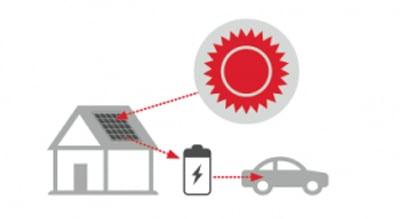 Far from being a drag on network investment and a burden on other consumers – as solar households are often painted by conservative politicians, Groves says prosumers will increase the resilience of networks, increase their use (presumably through charging electric vehicles), and help increase choice around consumption and production.
Groves said that ideally, ‘prosumers’ would be willing and able to directly or indirectly respond to local market conditions, so that they make efficient decisions as to the best time to use their electric appliances, charge and discharge their electric vehicles or have knowledge of their local conditions inform their investment decisions.
‘Perhaps the most significant benefit from increasing the integration of small customers into the electricity market is that it will lead to a range of new services. In fact, it may mean a host of yet unknown services that will deliver real value to consumers and society more generally.’
This article first appeared in RenewEconomy
 For four decades The Echo has printed the stories some people loved, some people hated, and some pretended not to read. If you want us to keep telling the truth, the real truth, not the sugar-coated version. We’ll need your support to keep the presses rolling.


