

18.8 C
Byron Shire
June 5, 2026

Struggling with the growth dream

Latest News

Marooned yacht on rocks near Ballina

A local photographer has shot a marooned yacht at Flat Rock, in Ballina Shire. It's the second boat to be washed ashore in recent months

Other News

Threatened species protection in NSW overhauled

A "new, holistic approach to threatened species conservation" has been introduced by the NSW Labor government, reforming the Saving our Species program.

Loss of amenity with new pool owners?

Byron Shire councillors recently decided – by a close margin – to hand over our two public swimming baths...

Was the NACC designed to fail?

The sudden resignation of controversy-plagued National Anti-Corruption Commissioner Paul Brereton has served to further highlight the failings of an organisation which began with such high hopes, having been one of the key demands of the first teal representatives and a core promise of the incoming Albanese Labor government.

Temporary home for Queer Family after heated debate

Byron Shire Council has voted to provide struggling local LGBTQIA+ support service Queer Family Inc with temporary access to a Council-owned property at peppercorn rent, following an impassioned plea from the organisation and a lengthy debate over governance and fairness.

Interview with Pacific Avenue

South Coast rockers, Pacific Avenue, have left an indelible mark on the music industry, their debut studio album Flowers secured a spot as a number one Australian album earning two ARIA nominations. Now, their recently released second studio album, Lovesick Sentimental, looks to be heading in the same direction.

Ballina Shire Council’s special rate variation approved

Independent Pricing and Regulatory Tribunal (IPART) has approved Ballina Shire Council's application to increase its general income through a permanent special variation (SV) of 26.25% [in rates] over four years, from 2026-27 to 2029-30.

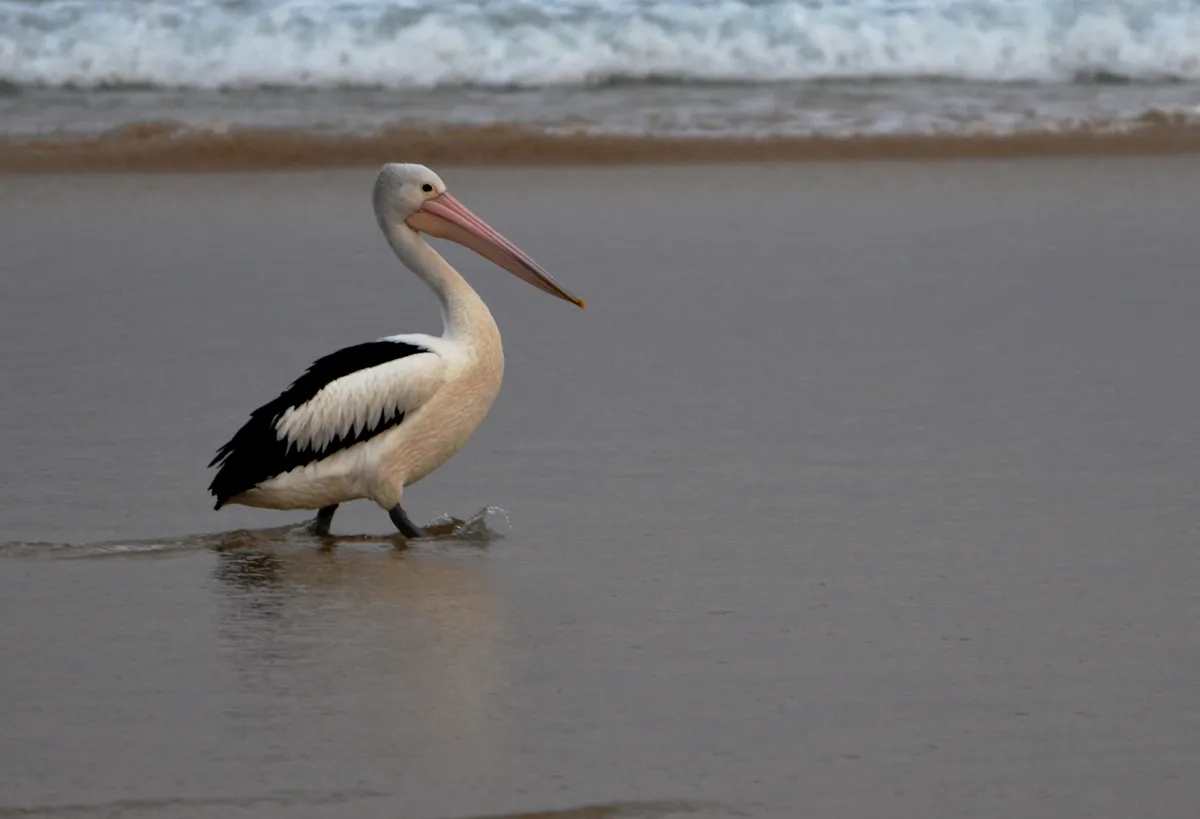
A pelican at Belongil estuary. Photo Mary Gardner
A pelican at Tallow Beach. Photo Mary Gardner

Mary Gardner

This waterway on Tallow Beach is still open to the sea. Nearly in tears, I stare at the pelican strutting in the cross currents. The lump of knowledge chokes in my throat and I am lost for words. The camera with its telephoto lens holds the image better than memory. I stutter, rewriting these first words again and again. After a painful hour, only three words remain: less is more.

If I flew with you as the pelican does over to the Belongil waterway, we could both see the strange busyness of people. They cut roads through the swamp for their noisy vehicles. The exhaust fumes sicken their lungs and hearts. Accidents also happen. All of this hurts and kills people.

Some of the exhaust settles onto the roads until rain washes the pollution into channels, all joined with waterways and beaches. The chemistry of the sea around us absorbs other pollution in the air. The ocean water receives everything. It becomes acidic. It is dirty with rubber from tyres, particulates from fossil fuel and more chemicals. Marine life suffers.

Soaring over the traffic jams, I point out routes for new roads, for parking lots and even buildings dedicated to storing more cars. We glide over hectares to be done over with more housing developments as thick as a city. Wetlands to be dug till their soils produce fresh acid sulfates. Food trees and shelters for koalas and all the other creatures will disappear. Hard surfaces will armour more of the soft ground. The effluent from the sewage treatment plant, already overwhelming the Belongil, will increase. That coastal edge there at Belongil is being prepped for more rock walls, well known to hurry erosion of beaches.

We do understand how building more roads, burning more fossil fuels and paving more coastal wetlands is not progress but excess. Of the entire far north coast, here is one of the last coastal places not quite cemented.

We are in the curious stage of living at the very limits of what we once labelled ‘growth’. What has it amounted to? In Australia, the Australian Council of Social Services explains that what measures as ‘average wealth’ is deeply inequitable: the upper group has 70 times the financial value of the lowest one. WWF describes another type of inequity: the known loss of over fifty per cent of mammals, birds, reptiles, amphibians and fish. The unknown losses of other lives from molluscs to insects. Global warming is racing ahead off the charts.

Trends are mental tsunamis. They flood our imaginary sense of the future. The experience is so vivid that our vision is shattered. It’s a waking nightmare.

Every culture, even our western one, respects bad dreams. Sometimes, personal counselling suggests that we each meet such terrors in an imaginary dialogue. Listen, respond and imagine new actions. Collective terrors require the same. As we keep listening, small details light up. Little turning points appear. Once again, we spot other potential. Our sense of shattered futures regroups itself but differently.

Here in Byron Bay, we struggle to accept limits to ‘growth’. Nightmare trends for more cars, bigger buildings, more roads and even more rock walls seem well underway. But just as we dreamed them up, we can re-imagine them. What about alternative growth trends? Backing off from pollution? Resolving inequities among ourselves and other species? Returning plants lost to beaches, wetlands, neighbourhoods and rural places? Less is more.

The great bird I watch watches me. Its kind survived trends over millennia to get here. I hang onto a phrase from an Aboriginal Australian language. Tangara minnarka. Brought from far away by a pelican.



For four decades The Echo has printed the stories some people loved, some people hated, and some pretended not to read. If you want us to keep telling the truth, the real truth, not the sugar-coated version. We’ll need your support to keep the presses rolling.

If you are a local business owner help us and in turn we help you. All The Echo asks for is advertising, not a free ride. It is every advert in The Echo and on www.echo.net.au, which creates the space for all the stories and coverage of community events, happenings and concerns.

If you are a reader you can become a sponsor of The Echo. Your support keeps the us independent.

Even a small one-off or regular donation from you will help keep the echo’s independent voice alive and strong.

Support Us

Become one of the supporters who helps keep independent, local journalism alive in the Byron Shire by contributing anything from as little as the cost of a coffee each month.

You're Wonderful, Thank you for supporting independent journalism in the Byron Shire

You’re supporting The Echo, thank you

Your contribution is keeping independent, local journalism alive in the Northern Rivers.

Because of supporters like you, we can keep every story free for everyone — no paywall, no exceptions. Your money goes directly to funding our newsroom of 40-odd local workers covering the stories that matter to this community.

Tell us what you think, give us your opinion

The Echo loves your letters and comments and is proud to provide a community forum on the issues that matter most to our readers and the people of the NSW north coast. So don’t be a passive reader, email us your epistles at editor@echo.net.au.

The letters deadline for The Echo is noon Friday. Letters longer than 200 words may be cut. The publication of letters is at the discretion of the letters editor. Please remember to include your full name, address and telephone number.

Online comments are no longer available.

Echo celebrates 40 with awards night tomorrow

Tickets are selling fast! Come join a fun-filled night of community celebration – This Saturday (tomorrow) The Echo is set to mark its 40th year in style with a ’30s swing-era style party and community awards night featuring the dynamic sounds of the Melbourne Ska Orchestra.

Author Tristan Bancks follows up with Two Wolves sequel

Local author Tristan Bancks launched his new book for readers 10+, Raised By Wolves, at Byron Book Room last night (Thursday 4 June).

Lismore City Council recognised for environmental leadership at LG awards

Lismore City Council has been recognised for outstanding achievement in environmental leadership, resilience and community infrastructure at the 2026 LG Professionals NSW Local Government Excellence Awards.

Byron Council’s Sandhills Wetlands project takes first place at LG awards

The Sandhills Wetland restoration project in Byron Bay has won another major award, with Byron Shire Council taking first place at the Local Government Professionals 2026 NSW Excellence Awards.

