


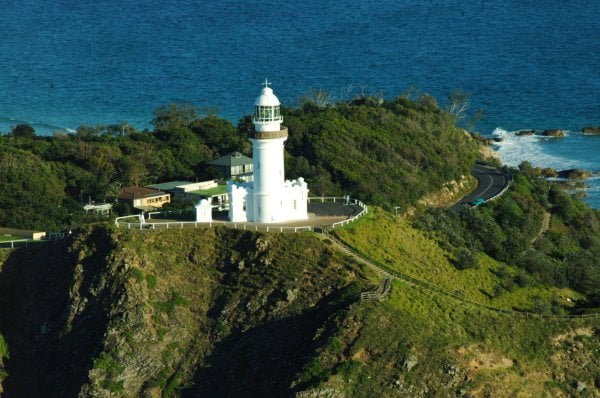
Could gondolas, shuttle buses, light rail or better walking tracks improve visitor experience and ease congestion at the popular Cape Byron?
That’s what the managers of the Cape Byron State Conservation Area (SCA) would like to know as it prepares to survey the community and visitors on its draft master plan for the area, visited by more than a million people each year.
National Parks and Wildlife Service (NPWS) will place the master plan on public exhibition in April and May and is urging locals to comment.
NPWS Byron Coast area manager Sue Walker said the preliminary survey wanted feedback on how people thought walking tracks, vehicle access and other areas of the Cape could be improved.
‘Some options might be seen as pie-in-the-sky by some however, we need consider the widest wide a range of options possible to help ensure the best outcome for protection of the environment and visitor use to this very popular destination,’ Ms Walker said.
‘The draft master plan project aims to provide guidance for the future of management and operation of cape, with estimated at over 1.2 million visitors annually, and a focus on the provision of facilities and services for locals and visitors to this iconic location,’ she said.
‘A key issue is addressing access to the lighthouse where current demand for access is not met on most days for transport together with the walking tracks being a popular visitor experience.
‘Byron Shire Council is also undertaking master planning project for Byron Bay, and the Cape Byron master plan project team will engage closely with Council to ensure outcomes are aligned
‘We recognise there are a significant number of individuals and groups with a close interest in the cape and that they will all have an interest in future planning for this significant site.
‘Any ideas are welcome at any time and can be sent to [email protected],’ Ms Walker said.
The community will have the opportunity to comment on the draft master plan during a public exhibition period expected to occur in April and May 2016.
 For four decades The Echo has printed the stories some people loved, some people hated, and some pretended not to read. If you want us to keep telling the truth, the real truth, not the sugar-coated version. We’ll need your support to keep the presses rolling.


