



Sue Arnold, Australians for Animals Inc.
With the Ballina Pacific Highway Upgrade poised to begin operations, scientists, community organisations, and environmental groups are horrified by the devices put in place by the RMS to change wildlife behaviour.
A number of what can only be described as death-trap grids have been placed in sections of the now-fenced Old Bagotville Road together with ‘escape hutches’, which defy description. The grids are designed in such a way that any small animal such as a potoroo, or a goanna could easily become trapped with no possibility of escape. Wallabies and koalas are likely to have similar problems.
The hutches are supposed to ensure that if an animal does get trapped on the road, or flees from the surrounding bushland because of noise and project activities, it can climb up the slippery boards and make a death-defying leap into the bushland.
The NSW Scientific Committee has just released a preliminary judgement, which finds the Wardell potoroo population should be listed as an endangered population under the Threatened Species Act. The committee estimates the population is fewer than 250 animals.

According to the Scientific Committee, ‘ the proposed realignment of the Pacific Highway to the western boundary (of the potoroo habitat) will reduce the extent of suitable habitat and further impede movement to nearby vegetated areas. A road corridor could also lead to an increase in the incidence of fire, road mortality (depending on the effectiveness of fauna connectivity measures), weed invasion, and potentially exacerbate impacts from introduced predators such as foxes and cats.
David Milledge, a local ecologist with long experience with potoroos, provided the committee with advice. On viewing the grids and escape hutches, he described them as ‘appalling and untested for impacts’.
Koala feed and shelter trees have been collared, preventing not only koalas but any tree dwelling creatures from accessing trees. Locals estimate that as many as 80 trees have so far been collared.
None of these devices – collars, escape hutches and wide grids – have been used in any other development.
In essence, the RMS is experimenting on Ballina/Wardell wildlife with no base line data that assesses the impacts. There is no provision for monitoring the grids and escape hutches to ensure injured animals are not trapped.
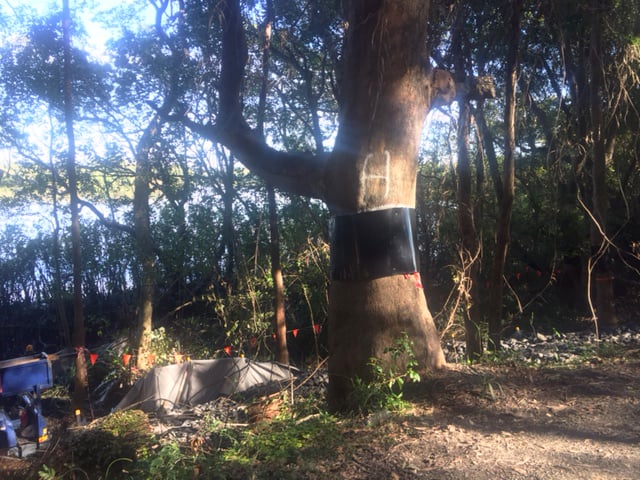
Locals estimate 900 vehicle movements a day will plough through koala and potoroo habitat.
Given the NSW Government’s Save our Species Programme, the Ballina Pacific Highway upgrade makes a mockery of any proposal to protect vulnerable and endangered species. The koala population at Ballina has been designated a significant population. Research commissioned for Australians for Animals Inc by David Milledge demonstrates that the southeastern population is predicted to go extinct as a result of the upgrade.
Now it would appear that not only koalas but also potoroos are threatened with extinction. Designated a State Significant Infrastructure, legal challenges are not permitted.
Instead, the community will be forced to witness an impending carnage of wildlife.
 For four decades The Echo has printed the stories some people loved, some people hated, and some pretended not to read. If you want us to keep telling the truth, the real truth, not the sugar-coated version. We’ll need your support to keep the presses rolling.


