


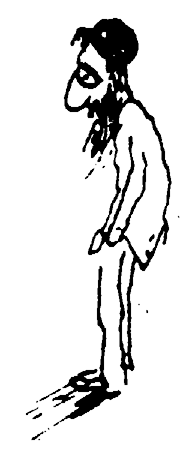
 Our mild-mannered prime minister has become an uncompromising economic fundamentalist. ‘The law of supply and demand,’ he proclaimed, ‘cannot be suspended.’
Well, up to a point, Mr Turnbull; actually it is not a law but something of an ideal, a belief that if the market was absolutely free and safe from interference by pesky governments that its invisible hand would always even things out in a harmonious equilibrium.
The idea is that is when supply gets tight, demand rises, and vice versa. Thus when there are a lot of jobs available, employers will not have to offer high wages to attract staff. On the other hand when there is a scarcity of workers, employers have to cough up.
Given that Turnbull is constantly boasting about the number of new jobs created on his watch, you might think that that the current stagnation in wages is entirely as it should be. But our leader is going more Keynesian – if we offer more money to the employers, especially the bigger ones, it will follow as the night the day that there will be more investment, more jobs, higher wages and a chicken in every pot.
Well, in a perfect market, untouched by human intervention, that might be a chance. But in the real world – and in particular the real world of Australia – it is very unlikely to work like that. The Australian market, and particularly the tax regime, is complex, highly regulated and skewed beyond recognition from the elegant simplicity of Economics 101.
And given that the skewing is overwhelmingly in favour of the wealthy, the idea that reducing their taxes will result in more than the smallest trickle down to the masses is no more than wishful thinking. They have many other ways to dispose of a windfall.
Apart from the obvious distortions to the system, like dividend imputation, family trusts, negative gearing, capital gains discounts, innumerable exemptions ranging from legitimate tools of trade to advertising costs and, most absurdly, political donations, favourable treatment for big superannuants and all the smaller lurks and perks involving travel, entertainment and the massive rort of attending professional conferences in the south of France, there are plenty of other ways to make sure that whatever tax breaks a compliant government provides end up not with their workers, but with the directors and shareholders – the capitalists.
We have already seen that in the United States, where the vast majority of those who will be the beneficiaries of Donald Trump’s cutting of the company rate from 35 per cent to 21 per cent have shamelessly announced that they will use the loot for share buy-backs, paying off debts or losses, or simply enhancing corporate profits.
Given that the Australian model has already seen large increases in the profit share do almost nothing for wage earners – those who have not been retrenched in the perennial quest for higher dividends and larger executive bonuses – there is no sensible reason to assume that they will suddenly afflicted by a social conscience on this side of the Pacific.
Or indeed anywhere else: parts of Europe are searching for an accord somewhat in the manner of the one devised by Bob Hawke in 1983, in which a deal can be negotiated so that employees have some guarantee that they receive at least a share of whatever largesse becomes available. Turnbull’s fundamentalism would regard that as interference with the market – as if the market had not already been molested beyond recognition.
But in any case, what is the real argument for big corporate tax cuts? As has been already pointed out, profits, after the slump after the end of the mining boom and the hit from the Global Financial Crisis, have recovered and are now doing very nicely thank you. And the claim that Australia will be left behind by the current rate (25 per cent for those up to $50 million a year and 30 per cent for those above it) can only be sustained by comparing apples and oranges.
The evidence – as opposed to the theory – is stark: trickle down economics has almost never worked and when it has, it is because there really has been something like a free – well, freeish – market. Australia has never had one of those any time in the last 200 years.
With all the fiscal fiddling from successive, mainly coalition, governments, the effective rate in Australia is about 17 per cent – in the bottom half of the OECD scale. In particular it is lower than the USA’s 21 per cent, which is far more straightforward. Our tycoons are in no danger of being left behind, even in the unlikely event they pay what the Australian Tax Office valiantly but often vainly attempts to enforce. And as for the multinationals – forget it. They are, as always, laughing all the way to their havens in the Bahamas.
As the former Australian Industry Group chief and Reserve Bank board member Heather Ridout admitted last week on Q&A, the issue has become a polarising one, which is why Turnbull, having emerged from his beach at Point Piper, is trying to frame it as an example of Bill Shorten’s anti-business agenda.
He has to be negative because when you get through the waffle, rant and bullshit, it is pretty hard to make a positive case: the mere assertions about the law of supply and demand, the declaration that supply-side economics is simply common sense, just won’t cut it.
The evidence – as opposed to the theory – is stark: trickle down economics has almost never worked and when it has, it is because there really has been something like a free – well, freeish – market. Australia has never had one of those any time in the last 200 years and is now so entangled with scams and shenanigans to have become more akin to a command economy – which is fine for Turnbull, as long as he issues the commandments.
John Hewson, a Liberal leader who was once a real free marketer (he has since reformed) once spoke of an insight he discovered when trying to get to terms with the nation’s economy. It was, he said, a bit like a rubber sheet, best undisturbed. Whenever you gave one bit of it a poke, it meant another lump bobbed up somewhere else.
Turnbull is looking at more than a poke: his so-called enterprise tax scheme would belt the rubber sheet like a sledgehammer, a wrecking ball – and grateful moguls would no doubt bob up all over the place. But it would not follow (except in Turnbull’s version of Economics 101) that too many workers would be elevated above the unwholesome coverlet.
Polarising, yes; perhaps good politics among his own class warriors. But an inexorable economic law? In your dreams, Malcolm.
 For four decades The Echo has printed the stories some people loved, some people hated, and some pretended not to read. If you want us to keep telling the truth, the real truth, not the sugar-coated version. We’ll need your support to keep the presses rolling.


