


Chris Dobney
The NSW Government has turned to drones after a second controversial trial of shark nets on the North Coast caught even fewer sharks than the previous trial in 2016-17.
But it has still failed to rule out returning nets to North Coast beaches again next year, despite their overwhelming failure to protect bathers and an increase in so-called ‘bycatch’ (by far the majority of sea creatures caught).
In last year’s trial, conducted by DPI Fisheries, the nets caught six target species out of 244 animals caught. The result this year (23 November to 31 March) was even less effective: with just one live and one dead bull shark netted.
Meanwhile a total of 264 of ‘non target’ sea creatures were caught, of which 83 were found dead.
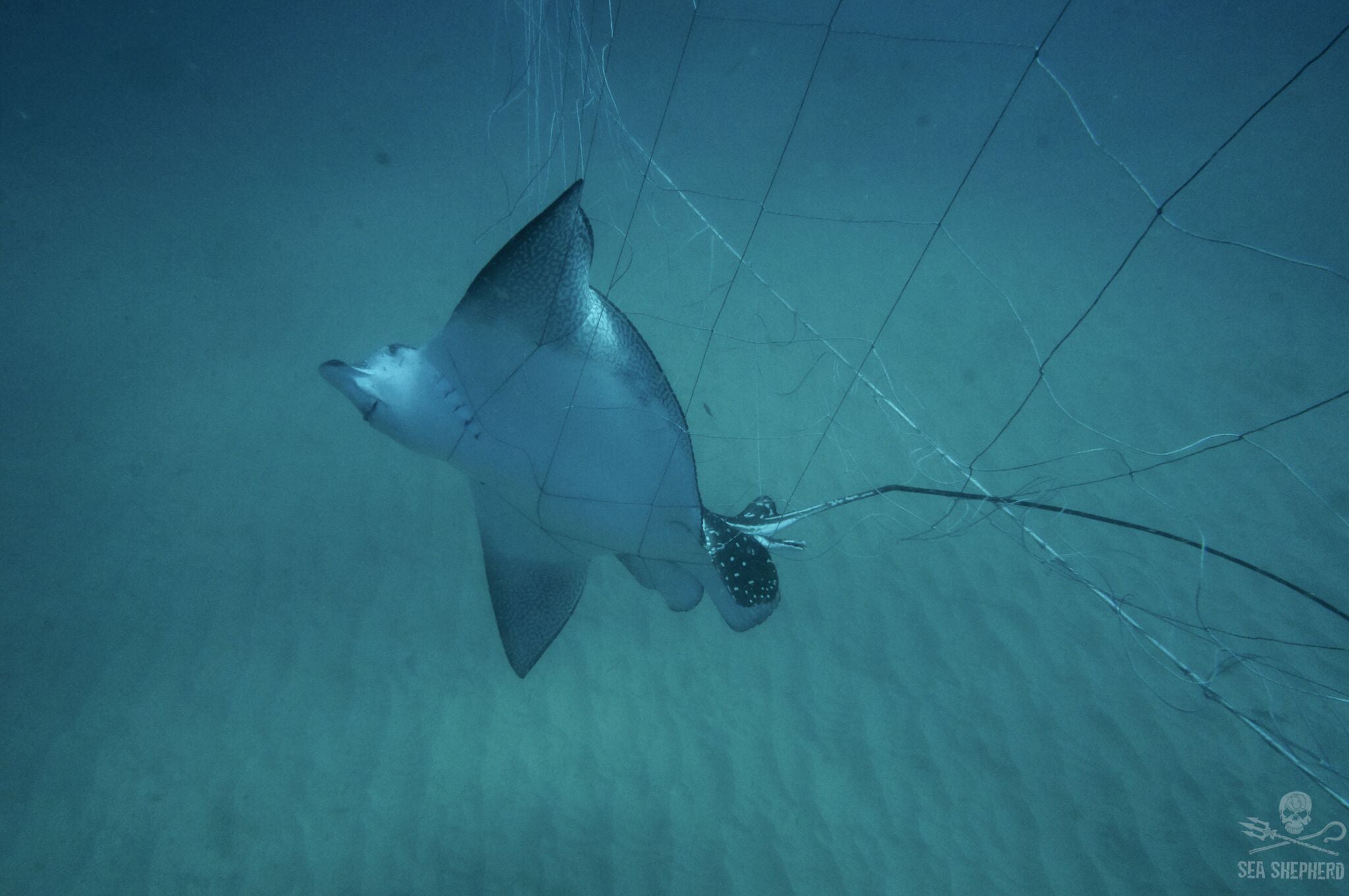
The most common species netted were rays, with a total of 41 Australian cownose rays caught (including 9 found dead) and 41 whitespotted eagle rays (including four found dead) trapped in the nets.
Other species found trapped included a green turtle, a hawksbill turtle and a grey nurse shark, all of which are endangered, and three dolphins, one of which was found dead.
The nets were deployed for 28 days during March but only checked 14 times. DPI claims this was due to weather conditions.

Drones go up
Meanwhile, Nationals Parliamentary Secretary for Northern NSW, Ben Franklin has announced a new trial of drones, just in time for the end of the season, which he acknowledges have ‘proven themselves as an effective tool in our arsenal for detecting sharks’.
The latest trial of drones will take place at Byron Bay, Ballina, Lennox Head and Evans Head.
Surf Life Saving NSW has used $430,000 in state government funding to purchase drones and train drone pilots, which, Mr Franklin said in a media release ‘is allowing for never-before-seen shark surveillance at beaches.’
Two of the drones will be part of mobile units fitted with a flotation device that can be dropped down to swimmers, an alarm and a loudspeaker.
Up to nine beaches will have the smaller drones fitted with Shark Spotter technology and will fly each morning.
Mr Franklin said ‘this innovative technology is again proving to be a genuine lifesaver in our communities and an essential piece of equipment on our beaches’.
‘Drones not only benefit locals but also the thousands of tourists who flock to the North Coast’s pristine beaches each year, giving them some extra assurance when they head to the beach these school holidays,’ Mr Franklin said.
The drones will complement helicopter aerial surveillance already underway on the North Coast for both the Queensland and NSW school holidays and, his media release omitted to mention, shark nets.
The government is also continuing trials of SMART drumlines every day, weather permitting, between Evans Head and Lennox Head on the North Coast he added.
Information on sharks is relayed from the helicopters to the SharkSmart App and @NSWSharkSmart on Twitter.
 For four decades The Echo has printed the stories some people loved, some people hated, and some pretended not to read. If you want us to keep telling the truth, the real truth, not the sugar-coated version. We’ll need your support to keep the presses rolling.


