


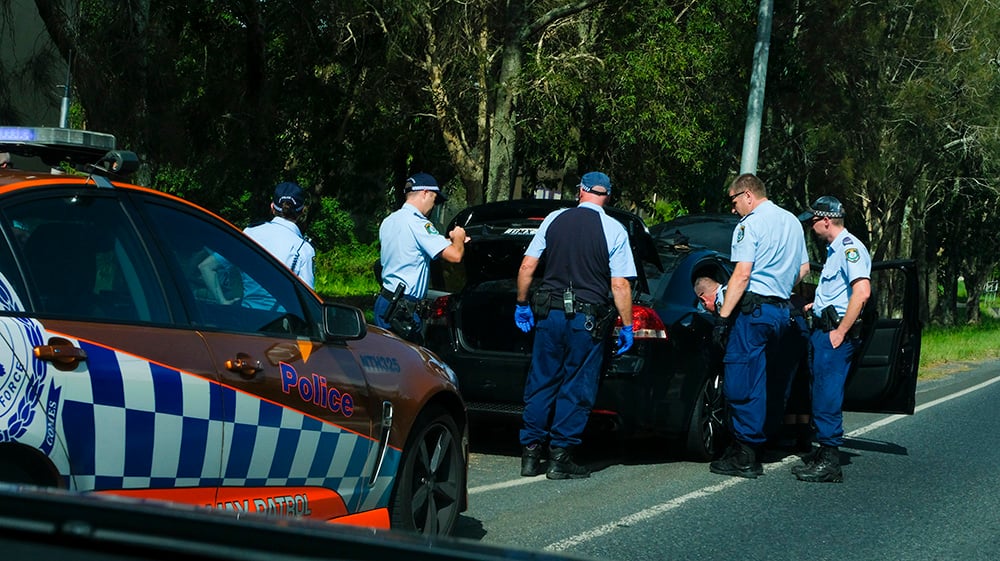
Photo Jeff ‘Cannotabis’ Dawson
Ron Priestly
Throughout 2018 there was a significant increase in police highway patrol activity in the northern rivers that has disturbed many residents.
While not objecting to increased police road safety efforts it is the nature of the Random Drug Test (RDT) applied by police that is causing concern. The problem is the so-called saliva test or ‘spit test’ that is being used does nothing to detect cannabis- impaired driving – it merely detects the presence of cannabis. The cannabis involved may have been used days before the test and there is no evidence that such historic use causes impaired driving.
Unfair and unproven test
When Andrew Gee MP was a senior National Party member of the NSW right-wing government he wrote to me stating that, ‘It does not matter if they (the drivers) appear to be unaffected by the drugs. The “mere presence” of the drugs establishes the offence’. He goes on to say ‘a driver can be charged… no matter how high or low (the THC reading)’.
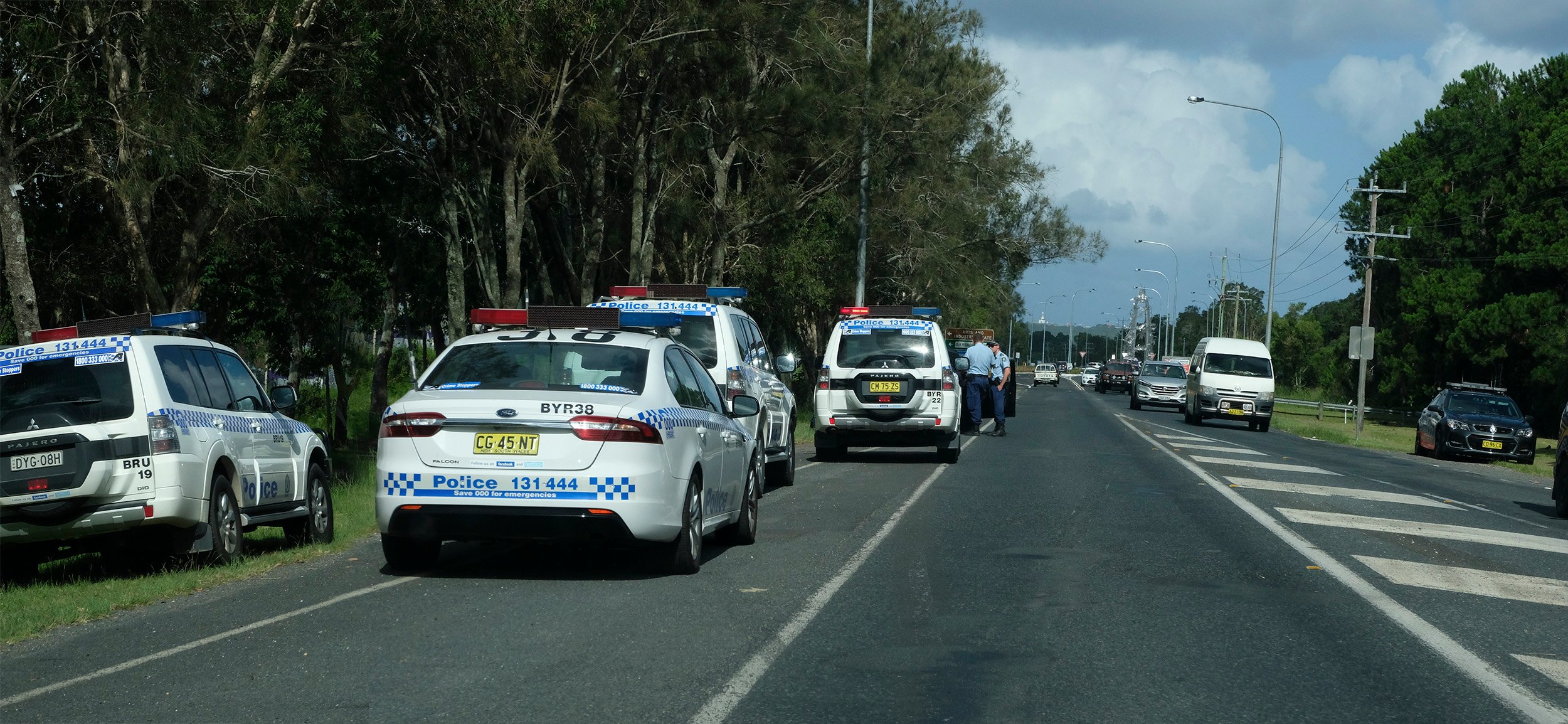
Photo Ron Priestly
Impairment disregarded
This is completely different from the alcohol test that establishes a level where impaired driving is likely. Also, the RDT ‘spit test’ differs from many Western countries that have a more expensive cannabis test that does detect actual impairment. Perhaps there is a cost problem leading to the use of cheaper unjust ‘presence only’ testing.
Numerous north coast residents, often the young, are being convicted when there has been no impaired driving. Drivers are banned, jobs are lost, foreign travel gets difficult and criminal records are created disadvantaging the victim for life when the driver has done nothing wrong!
Not the intent of the legislation
There is no public transport alternative when a licence is lost. Local magistrate David Heilpern has stated that when the law was introduced, ‘Parliament did not intend to stop people driving or take away their licences three days or six days after they consumed cannabis’; but this is what is happening. The Greens said ‘these judgments were further proof of the government’s “evidence-free” approach to drug policing’.
Protests against the unfair test
A local group called the ‘nth coast RDT locations’ has attracted some 19,817 members to its Facebook page. Numbers are increasing at the rate of 200 per month. The stated aim of the group is to ‘help stop the unfair and unproven testing regime’. The area they cover is basically the state electorates of Tweed, Lismore, and Ballina, which together have 170,000 voters. With nearly 20,000 members, the group represents a not insignificant nearly 12 per cent of the voters.
Enrol to vote
Campaigners for the next NSW election are hoping that disgust with the unjust testing regime will unseat local National Party members who are behind this injustice. The Nationals hold Tweed and Lismore by only around 2,500 votes. With the expected swing against the Liberal/National coalition it would only take, say, a further 500 votes in each seat out of the 20,000 members for the Nationals to lose both seats.
Campaigners are encouraging complaining drivers to enrol and vote. The Greens hold Ballina and have already come out opposing the unfair test. In Ballina the Nationals’ challenge to the sitting Greens would fail if the Tweed/Lismore swing and protest vote is duplicated.
Intense police activity: burden to taxpayers
The police activity involves some seven to ten fast, brightly coloured highway patrol sedans, RBT/RDT testing vans, local 4WDs and paddy wagons, motor bikes, testing costs, mobile speed cameras, and some 20-plus personnel. It is estimated to be worth $100,000 per week: a sum far in excess of total fines recovered and a burden to the taxpayer.
The squad appears to operate mainly during daylight hours. It seems to focus on Byron Bay, Nimbin, Casino, and Lismore but can appear anywhere for a day; bailing up a whole town and randomly stopping anyone they do not like the look of. The full squad appears to be around more than 50 per cent of the time.
Heavy surveillance on north coast
The north coast sadly attracts a disproportionate amount of this heavy surveillance compared with the rest of NSW. Many locals believe it is the NSW right-wing government’s revenge for the successful anti-fracking protests. Interestingly, the full might of the squad does not seem to be used when mainstream events such as Melbourne Cup or New Years Eve occur – instead it focuses on festivals. This focus is leading to an increased anger and a growing divide between drivers and police.
European equivalent
Nothing like this level of police presence happens in other western countries. Overseas visitors are amazed at the level of police activity endured.
I travelled 17,000km by car over four months this year, visiting the UK and seven European Union countries, and I never once saw a roadblock or random search.
New Zealand police have recently studied the unjust NSW regime but there has been no decision to impose this horror on their citizens.
The Echo was founded some 33 years ago to highlight excessive, aggressive police raids on domestic properties. Sadly, all these years later, nothing seems to have changed. Perhaps we need a yellow vests movement here?
 For four decades The Echo has printed the stories some people loved, some people hated, and some pretended not to read. If you want us to keep telling the truth, the real truth, not the sugar-coated version. We’ll need your support to keep the presses rolling.


