


The world watched on appalled by the actions of mining giant Rio Tinto and the Australian and Western Australian governments when the 46,000-year-old rock shelters in Western Australia’s Pilbara region were blown up last month. These were caves in the Juukan Gorge and are ‘the only inland Australian site that shows occupation continuing through the last Ice Age’ according to reports in The Conversation.
The event has triggered a wave of condemnation from around the world has led to BHP committing to re-engaging with Aboriginal groups over its planned destruction of up to 40 sites in a remote Pilbra region.

Indigenous sacred sites for all Australians
In NSW local custodians of the area of the Chinese owned Shenhua mine site on the Liverpool Plains’ in NSW sought protection from the Commonwealth Environment Minister for their significant sacred sites in 2015. The Environment Minister in July 2019 declined to make any declaration to protect the areas clearing the way for the potential mine to go ahead.
Responding to the existing failure of the government at all levels to protect Indigenous culture, last night the Greens put a up motion ‘against destruction of Aboriginal heritage on the Shenhua mine site in the NSW senate (Upper House).
The motion was moved by Greens MP and environment and water spokesperson Cate Faehrmann and passed without any opposition.
It was ‘to ensure that Aboriginal heritage is not destroyed on the proposed Shenhua coal mine site on the Liverpool Plains,’ said Ms Faehrmann.
‘Support for this motion comes at a critical time as a deadline looms for the NSW government to grant Shenhua a mining licence as its exploration licence expires on 30 June.
‘The world’s eyes are upon us as we decide whether to allow yet more destruction of the spiritual and cultural heritage of our First Nations peoples and some of the world’s most ancient cultural artefacts,’ said Ms Faehrmann.

‘Shenhua Energy itself has acknowledged that its massive coal mine will destroy significant Aboriginal cultural heritage and sacred sites.
‘After the devastating, yet lawful, actions of Rio Tinto a few weeks ago which destroyed 46,000 year old rock shelters in Western Australia’s Pilbara region, it’s clear the sentiment in the NSW Parliament tonight that enough is enough.
‘My initial motion was for the NSW government to reject any application by Shenhua Energy for a mining licence. However, I accepted an amendment by the Labor Party and it was this amended motion which passed the Upper House without opposition.
‘This may seem small, but it is a significant win. That’s because Aboriginal artefacts and sacred sites on the proposed mine site are extensive and scattered across the mine footprint.
‘Therefore if the government is to ensure that Aboriginal heritage is not destroyed on the site then it is extremely difficult to see how the Shenhua mine can go ahead,’ said Ms Faehrmann.
Face saving apologies
Rio Tinto chief executive Jean-Sébastien Jacques issued an apology for the ‘distress we have caused the PKKP (Puutu Kunti Kurrama and Pinikura) in relation to Juukan Gorge’ on 12 June. However, Rio Tinto staff were then allegedly told by its iron ore chief executive, Chris Salisbury, that the apology was for the distress caused not for the event itself according to reports in The Guardian and The Australian Financial Review.
According to The Guardian ‘He also reassured staff the company maintained the backing of “political leaders of both sides” (despite the federal Labor party forming a Senate inquiry), saying he had “engaged with lots and lots of stakeholders and… quietly, there is still support for us out there”.’
As reported in The Guardian the Federal Labor Party has formed a Senate inquiry to take a ‘to take a look at all states and territories, where Aboriginal heritage is poorly protected under the law’. However, ‘WA Labor senator Pat Dodson went further, calling for a moratorium on the granting of section 18s until WA amends the act.’
The motion as carried:
- That this House notes that:
- a) In January this year Shenhua Energy started exploratory drilling for its open-cut coal mine on the Liverpool Plains that will extract 10 million tonnes of coal a year for 30 years;
b) the coal mine is expected to destroy roughly 4,000 hectares of fertile agricultural land including 800 hectares of Endangered Ecological Communities including koala habitat;
c) a peer reviewed study found that Shenhua overestimated the amount of groundwater in the impact zone by 100 to 1000 times;
d) an archaeological report commissioned by China Shenhua Energy has stated that roughly half of the 60 historically and culturally significant artefacts of the Gomeroi people present on the site will be destroyed by the mining project;
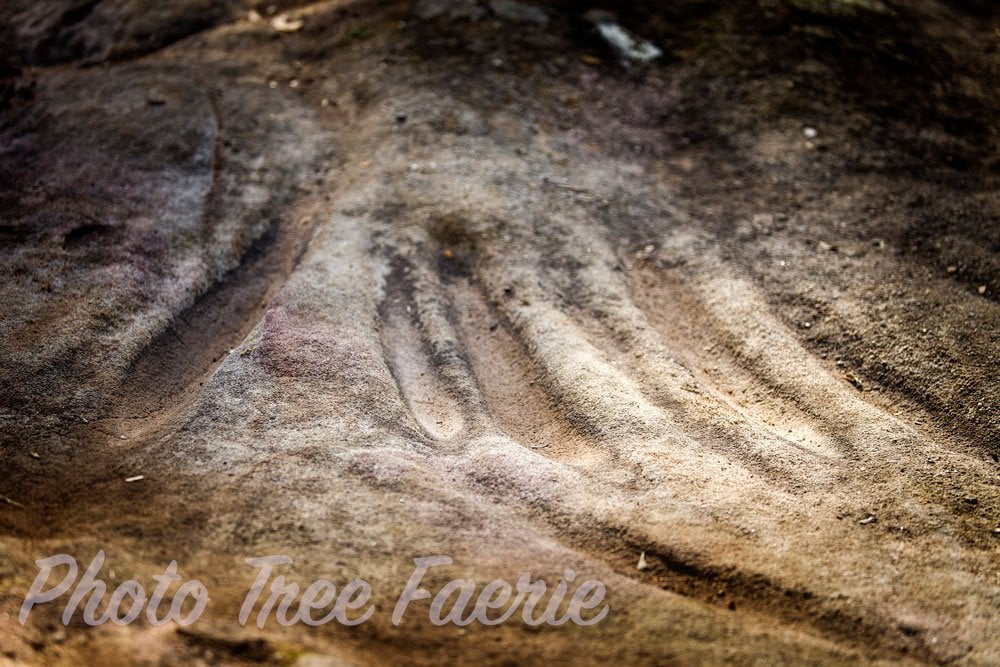
e) these artefacts include grinding grooves showing markings of spears being sharpened for battle, burial sites and sacred trees;
f) the mine is opposed by the Gomeroi people who have filed a submission in the Federal Court against Federal Environment Minister Sussan Ley in an attempt to overturn the mine’s 2015 approval; and
g) When the Government renewed Shenhua’s exploration licence in 2018, it included a cancellation clause that allows it to terminate the project if it hadn’t reached production stage by applying for a mining licence within two years, which is 30 June 2020. - That this House notes the destruction of ancient Indigenous caves at Juukan Gorge in Western Australia.
- That this House calls on the Government to ensure a similar act will not occur at the proposed Shenhua Watermark coal mine.


 For four decades The Echo has printed the stories some people loved, some people hated, and some pretended not to read. If you want us to keep telling the truth, the real truth, not the sugar-coated version. We’ll need your support to keep the presses rolling.


