



From cars to fallen trees and even a boat pontoon more than 890m³ of flood debris has been removed from the Tweed River and Tweed Coast beaches.
The massive project has been running since April following the March 2022 floods and involved using underwater divers and barge-mounted excavators to clear the Tweed River of flood debris.
The project to remove flood debris was coordinated by the NSW Environmental Protection Authority (EPA) in conjunction with the Tweed Shire Council (TSC) as part of their flood response.
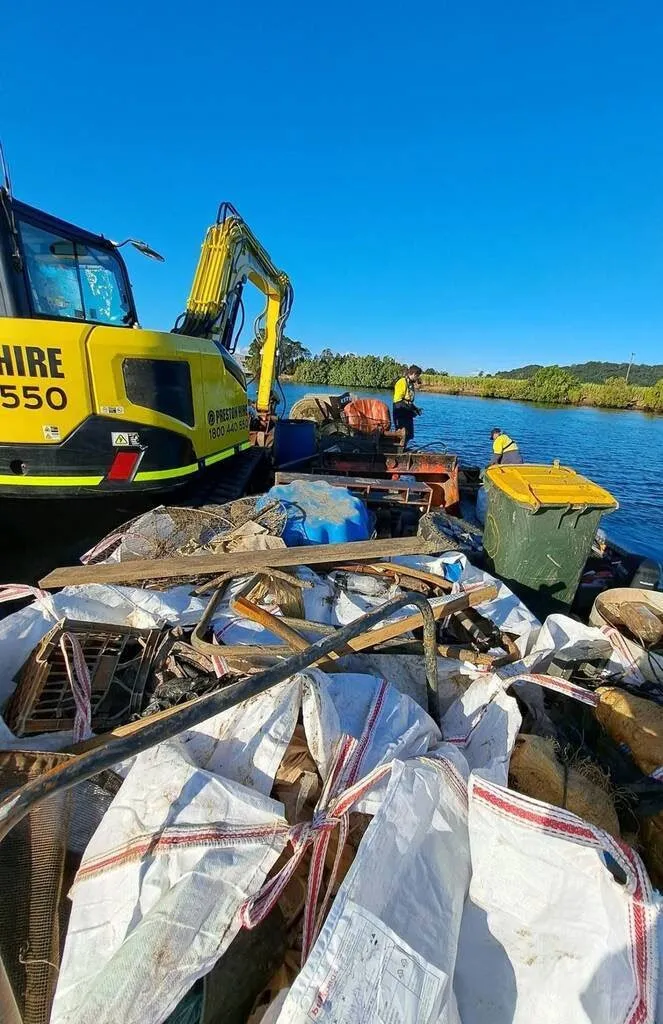
‘The clean-up, which ran from April through to mid-September, involved the removal of man-made and natural debris from the waterway after aerial surveys conducted following the floods of February and March 2022 indicated significant amounts of debris in the Tweed River,’ said the TSC in a press release.
Human-made debris was collected by hand from the shoreline of the Tweed River and Tweed beaches, with larger items collected via a barge-mounted excavator.
‘The unprecedented volume of water which rushed down the Tweed River saw an incredible amount of rubbish dumped along the waterway,’ said Tom Alletson, TSC’s Waterways senior program leader.
The volume of rubbish collected by the EPA was on top of significant amounts of waste collected by Council from riverbanks and beaches in the immediate aftermath of the flood.
‘We are grateful to the EPA for their help in removing debris and while it will take some time for the river to return to its previous health, this is a positive start,’ said Mr Alleston.
Risk to health and environment
Trees which presented a navigational hazard were identified by NSW Maritime and removed via excavator barge or crane boat, while hazardous submerged debris was identified using multibeam sonar technology and removed using specialist underwater dive crews.
Assessments of submerged hazards identified 29 items of potential immediate risk to human health or the environment, including navigational hazards like large trees, and man-made items which were potential chemical hazards. Following inspection by divers, 12 of the items were determined not to be flood waste which did not present a navigational or environmental hazard and were not removed.
Three cars were removed which were determined to be flood waste and presented a risk to the environment.
More than 50 cubic metres of flood waste and a 12-tonne pontoon from South Murwillumbah were also removed from Ukerebagh Nature Reserve. The pontoon has been returned to its owner.
EPA flood clean-up crews, assisted by Tweed Byron Local Aboriginal Land Council (LALC) rangers, Tweed Aboriginal Co-operative Society, National Parks and Wildlife Service and Council removed the debris from Ukerebagh Island.

Flood debris removed included various plastics, building materials, tyres, chemical/oil/plastic drums, gas cylinders, furniture and whitegoods, hay bales and natural debris which posed navigation hazards.
A total of 54km of shoreline on the Tweed River was inspected on completion of the clean-up work.
While the EPA program has been of immense help in removing flood debris from the river, Council’s Waterways Program has recently completed a second campaign of flood debris removal from the Oxley Cove Canal Estate.
Heavy rain in September resulted in hundreds of tonnes of woody debris again being washed into the canal system, where the only option for removal for large pieces is hand collection by Council staff.
‘Staff removed debris from the canal estate in April, following the March flood, and in October following the September rains, and I’m concerned that we may see it affected again following this past weekend’s heavy rain,’ Mr Alletson said.
The river will be eligible for EPA maintenance clean-up for a period of 6 months from September 2022. Any debris reports should be forwarded to: [email protected].
 For four decades The Echo has printed the stories some people loved, some people hated, and some pretended not to read. If you want us to keep telling the truth, the real truth, not the sugar-coated version. We’ll need your support to keep the presses rolling.


