


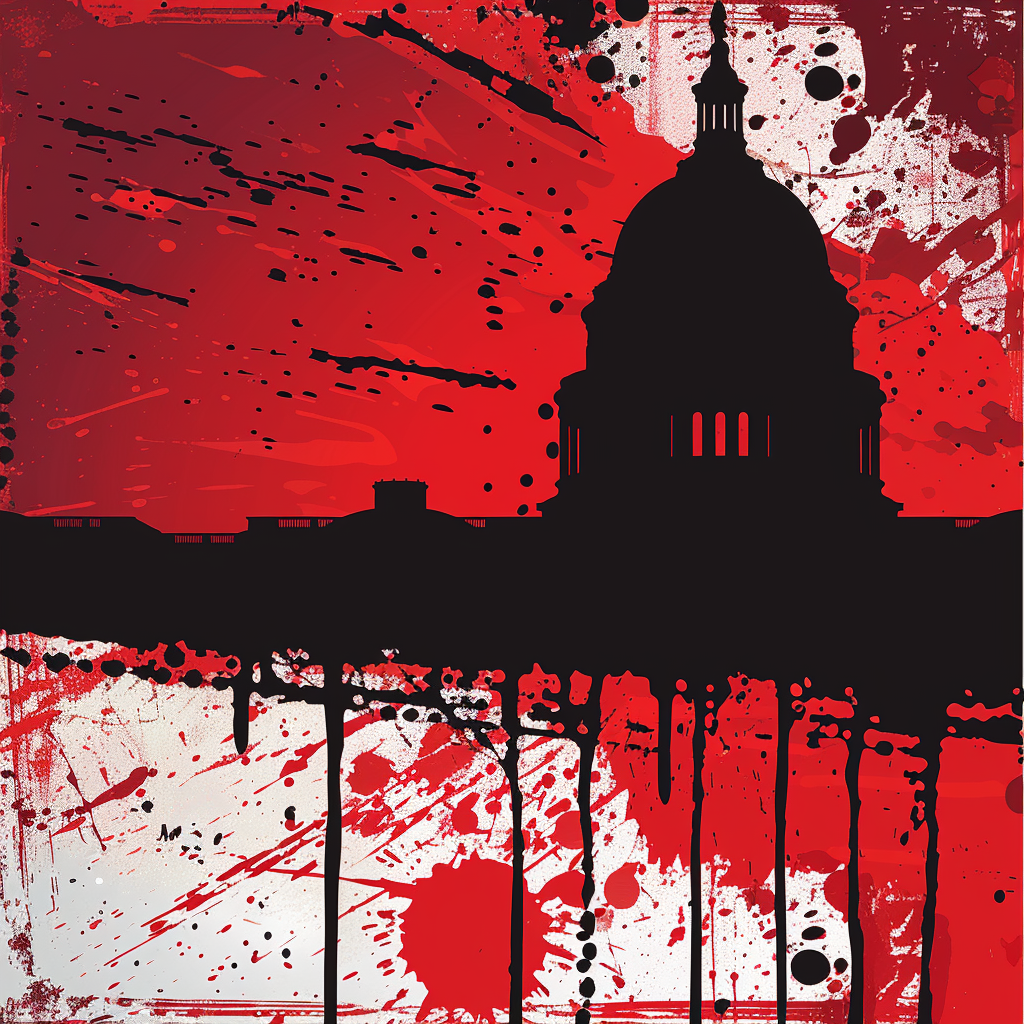
The ancient idea of democracy is under threat around the world. Today, there are only 63 democracies compared to 74 autocracies, and many of these democracies are highly problematic.
Russia has just had another fake election on behalf of Vladimir Putin, China doesn’t have open elections at all, and India’s democracy is looking increasingly strained. Elsewhere, things have got worse since the COVID pandemic, which simultaneously demonstrated the need for some kind of central authority to help people at times of national crisis, while also demonstrating the vulnerability of democratic governments.
In the USA, there’s the real prospect of an authoritarian-leaning charlatan returning to the White House, and populists with little regard for democratic principles are on the rise across Europe and Africa.
The conundrum is that while things are clearly better for citizens – in ways that can be measured – in more democratic societies, such as across Scandinavia, strongmen with fascist tendencies (and scapegoats to blame), look increasingly attractive when things go bad. War, climate catastrophe and other intractable problems are a boon to these political actors. Once anti-democratic forces are entrenched, it becomes increasingly difficult to remove them.
In Germany, where people have a particular interest in this problem, something called the Bertelsmann Stiftung Transformation Index has been published for the last twenty years, analysing the health of global democracy in great detail. The Index points to signs of optimism in places like Brazil and Poland, where authoritarians have been pushed on to the back foot recently, but numerous other countries, such as Bangladesh, Mozambique and Türkiye, are heading in the opposite direction, along with Germany itself.
When social cohesion collapses, and compromise becomes impossible, democracy cannot flourish. The Index authors point out that democracy is not a self-sustaining idea – it has to be protected and nourished. Public participation, trust, rule of law, and a well-informed populace are all vital (journalists must be able to do their work).
Democracy’s health also depends on big money not being allowed to corrupt the system. The example of the United States shows how easily democracy can become oligarchy.

Money, misinformation, fear, stupidity and ignorance threaten democracy’s existence, which is why these things need to be carefully watched, and called out.
Aussie democracy
In Australia we’re lucky enough to live in one of the most long-running and stable liberal democracies, along with Switzerland, but that doesn’t mean we can be complacent.
Secret, compulsory voting for all adults is the bedrock of our system, administered by an independent electoral commission, but democracy is facing challenges here from multiple directions, including unscrupulous politicians and a rapidly changing media landscape.
Peter Dutton’s shameful attack on the electoral commission last year, and use of misinformation on a range of issues, is beginning to look less like a blip than deliberate strategy as far as the Liberal Party is concerned.
Down in Tasmania on the weekend, Liberal leader Jeremy Rockliff stood up in front of the cameras and declared he’d won the election, when in fact he had failed to gain a majority of seats and suffered a 12 per cent swing against him. The party with the biggest positive swing was actually the Greens. It’s yet to be seen what type of minority government will be running the state.
Tasmania’s Hare-Clark electoral system means that unlike most places in Australia (at least in lower houses), the politicians who end up sitting in the state parliament correspond fairly accurately to the choices of the electors, rather than having their votes diverted in various undemocratic ways.
Hooray for democracy!
Originally from Canberra, David Lowe is an award-winning film-maker, writer and photographer with particular interests in the environment and politics. He’s known for his campaigning work with Cloudcatcher Media.
Long ago, he did work experience in Parliament House with Mungo MacCallum.
 For four decades The Echo has printed the stories some people loved, some people hated, and some pretended not to read. If you want us to keep telling the truth, the real truth, not the sugar-coated version. We’ll need your support to keep the presses rolling.


