


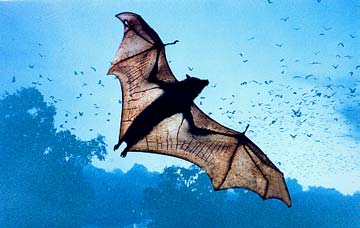
Visitors and residents in the Northern Rivers are being reminded not to handle or touch flying foxes and microbats.
While these lovely creatures play an important role in the ecosystem and in pollination they also can carry viruses including Australian bat lyssavirus, which is very dangerous to humans.

Acting Director of North Coast Population and Public Health, Robin Auld, warned against attempting to handle an injured or distressed flying fox or microbat, which are particularly active throughout spring and summer.
‘We often see an increase in the number of people being scratched by bats in late spring each year,’ Mr Auld said.
Australian bat lyssavirus can only be passed to humans from an infected flying fox or bat. Infection in humans can occur when bat saliva comes into contact with human tissue via an open wound or the eyes or mouth.

Wash with soap immediately
‘If someone is bitten or scratched by a flying fox or microbat, wash the wound immediately and thoroughly with soap and water for at least 15 minutes, and apply an antiseptic with antivirus action,’ Mr Auld said.
‘People should also seek medical attention as soon as possible to assess whether they are at risk of infection and to access rabies post-exposure treatment if required. Getting post exposure treatment as soon as possible is crucial, because there is no effective treatment once the symptoms of Australian bat lyssavirus commence and it is almost always fatal. ‘The early symptoms are flu-like, including headache, fever and fatigue. The illness progresses rapidly to paralysis, delirium, convulsions and possibly death.

‘If you see a bat in distress, injured or on the ground, do not try to rescue it. Contact WIRES on 1300 094 737, or if in Port Macquarie or Kempsey areas, call FAWNA 02 6581 4141. If you see a dead flying fox in a public area, contact your local council and ask them to dispose of it.’
Lyssaviruses are a group of viruses that includes bat lyssavirus in Australia and rabies overseas. These viruses are carried by mammals such as dogs, cats, monkeys and bats in some of Australia’s closest neighbours, including Bali and Thailand.
To protect yourself from these viruses when travelling overseas, there are some simple steps you can take:
- Talk to your doctor at least one month prior to departure about pre-travel rabies vaccination • Avoid contact with all wild and domestic animals while overseas
For more information, contact North Coast Population and Public Health on 1300 066 055, or visit the NSW Health website.
 For four decades The Echo has printed the stories some people loved, some people hated, and some pretended not to read. If you want us to keep telling the truth, the real truth, not the sugar-coated version. We’ll need your support to keep the presses rolling.