



The recent report, At Our Front Door by the Climate Council highlights where homes and businesses are most at risk from climate-fuelled flooding, bushfires, tropical cyclone winds, coastal inundation, and extreme wind.
Confrontingly, two Northern Rivers electorates make it into the top ten federal electorates that are most at-risk to climate extremes. In fact, the electorate of Richmond, which includes Tweed, Byron and Ballina shires ranks number one with 31,564 high-risk properties and the electorate of Page, that includes parts of Ballina, Lismore, Richmond Valley, Clarence Valley shiers ranks number five with 18,636 high-risk properties.
‘The climate crisis is literally at the doorstep of Australian households, as worsening extreme weather driven by climate pollution risks their greatest asset: the home,’ explained Climate Councillor and economist Nicki Hutley.
‘We keep getting hit by disasters in Australia and that’s driving insurance bills through the roof, but we cannot insure our way out of this crisis.’
The report uses the Climate Risk Map, an interactive online map using fresh data from Climate Valuation (both available to every Australian to see the climate risks in their local area), to analyse this data at a national level. It finds:
- One in 23 Australian homes and businesses, or 652,424 properties (4.4%), across the country are already at high risk today from one or more hazards that have been made more dangerous by climate pollution.
- Another 1.55 million properties (10.4%) nationally are at moderate risk – for which insurance costs will be abnormally high. That’s a further one in 10 properties.
- At high levels of climate pollution, our exposure to climate risk is set to get much worse, with twice as many properties (more than 1.3 million) at high risk by 2100.
- Further, the analysis finds that more than 72,000 homes and businesses are located in 86 suburbs categorised as “critical climate risk zones”, where 80-100% of properties are classified as high risk and insurance may soon become unaffordable or withdrawn entirely.
‘Our data draws on 15 million commercial and residential properties in over 15,000 Australian suburbs and 150 electorates. The numbers show us that climate change is not a far-off future event: it threatens entire communities today,’ said Climate Valuation founder Karl Mallon.
‘Most alarmingly, our analysis has identified 86 critical climate risk zones requiring urgent and major government interventions, such as flood levies, buy backs or other measures. It is imperative that decision makers at all levels look seriously at the stark statistics presented here and work to address questions head-on: What adaptation action are all levels of government going to take now to protect our vulnerable communities? And, how will this be financed?’
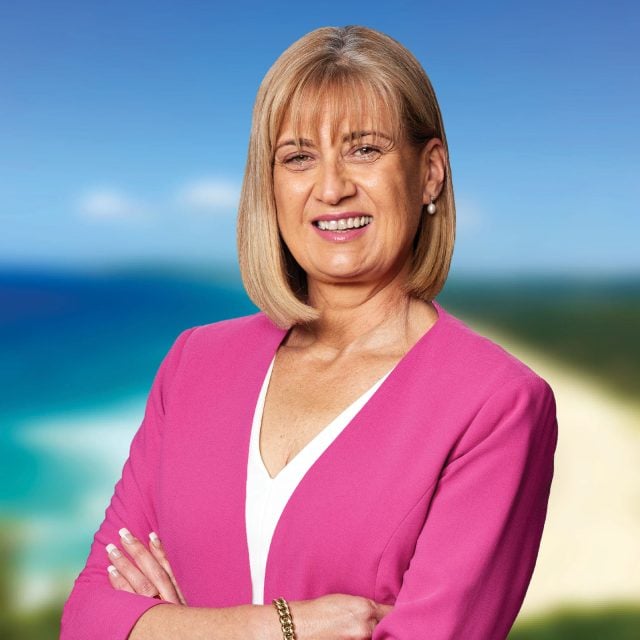
With the Richmond electorate being at number one for the number of homes and businesses at risk in Australia, Labor’s Federal Member for Richmond, Justine Elliot, told The Echo, ‘The Albanese government is acting on climate change and bringing down climate pollution now. Our action is contributing to global emissions reductions and securing our economic future in a global net zero economy. Our focus has been on supporting renewable energy and investing in a Future Made in Australia.’
Action needed
According to the report High Risk Properties (HRP) are defined as properties where there is a significant risk of insurance becoming unaffordable or withdrawn entirely due to the high risk of damage from extreme weather.

And with 31,000 proporties at risk across the Ballina, Byron and Tweed shires Greens candidate for Richmond, Mandy Nolan, told The Echo that, ‘This data confirms what people in this region already know first hand – the climate crisis is making insurance unaffordable.
‘We need big polluters to start contributing to the cost of insurance, instead of sending our community into financial hardship – and for some people– into homelessness.
‘We’ve had the same Labor MP for twenty years and Labor has approved over 30 new coal and gas projects. We can’t keep adding fuel to the fire. I only need a 1.8 per cent swing to win, to keep Dutton out and push Labor to act on the climate crisis and stop approving new coal and gas projects.’
With the impacts of climate change literally lapping at our front doors in the Northern Rivers and burning its way around the world there is no doubt that action is needed.
‘As the climate risk map and report makes distressingly clear, no home or business is now safe from the devastating consequences of burning fossil fuels,’ said Climate Councillor and Former NSW Fire & Rescue Chief Greg Mullins.
‘Even if your electorate is in a low risk zone, it does not mean fires or floods won’t happen in your local area because climate change has rewritten the rules.
‘As the recent fires in LA and Japan show, massive fires can now happen in winter. They can happen in rainforests like the Daintree or in the suburbs of London. We’ve been through Black Summer, Black Saturday, and the 2003 fires that badly impacted Canberra. Unfortunately, we’ve already locked in conditions for similar fires again, but we have a choice for the future. We must drive down global climate pollution faster and continue the shift to clean energy. The cost of failing to do so is spelled out in this climate risk map.’
 For four decades The Echo has printed the stories some people loved, some people hated, and some pretended not to read. If you want us to keep telling the truth, the real truth, not the sugar-coated version. We’ll need your support to keep the presses rolling.


