

20.3 C
Byron Shire
October 20, 2026

Remembering Wave Hill, fifty years on

Latest News

Cinema: NAZA

A must-see, award-winning documentary investigating AI warfare in Gaza. Fresh from winning the Special Jury Prize at the 2026 Venice International Film Festival, NAZA, the latest documentary from Academy Award-winning filmmakers Yuval Abraham and Rachel Szor (No Other Land), examines artificial intelligence and surveillance in Israel’s military operations in Gaza.

Other News

Thirty-six unmissable films

The 2026 Russell Hobbs British Film Festival features an unmissable line up 36 films, including five retrospectives which will screen from 28 October to 29 November at Palace Byron Bay and Ballina Cinemas.

Music overtones at Byron Bay International Film Festival

From the extraordinary life and legacy of Marianne Faithfull to the raw energy of Australia’s 1995 Summersault tour, a larrikin road trip through the Australian bush and the next generation of music video makers, music runs through this year’s Byron Bay International Film Festival. 

Police seize 22 e-bikes in Sydney

As part of a crackdown on e-bikes across the state, 22 illegal e-bikes have been seized following a NSW Police Force and Transport for NSW joint operation across southern Sydney and the Illawarra.

Lismore seeks feedback on waste rethink as disposal choices remain unresolved

Lismore residents are being asked to comment on a revised waste strategy as Council works towards diverting rubbish from landfill while leaving its long-term disposal options unresolved.

Courtney Act puts Gerwyn Davies’ colourful world in the spotlight

Sequins, spandex and seaside souvenirs will be up for discussion when Courtney Act takes the interviewer’s chair in Murwillumbah next month.

Wanderlust come to Mullum

Wanderlust invites the community to a magical evening celebrating connection and conscious living at the Wanderlust Night Market.

Vincent Lingiari addresses the media after Prime Minister Gough Whitlam officially returns Aboriginal land at Wattie Creek, 1975.

It’s fifty years since Gough Whitlam poured red sand into Vincent Lingiari’s hand, symbolising the legal transfer of Wave Hill Station in the Northern Territory back to the Gurindji people.

This was the result of many years of quiet, unrelenting pressure from community leader and stockman Lingiari against seemingly insurmountable forces; government, empire and capital. It began as a dispute about wages, but became something much more – the beginnings of the land rights movement.

The station at Wave Hill had a troubled history, and was burned down in 1899. By 1912 it was carrying 75,000 cattle, and was acquired by a British pastoral conglomerate owned by the English Vestey Group, who were still in charge when Vincent Lingiari and 200 other Gurindji people walked off in 1966, in protest at appalling working and living conditions, and less than minimal wages for their labour.

Many were never paid at all, and had no access to education, health care or basic dignities.

Strike

The strikers sent a petition to the Governor-General, Lord Richard Casey, requesting a lease of 1,300 square kilometres, to be operated cooperatively, but Casey refused.

Lord and Baron Samuel Vestey modelling a very fancy hat in 2012, while riding in the Queen’s Birthday Parade as Master of the Horse. Wikipedia/CC

The station owner, cattle king Lord Samuel Vestey, worked with the government to deny the strikers food and communications, but Lingiari discovered ways to work around these obstacles, continuing his quiet diplomacy and finding support far beyond the Territory.

The striking Gurindji workers and their families found strength on their traditional country around Dagarau, known to the colonists as Wattie Creek, and unionists organised for food and financial support for the strikers.

Popular author Frank Hardy publicly backed the Gurindji, and the people managed to survive and hold strong long enough for the national political mood to change in their favour. As Paul Kelly and Kev Carmody put it,

‘Eight years went by, eight long years of waiting,
‘Til one day a tall stranger appeared in the land,
And he came with lawyers and he came with great ceremony,
And through Vincent’s fingers poured a handful of sand…’

For the first time in Australia’s history, the federal government legally recognised Traditional Owners rights to their traditional lands, acknowledging 60,000 years of lived connection.

On 16 August 1975 Prime Minister Gough Whitlam said, ‘Vincent Lingiari, I solemnly hand to you these deeds as proof, in Australian law, that these lands belong to the Gurindji people and I put into your hands part of the earth itself as a sign that this land will be the possession of you and your children forever.’

Lingiari responded by saying, ‘Let us not make it hard for each other… We want to live in a better way together, Aboriginals and white men, let us not fight over anything, let us be mates.’

From little things, big things grow. Image Cloudcatcher Media.

Birth of land rights

The iconic sand photo was shot by Indigenous photographer Mervyn Bishop, whose life was transformed as a result, having captured the symbolic birth of land rights.

PM Gough Whitlam was dismissed in November 1975.

Vincent Lingiari was named a Member of the Order of Australia in 1976, and died in 1988. His work lives on via the Lingiari Foundation, which promotes reconciliation and develops Aboriginal leadership, as well as the annual Vincent Lingiari Memorial Lecture.

Vestey Group sold its Australian pastoral holdings in 1992. Lord Vestey went back to England, serving as Master of the Horse to Queen Elizabeth from 1999 to 2018, and being investigated for financial irregularities before he died.

In 2020, Native Title rights to the land in question were formally granted to the Gurindji people, allowing them to receive royalties as compensation from resource companies who explore the area. The original walk-off route, near Kalkarindji, is now heritage listed.

Fifty years since 1975, the Wave Hill story is a reminder of what political courage looks like, from above and below, and of how far Australia still has to go.
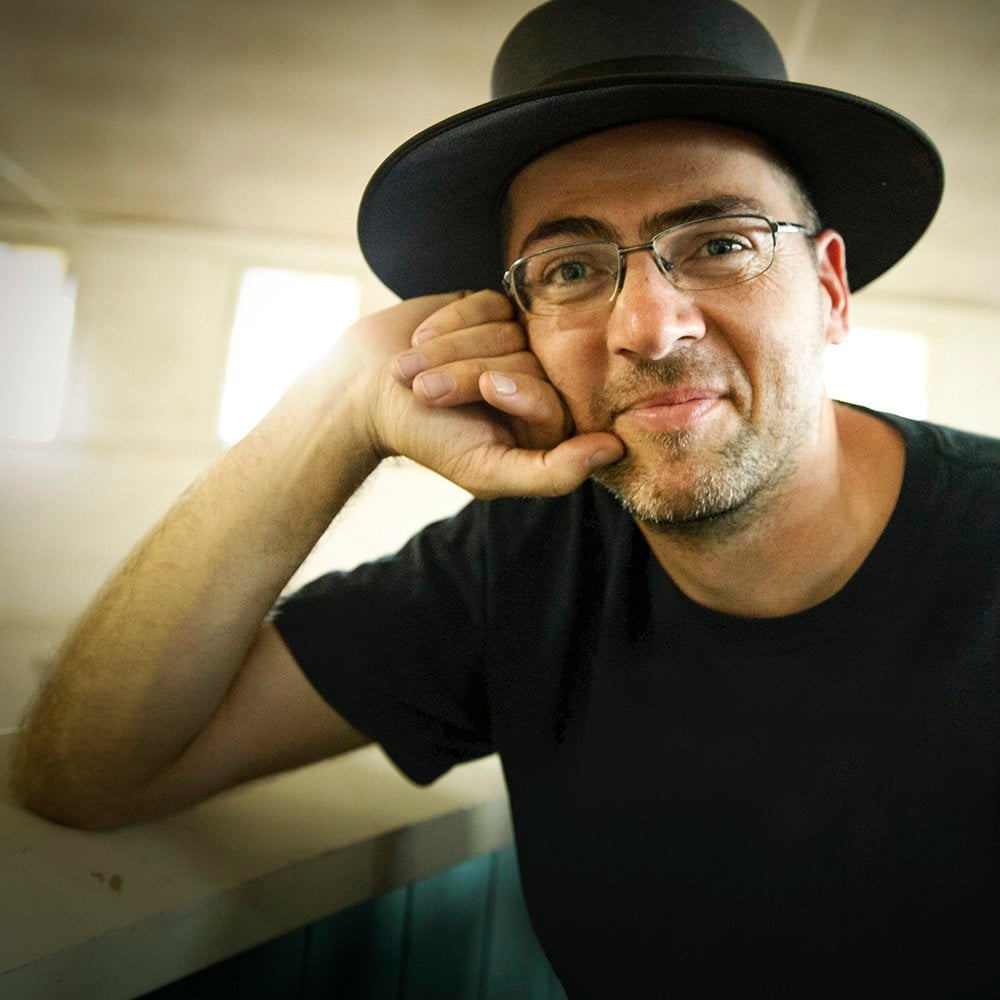

David Lowe
David Lowe. Photo Tree Faerie.

Originally from Canberra, David Lowe is an award-winning filmmaker, writer and photographer with particular interests in the environment and politics. He’s known for his campaigning work with Cloudcatcher Media.

You can find more of his writing at Patreon and Gumroad.



For four decades The Echo has printed the stories some people loved, some people hated, and some pretended not to read. If you want us to keep telling the truth, the real truth, not the sugar-coated version. We’ll need your support to keep the presses rolling.


If you are a local business owner help us and in turn we help you. All The Echo asks for is advertising, not a free ride. It is every advert in The Echo and on www.echo.net.au, which creates the space for all the stories and coverage of community events, happenings and concerns.

If you are a reader you can become a sponsor of The Echo. Your support keeps the us independent.

Even a small one-off or regular donation from you will help keep the echo’s independent voice alive and strong.

Support Us

Become one of the supporters who helps keep independent, local journalism alive in the Byron Shire by contributing anything from as little as the cost of a coffee each month.

You're Wonderful, Thank you for supporting independent journalism in the Byron Shire

You’re supporting The Echo, thank you

Your contribution is keeping independent, local journalism alive in the Northern Rivers.

Because of supporters like you, we can keep every story free for everyone — no paywall, no exceptions. Your money goes directly to funding our newsroom of 40-odd local workers covering the stories that matter to this community.

Tell us what you think, give us your opinion

The Echo loves your letters and comments and is proud to provide a community forum on the issues that matter most to our readers and the people of the NSW north coast. So don’t be a passive reader, email us your epistles at editor@echo.net.au.

The letters deadline for The Echo is noon Friday. Letters longer than 200 words may be cut. The publication of letters is at the discretion of the letters editor. Please remember to include your full name, address and telephone number.

Online comments are no longer available.

Interview with Genevieve Clay-Smith, director of Boss Cat showing at the Byron Bay Film Festival

When Sonja (Olivia Hargroder) loses her mother without warning, the only steady presence left in her life is her grandmother, Doris. But Doris’s idea of stability means dismantling everything Sonja has built. For Sonja, who lives with Trisomy 21 (Down syndrome) and has spent her life fighting to be underestimated by no one, Doris’ plan feels less like protection and more like erasure. Directed by Genevieve Clay-Smith, Boss Cat is a vibrant, big-hearted Australian dramedy about independence, family and self-determination, anchored by a fearless lead performance.

Something for everyone at the Picture House

From Australian superstar musos, to brand new documentaries, to comedians at the top of their game, there really is something for everyone at the Brunswick Picture House.

Thirty-six unmissable films

The 2026 Russell Hobbs British Film Festival features an unmissable line up 36 films, including five retrospectives which will screen from 28 October to 29 November at Palace Byron Bay and Ballina Cinemas.

A timeless story of self-discovery

A husband with a promotion, two adorable children and a lovely new house. Nora thought she had it all. But did she? What was the discontent that was whispering to her in the shadows?
