



In medieval times, for a fee, indulgences were granted by the church to rich men to expiate their sins. Since the link between carbon dioxide emissions and global warming has been understood, there’s been a similar vibe around many carbon capture and storage projects, with the existence of this technology providing an excuse for very large companies to continue polluting our atmosphere, rather than transitioning to renewables.
That said, the underlying theory of CCS makes sense. If more carbon can be removed from the atmosphere than is being released, everybody wins. The only problem is that practical results so far haven’t lived up to expectations.
In Western Australia, the Gorgon CCS project is currently the largest operation of its kind in the world, theoretically able to deposit up to 4 million tonnes of CO2 per year in deep saline aquifers beneath Barrow Island, but in practice storing much less than that.
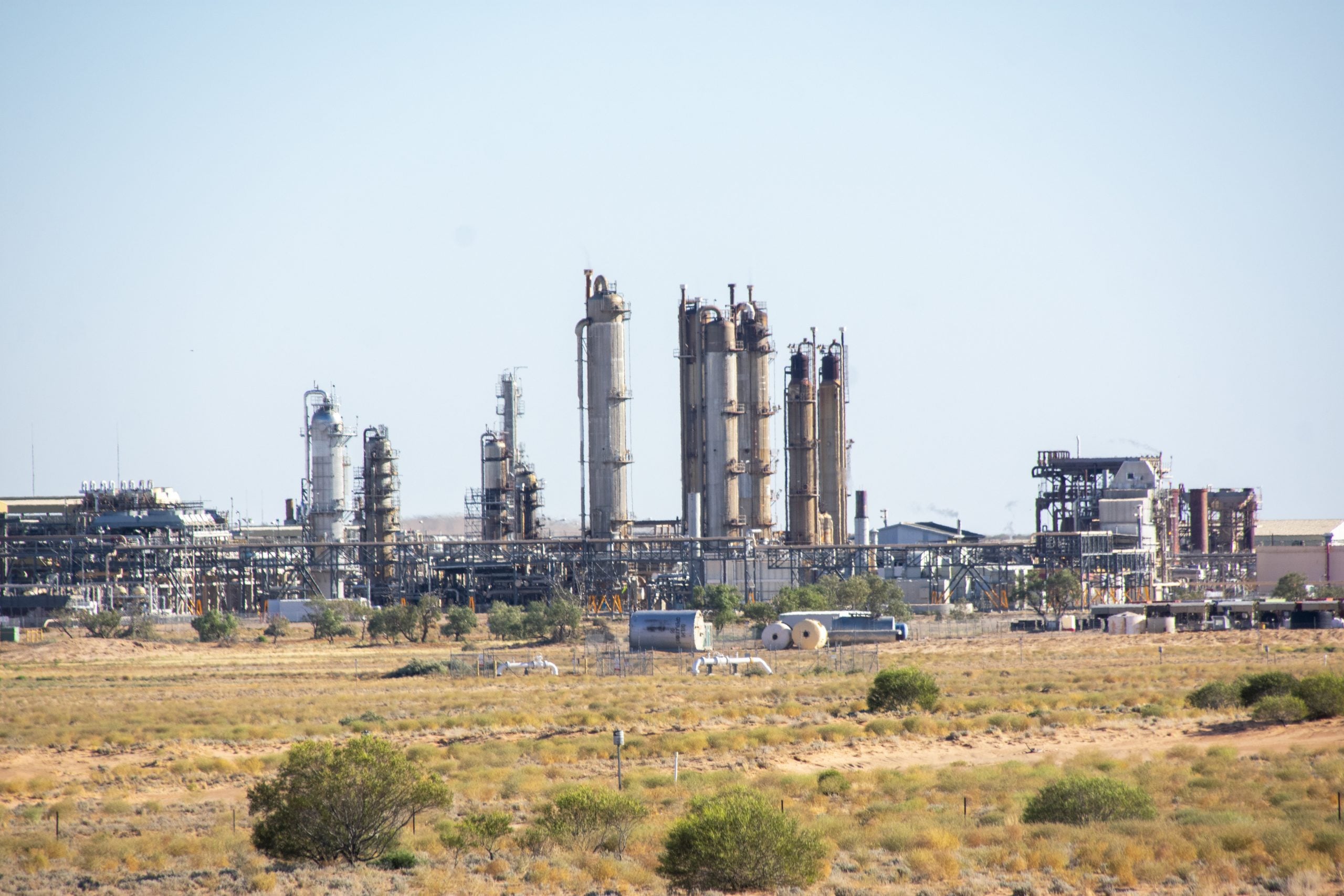
Another mega-project tied to a gas operation, Moomba CCS in South Australia, is currently injecting CO2 into depleted gas fields in the Cooper Basin at the rate of 1.7 million tonnes per year, with a theoretical capacity of 20 million tonnes per year, for at least 50 years.
The problem is that the company involved, Santos, produces Scope 1-3 emissions of upwards of 38 million tonnes per year, and is expanding its hydrocarbon production around the world.
As part of the transition to net zero, the Australian government and CSIRO are exploring a number of new carbon capture technologies. $1.6 million has gone to the University of Melbourne to trial converting CO2 captured from the atmosphere into travertine, a type of carbonate rock, and research is underway into new CCS techniques at the Otway International Test Centre, also in Victoria.
DAC Labs
Some of the most promising work in the field of direct air capture of existing emissions is being done by people associated with the University of Sydney, notably Dr Sam Wenger of DAC Labs.

While the exact details remain under wraps for commercial reasons, Wenger and his team claim to have found a way to capture atmospheric CO2 using renewable energy, raw material efficiency, automation and modular design.
The technology is pitched as a great improvement over earlier DAC methods, with compact units requiring 99.9 per cent less land than forests to extract the same amount of carbon dioxide.
Captured CO2 could then be stored underground or used to produce carbon-based products such as aviation fuels and building materials, including concrete and plastics. They’re currently building a 10 tonne per annum demonstration unit, with a plan to scale up to kilotonne pilots and eventually modular ‘megaforests’.
In the near future, DAC Labs say it will be possible for anyone to purchase meaningful, permanent carbon abatement at an initial price of around $1.50 per kg of CO2.
Dr Wenger told The Echo, ‘We have been very conscious to only offer our CO2 removal service once we are confident that we can deliver on the removal, the sequestration, and third party verification. At that point in time, we will only pre-sell an amount that we feel we can reasonably remove in the next 2-3 years. We strive to have the highest delivery-to-purchase ratio in the industry.’
What about forests?
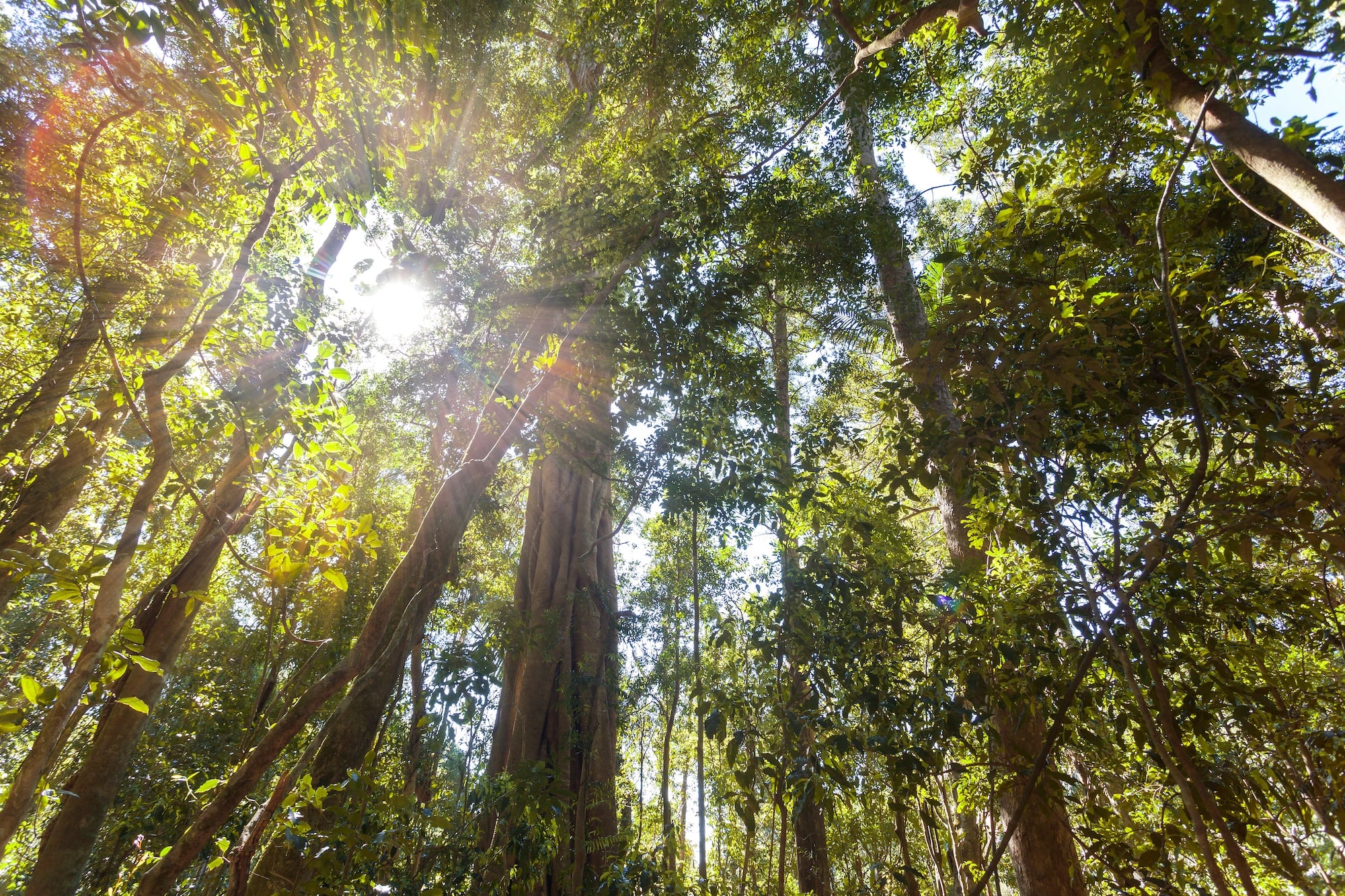
Air transport is one of the most carbon emission intensive activities any individual can undertake. Currently, if you need to take a flight, your only option is to tick the carbon offset box, with a promise to plant or protect trees on your behalf.
Unfortunately these offsets are about as useful in practice as indulgences, providing little more than a warm inner glow.
Verra is the world’s largest carbon offset certifier. A major investigation in 2023 found that 90 per cent of Verra’s credits were essentially worthless, not representing real carbon reductions. Forests burn down, exist already in protected areas, or might be saved at the cost of neighbouring forests.
Government carbon offset projects involving forest plantings on old agricultural land have also been a dismal failure, according to UNSW and ANU researchers. This is not to say that we shouldn’t all be planting more trees, and stop destroying forests, but the latest evidence shows that we can’t simply plant our way out of the global climate crisis.
The solution is likely to also include permanent, verifiable and measurable direct air capture of CO2, biochar (locking carbon into soil in a relatively stable form), and enhanced rock weathering. ERW involves finely crushing silicate rocks like basalt and spreading them over agricultural land, converting carbon into a geologically stable form and simultaneously creating natural fertiliser to replace hydrocarbon derivatives.
By great good fortune, Australia is well placed to take advantage of all three of these approaches, as well as being blessed with abundant wind and solar resources. Time to get on with it!
• This article appears in Sustainability 2026 – an Echo supplement appearing as part of The Byron Shire Echo issue 40.47, April 29, 2026.
View Sustainability 2026 online here.

 For four decades The Echo has printed the stories some people loved, some people hated, and some pretended not to read. If you want us to keep telling the truth, the real truth, not the sugar-coated version. We’ll need your support to keep the presses rolling.


