



Richmond Riverkeeper says it welcomes the data behind CSIRO’s new model for the Richmond River catchment, accepting that even the most ambitious set of measures modelled would not stop towns in the catchment from flooding, while warning that the health of the river itself is still missing from the conversation.
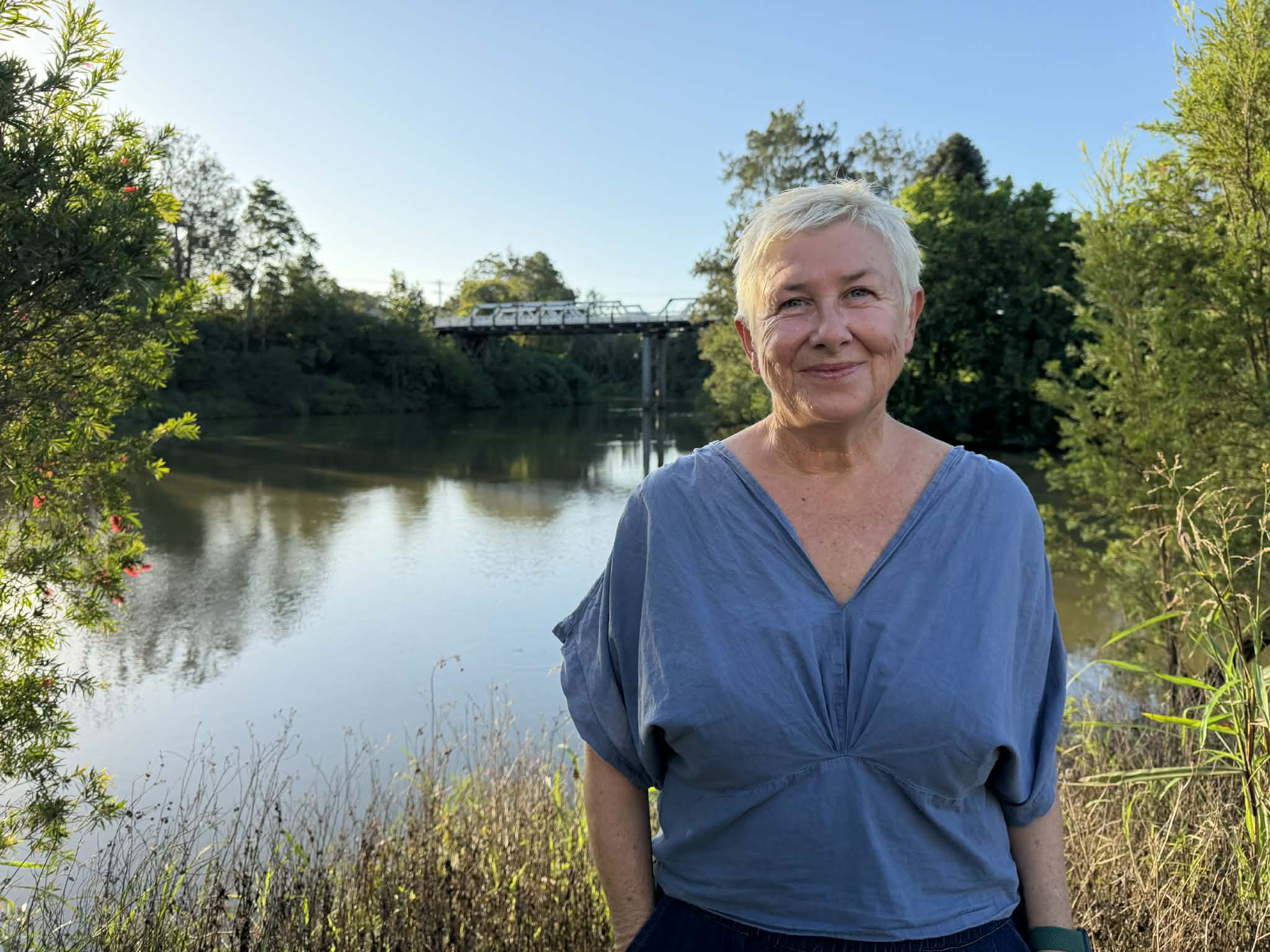
‘You cannot talk about flooding in the Richmond catchment without talking about the river,’ said spokesperson Dr Adele Wessell.
‘Ten detention structures plus the lower catchment interventions will change this catchment for decades to come, and none of that has been assessed. Floods are not only a hazard. In a healthy catchment, floods are part of what keeps the river system working. That side of the story has not been told yet.’
Flooding can’t be engineered away
The report, released by CSIRO for the National Emergency Management Agency as part of the Northern Rivers Resilience Initiative, models two bundles of flood mitigation measures against three major flood events: 2008, 2017 and 2022.
All fifteen measures put to the community during consultation were structural or engineering measures, including new water detention basins, levee upgrades and drainage works.
Nature based solutions were the only category of response raised by the community that was not modelled, and have been deferred to a separate project.
‘This is careful science, and CSIRO deserves credit for building the first whole of catchment flood model for the Richmond,’ Richmond Riverkeeper President Dr Adele Wessell said.
‘But this report is not a plan to stop flooding. It is a study of how much flood peaks might be reduced. The river is still going to flood. The question we need to keep asking is what kind of catchment it floods in.’
Urgent call
Richmond Riverkeeper is calling on CSIRO, NEMA, NSW Reconstruction Authority and local members to:
- Assess river and catchment health, including ecological flows, fish passage, sediment transport, water quality and floodplain wetland connectivity, with the same scientific rigour applied to the flood modelling, before any construction decision is made.
- Bring nature based and river health options into the same CSIRO led modelling framework used for the structural measures, rather than leaving them to a separate and undefined process.
- Continue to communicate clearly to the community that these measures reduce, but do not remove, flood risk.
- Ensure any further feasibility work includes a full cost benefit analysis, covering the social, cultural and economic impacts and values that have been out of scope so far.
Speaking for the river
Richmond Riverkeeper is the independent voice for the rivers, sub catchments and tributaries of the Richmond catchment, and is affiliated with the Global Waterkeeper Alliance.
The organisation is calling for a Richmond catchment where the rivers are healthy, where floods are understood as part of that health, and where the community and Custodians have a voice in decisions that will reshape the river for generations.
The Richmond Riverkeeper is also calling for the Richmond River to be recognised as a living entity with rights of its own, following the lead of rivers such as the Birrarung (Yarra) in Victoria and the River Wye in the United Kingdom.
A limited community consultation process about the CSIRO’s plans are underway. The Kyogle and Casino sessions have already been held, with the Lismore and Ballina sessions to be held today:
- Lismore – Wednesday 22 July, 9:00am–11:00am at Lismore Workers Club.
- Ballina – Wednesday 22 July, 3:30pm-5:30pm at Ballina Lighthouse & Lismore SLSC.
- Woodburn – Thursday 23 July, 9:00am–11:00am at Woodburn Memorial Hall.’
 For four decades The Echo has printed the stories some people loved, some people hated, and some pretended not to read. If you want us to keep telling the truth, the real truth, not the sugar-coated version. We’ll need your support to keep the presses rolling.


