



There was a momentary pause in the usual fighting, abuse and party conflict that characterises the NSW state parliament last week as the outgoing MP for Ballina, Tamara Smith, reflected on her time as a regional political trailblazer, in a long and emotional speech to an audience which included many colleagues and family members.
Ms Smith began her final address to the NSW parliament last week by acknowledging First Peoples’ sovereignty, and recognising Aboriginal and Torres Strait Islander peoples’ enduring connection to and stewardship of Country.
She described efforts during her time in parliament to create opportunities for First Peoples and support organisations they control, acknowledged the ongoing effects of dispossession in her electorate.
Her story as the Member for Ballina, she said, began and ended with the Bundjalung people: the Arakwal in the north, the Nyangbul in the south and the Widjabal Wia-bal in the west.

She thanked Bundjalung women who had guided and supported her, including Byron Cr Delta Kay, as well as the Cabbage Tree Island community ‘for their trust’.
Greatest privilege
Smith reflected on nearly twelve years in parliament as the greatest privilege of her life.
An originally reluctant candidate with a background in education, she said she had taken the responsibility seriously and was grateful to the Greens Party, its volunteers and supporters, and the people of her electorate – whether or not they had voted for her.
She compared public service to putting one’s work before an audience and receiving unsolicited notes. Drawing on her brother Dominic’s experience as an author, she joked that people often believe someone else could have done the job better. For an MP, the electorate delivers its report card at each election: ‘They either buy the book or they don’t.’
As a private and introverted person, Smith said public life hadn’t always been easy. Her constant guide, she explained, was responding to her constituents’ needs and aspirations. She had tried to practise hopeful, positive politics – not by glossing over problems, but by recognising people’s bravery and resilience and focusing on practical solutions.
Tamara Smith said her office had helped thousands of people and that her team had prioritised those experiencing poverty and homelessness. She highlighted the 2022 floods, which pushed many people and families into poverty and insecure housing.
That disaster, she said, showed both the growing effects of climate change and the long, often incomplete process of recovery.

Greens making history
She also celebrated the Greens’ electoral success in Ballina. The party won the seat from the Nationals after 27 years, with a margin of less than one per cent; it now stands at just under eight per cent. In 2023, the Greens won the primary vote.
Smith credited this result to decades of work by local Greens and supporters, and to standing with the community on social justice, essential services and protection of wild places and species.
Climate change, she said, was the reason she entered politics – and a fitting subject for her departure. She warned that the world faces profound risks from climate change, conflict, systems collapse and artificial intelligence.
In recent years, she said, communities had endured disasters including the Black Summer bushfires, the 2022 Northern Rivers floods and other extreme weather, alongside coral bleaching and damage to marine life. She had heard similar accounts from communities overseas and in the Pacific.
Ms Smith warned that without sharp emissions reductions, the consequences for ecosystems and people would be severe. When she entered parliament in 2015, the Paris Agreement had raised hopes of limiting warming to 1.5 degrees Celsius. A decade later, she said, the world was at risk of reaching 2.6 degrees by century’s end.
She criticised governments for supporting new gas developments and extending coal production while arguing that gas can replace coal. Quoting journalist Marion Wilkinson, she said the gas is better than coal argument set ‘a very low bar.’

Governments, she argued, should assess the full climate impact of Australia’s fossil fuel exports and introduce a climate trigger in energy and environmental laws.
Grounds for hope
Tamara Smith pointed to legal decisions as grounds for hope.
She cited the Rocky Hill coal mine case, in which a court rejected the argument that another project would proceed if one was refused, and a recent High Court decision concerning the Mount Pleasant mine. She also highlighted Australia’s solar and battery uptake and the record share of renewable energy on the national grid.
The community response to the 2022 floods, she said, offered another example of hope, in people’s care for one another and their determination to adapt.
The scale of the crisis calls for honest conversations, Smith said. People must consider their own part in the problem and the choices available, while governments support communities to adapt.
She quoted climate scientist on the challenge of adapting to rapid warming, and concluded that humanity’s effort to learn to live sustainably could become ‘a redemptive moment for our species.’
Much of the address was devoted to thanks. Smith expressed gratitude to her daughter Tara, son-in-law Luke, brother Dominic, extended family and close friends. She praised her staff, past and present, for their work for the community, and thanked mentors Jan Barham and Jamie Parker.

Parker’s mantra that ‘the community is the hero of every story,’ she said, had shaped her approach to public service.
Collaborators
She also thanked colleagues across parliament, including people from different political parties, ministers, crossbench members, clerks and parliamentary staff, notably the ‘inspiring’ Janelle Saffin.
She praised the collaborative relationships that had helped her advocate for the Northern Rivers, and described the NSW Reconstruction Authority as an important innovation in disaster recovery.
Smith said she was leaving public life not because she was unhappy, but because she had become ‘too comfortable; and wanted to learn, prove herself in a new setting and spend more time in nature.
As for those who had sought to harm her during her time in public life, Tamara Smith said she would remember the privilege of serving her community, not those who had hurt her.
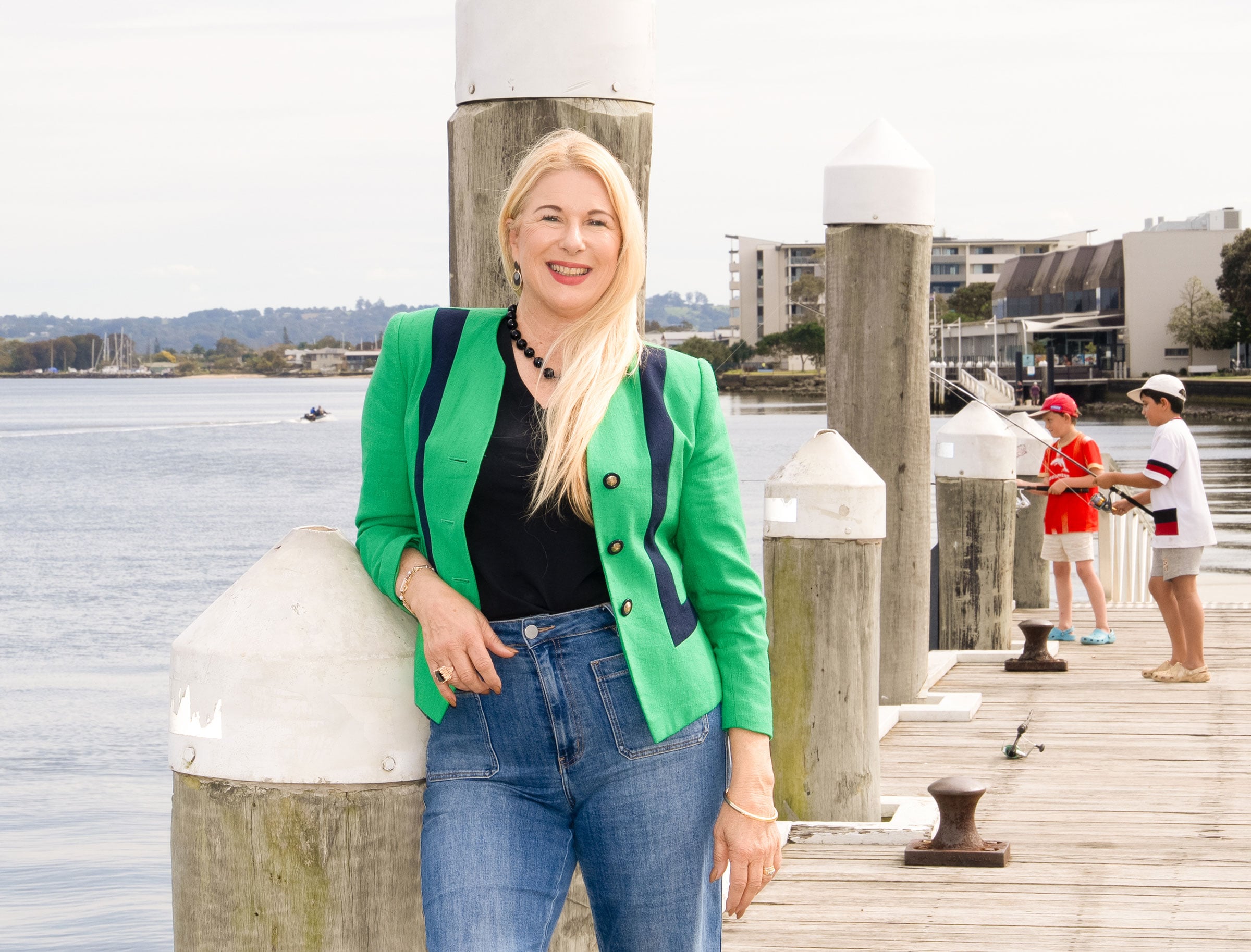
‘Thank you to our Greens candidate for Ballina, Mandy Nolan, who is here with her husband John. Mandy has devoted decades to supporting vulnerable people in our community, and she has supported me throughout my entire parliamentary career, and the Greens, in an incredibly selfless way.
‘She will serve our community well, and I hope you get to have her here because she’s also a hoot!’
Tamara Smith’s final message was for people to ‘be kind to yourselves and each other. You have very few precious moments on this Earth in the scheme of a vast and infinite universe. Enjoy it and make it matter.’
The next NSW election will be held in March 2027.
 For four decades The Echo has printed the stories some people loved, some people hated, and some pretended not to read. If you want us to keep telling the truth, the real truth, not the sugar-coated version. We’ll need your support to keep the presses rolling.



