


David Lisle
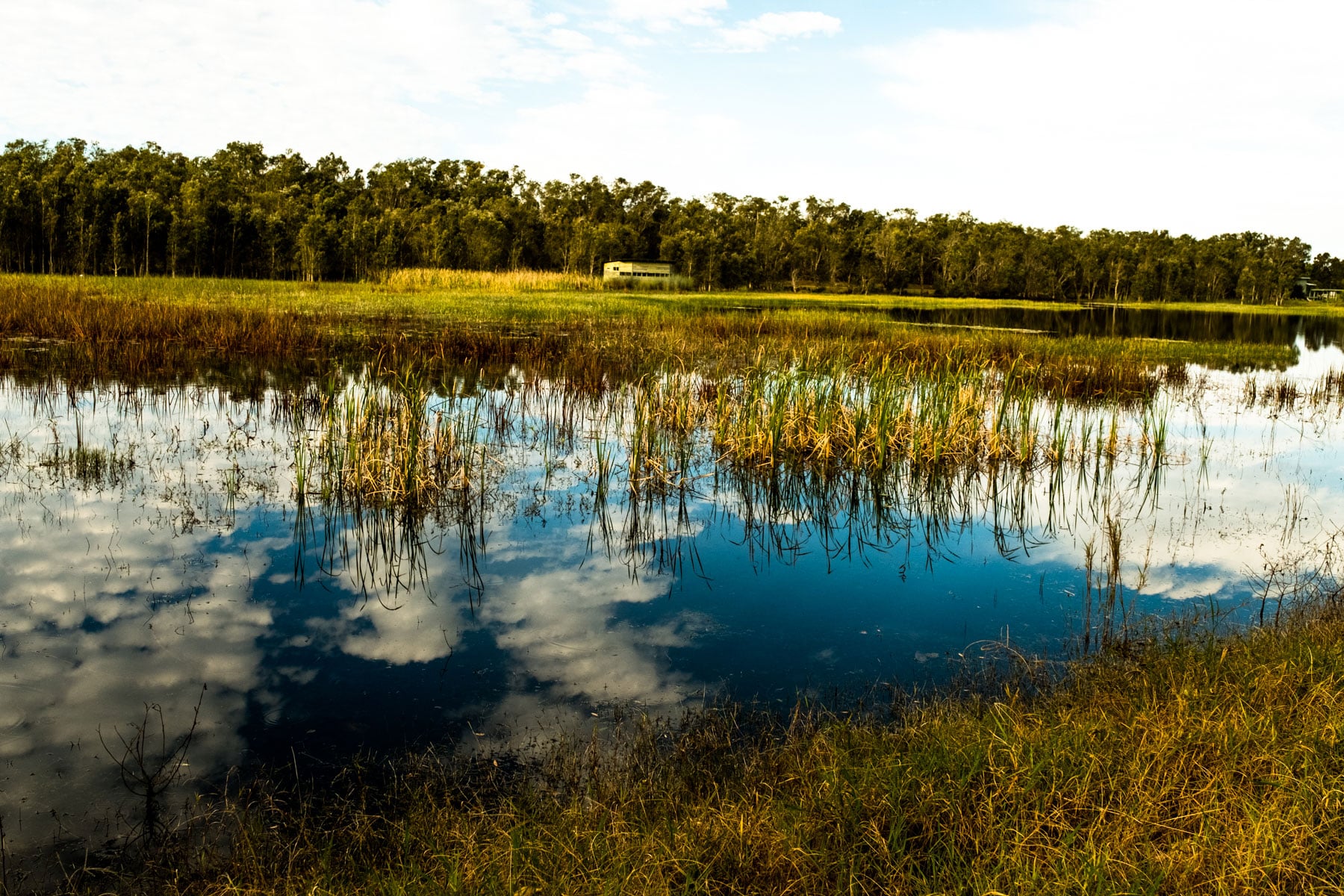
Byron Wetlands is a vibrant bird sanctuary, alive with birdsong and the thrum of insects. But it is scarcely wilderness. Construction noise and Ewingsdale Road’s traffic hum mingle with the great egret’s guttural honk and such spirited vocalists as the varied triller.
The wetlands form part of Byron’s sewage treatment plant (STP) and are nestled between the Cavanbah sports fields and the industrial estate. The part of the industrial estate currently expanding towards this precious wildlife habitat is the poetically named Habitat.
Wetlands are among the world’s most vulnerable ecosystems. When the STP was built two decades ago, an area was set aside as a wildlife sanctuary — a quid pro quo of sorts, in recognition of the industrial incursion into a delicate coastal ecosystem.
Now Council has plans to construct a bioenergy plant adjacent to the wetlands and STP. The development application (DA) is on exhibit until 10 August Feedback is encouraged.
Financial incentive
The STP is Council’s largest single consumer of electricity. The proposed plant would use a process of dry anaerobic digestion to transform sewage sludge, grease trap waste, domestic green waste and commercial food waste into biogas for electricity to power the plant. Surpluses will be exported into the grid. A rich compost by-product, to be sold to local farmers, is touted as an additional revenue stream.
Indeed, the impetus for the plant, which is expected to cost $15–20 million, is perhaps more financial than environmental.
Electricity is expensive, as is creating landfill, and carting organic waste and sewage sludge interstate for processing. The hope is to secure grant funding from government agencies, such as the Australian Renewable Energy Agency (ARENA), and that Byron Shire Council (BSC) can borrow the money. The project will apparently help us towards ‘net zero’, create three jobs, and pay for itself in 10 to 20 years. Rates won’t rise.
Greenwaste goes to Qld
Curiously, Council currently collects ‘green bins’ weekly from households and trucks the organic material to Queensland. Now it will be trucked to the wetlands and become ‘renewable energy,’ replacing renewable energy from the grid.
The green bin waste stream was created by Council six years ago to keep organics out of landfill. These days, 30 per cent of domestic ‘red bin’ waste is organics. Byron’s restaurants dump most of their food waste in landfill. All up, half of this ‘green’ shire’s landfill is organics!
Burying organics is a source of methane, a potent greenhouse gas – diverting organic material from landfill offers real environmental dividends.
But how much diversion will occur because of the bioenergy plant is uncertain. Project manager, the affable John Hart, hopes the plant will stimulate commercial organics collection and prompt Council to address landfill contamination with reinvigorated education campaigns. Council has nothing planned though.
Project flaws
The proposal presents as an innovative, climate friendly solution to our organic waste management woes. But there are murmurs in the community about basic flaws in the project’s fundamentals, and the process by which it is being pursued.
I wonder about the creeping industrialisation, and whether Council values bioenergy over biodiversity? Will a 14-metre-tall addition to the STP, and the attendant truck movements – at least ten in, and out, daily – impact negatively on the wildlife using the refuge? Will birdlife, already stressed by human activity, be further marginalised?
A local conservation group, Byron Bird Buddies, has been monitoring the wetlands for 15 years. Their monthly surveys, undertaken on Council’s behalf, provide a rich source of data about the wetlands’ winged residents and visitors.
Two hundred and forty bird species have been observed in the wetlands, including 24 listed as threatened. Those in danger include the black-necked stork, aka Jabiru; a large, striking bird and Australia’s only stork.
Eighty migratory species visit the wetlands, including the Latham’s snipe, an epic journeyer who breeds and spends the northern summer in Japan, and then flies here for our summer.
Wetlands just a ‘buffer’
Council takes great pride in the wetlands. Its grandly named Byron Bay Integrated Water Management Reserve is described as an ‘award-winning example of how good resource management can minimise the impact of the sewage treatment plant on surrounding ecosystems and create a wonderful, natural habitat for the support of local flora and fauna diversity.’
Yet in the DA, the wetlands are characterised as a useful ‘buffer’ around the development. Council’s focus is the plant’s impact on the neighbours at Habitat, not on actual habitat.
They consider adverse biodiversity impacts ‘unlikely’, because no threatened species are located on the proposed development’s actual footprint (aside from the troublesome Mitchell’s rainforest snail, which will be relocated) and will happily ‘offset’ any impact by paying into the state’s biodiversity conservation fund.
The range of shorebirds and waterbirds visiting the wetlands is in decline. The exact reasons are uncertain. But it is clear that in the Anthropocene, non-human life gets squeezed. Time for a reminder that habitat loss drives extinction?
Byron Bird Buddies’ convenor Jan Olley knows the site intimately, and urges caution. Her group fears the bioenergy plant will add further pressure to this beautiful, fragile site. The disturbance from trucks bringing ‘feedstock’ into the plant along a road to be built beside the ponds is of particular concern.
The industrial feel of the wetlands befits its entwinement with a sewage facility. Whether the bioenergy plant and its truck movements deter avian visitors and residents is an open question.
Council and its consultants assure us there will be no impact. The Byron Bird Buddies are less sanguine, but will continue harvesting data from the field. In time, we’ll get a sense of how bioenergy and biodiversity cohabit.
♦ David Lisle’s partner is a member of Byron Bird Buddies.
 For four decades The Echo has printed the stories some people loved, some people hated, and some pretended not to read. If you want us to keep telling the truth, the real truth, not the sugar-coated version. We’ll need your support to keep the presses rolling.



