


For years, Byron residents have been told the Shire is carrying the financial burden of being one of Australia’s premier tourist destinations.
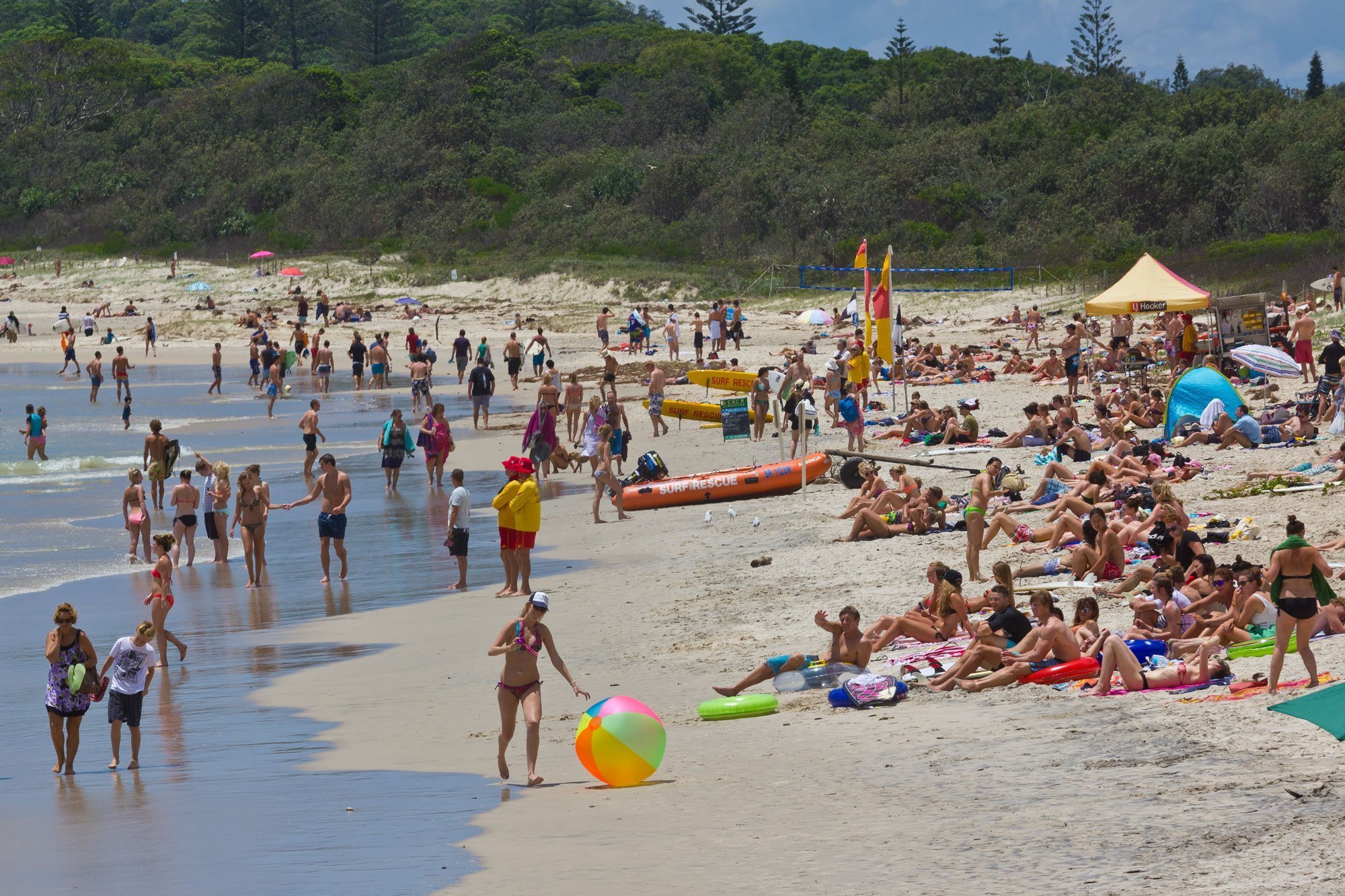
Millions of visitors stream into the region every year. They fill the beaches, clog the roads, wear out public infrastructure and put pressure on everything from rubbish collection to public toilets. Meanwhile, the state reaps much of the economic reward while local ratepayers are left footing the bill.
It’s an argument that has underpinned repeated calls for a visitor levy or ‘bed tax’ and become a familiar refrain in debates about Byron’s finances.
But when The Echo asked whether tourism is actually a significant driver of Council’s current financial position – and whether it formed part of the justification for the proposed 33–35 per cent Special Rate Variation (SRV) – Council’s response was unambiguous.
‘Council is not claiming tourism is the significant driver of its current financial position,’ a spokesperson said.
Infrastructure and operating costs
Instead, Council said its financial sustainability challenges arise from ‘a combination of factors identified in the Long Term Financial Plan, including constrained revenue growth, increasing operating costs, cost shifting from other levels of government, population growth, increasing community expectations, and the need to renew and maintain infrastructure.’
The spokesperson added that ‘Council has not relied on any analysis that identifies tourism as the cause of its current financial position, nor is tourism presented as the primary justification for considering a SRV.’
That clarification appears to draw a distinction between two debates that have often become intertwined.
On the one hand is Council’s campaign for a SRV to address what it describes as a long-term structural funding problem.
On the other is its campaign for a visitor levy or bed tax, based on the argument that the millions of people who visit Byron each year should contribute more towards the infrastructure they use.
Not broken it down
Yet Council also confirmed it has not quantified tourism’s net financial impact on its own finances.
‘Council has not undertaken a comprehensive analysis that quantifies the net financial impact of tourism,’ the spokesperson said.
Instead, Council pointed to its April resolution to commission an independent study into tourism’s financial impacts.
According to the resolution, the research will examine both ‘the positive and negative impacts of large visitor numbers’, including ‘both the direct costs and incomes to Council’, before being used as the evidence base to lobby the state and federal governments for new funding mechanisms, including ‘tourism/bed taxes’ and other visitor-related funding models.
For now, Council says tourism should not be viewed as the reason rates are rising.
While acknowledging that Byron experiences visitor numbers far exceeding its resident population, the spokesperson said those visitors create demand for roads, waste services, beaches, parks, public amenities, and parking infrastructure.
However, Council maintains those pressures are separate from the structural financial challenges underpinning the proposed SRV.
The tourism study, once completed, is intended to answer a different question altogether: not whether tourism is causing Council’s financial problems, but whether visitors are paying enough towards the cost of the infrastructure they use.
 For four decades The Echo has printed the stories some people loved, some people hated, and some pretended not to read. If you want us to keep telling the truth, the real truth, not the sugar-coated version. We’ll need your support to keep the presses rolling.


