



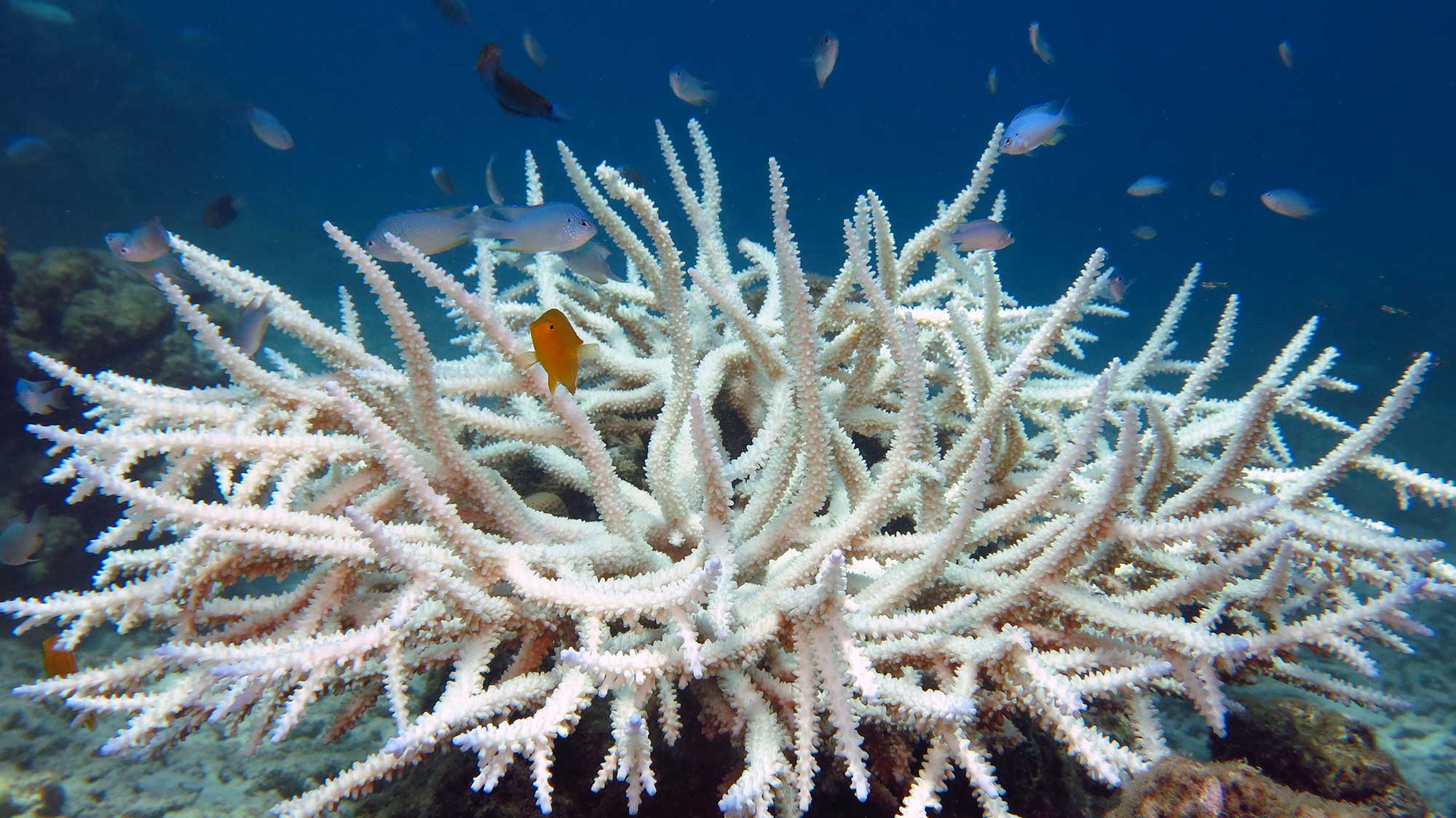
A new paper from Dr C. Isabel Núñez Lendo shows nearly half of reef-building corals face elevated relative risk of extinction.
Dr Núñez Lendo is part of a team of more than 60 coral experts globally in a study that reassessed the 892 reef-building coral species on the International Union for Conservation of Nature (IUCN) Red List of Threatened Species. The resulting paper has just been published in Nature.
‘We reassessed 892 reef-building coral species, updating the first global assessment carried out in 2008. Of 774 species with enough data to assess, 340 (or 44 per cent) were classified as threatened, comprising 33 critically endangered, 251 endangered and 56 vulnerable species,’ said Dr Núñez Lendo.
‘The findings predate the record global heat and the fourth mass coral bleaching event from 2023 to 2025, and the still unknown consequences of the current El Niño (projected to continue in 2027), so the true level of risk could be even higher.
‘In the first assessment, one-third of coral species were threatened with extinction. In this assessment, we found it was almost half.’
Alarming
‘What is more alarming is corals are moving towards extinction faster than many other groups of animals, including amphibians, birds, mammals, sharks and rays,’ said Dr Núñez Lendo.
‘We found that climate change, particularly ocean warming, is the primary threat. Rising ocean temperatures increase the frequency and severity of coral bleaching events, putting coral populations at greater risk of decline.
‘Every tenth of a degree matters when it comes to coral extinction risk. As carbon emissions rise, so does that risk. But by reducing emissions, we can help lower the risk of extinction. Our findings are not a death sentence for corals, but a wake-up call for urgent action.
‘The findings make clear that countries need to commit to ambitious reductions in carbon emissions,’ she said.
‘We hope these findings will translate into meaningful international agreements, with countries committing to ambitious reductions in carbon emissions, while strengthening coral reef protection and investing in conservation and restoration programs.’
 For four decades The Echo has printed the stories some people loved, some people hated, and some pretended not to read. If you want us to keep telling the truth, the real truth, not the sugar-coated version. We’ll need your support to keep the presses rolling.