


Darren Coyne
The NSW Greens have promised to push for a parliamentary inquiry into the state’s drug driving regime after hearing of the unfair impact it is having on northern rivers residents.
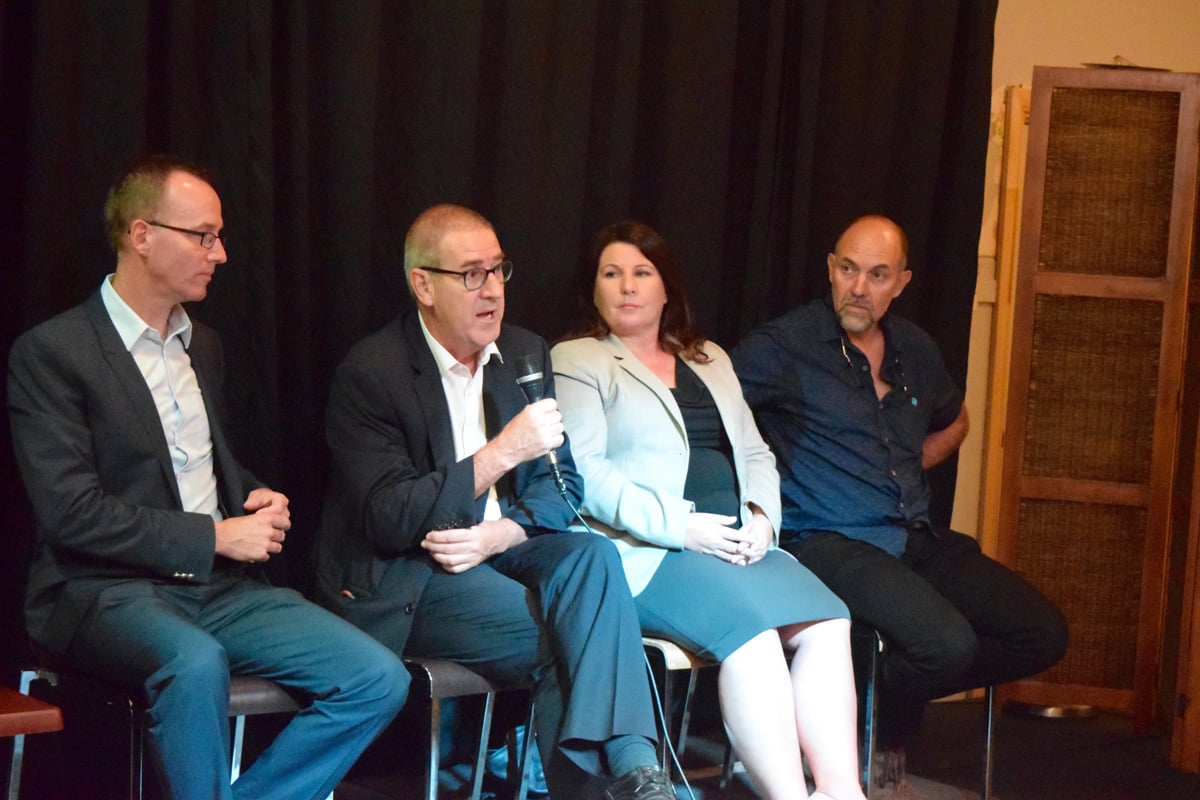
At a forum in Lismore last night, Greens MLC David Shoebridge and Ballina MP Tamara Smith gave an undertaking to the crowd that they would push for in inquiry in both houses of parliament once it resumes later this month.
After spending the morning in Lismore Local Court, where 45 people appeared on drug driving charges, Mr Shoebridge told Echonetdaily that it was clear that the current drug-testing regime wasn’t working.
Mr Shoebridge said his office had fielded numerous calls from northern rivers residents since the introduction of drug testing, and after investigating their concerns, had come to the conclusion that the tests had nothing to do with road safety.
‘On page one (of their standard operating procedures) they say roadside drug testing does not test for impairment or infer impairment, it simply tests for the presence of drugs,’ he said.
He pointed to the Wolfe report from the United Kingdom saying it sets out chapter by chapter the effects that various drugs have on driving.
‘The most common drug (found in drivers who had been involved in an accident) was not cannabis but rather Benzodiazepines, a prescription drug, and also cocaine,’ he said.
‘But instead we’ve got NSW Police only testing for cannabis, methamphetamine and MDMA.’
Mr Shoebridge agreed with fellow presenter, Aidan Ricketts, a law lecturer from Southern Cross University, that the testing regime was ‘pretty much a culture war dressed up as a road safety campaign’.
‘The interesting thing about the Drager (testing machine) is that it can test for cocaine and benzos so why aren’t they testing for these drugs?’ he said.
‘Cocaine is a rich person’s drug and police have decided not to test for cocaine because they don’t want to piss off the wrong sort of people.’
Mr Shoebridge said he was convinced that many people used cannabis as a medicine yet these were the people being targeted by police, who had technology to tag people’s vehicles.
The result of that was that anyone who had been given a Section 10 in court (case proved but charge dismissed) and placed on a good behaviour bond was likely to be pulled over again by police and face further charges, despite not being impaired.
He spoke of the case determined last week by magistrate David Heilpern, who found that a man had an honest belief that he did not have cannabis in his system after being told by a police officer to wait a week before driving again.
The man was pulled up nine days later by police and returned a positive reading.
That case, and the growing movement agains the roadside testing regime, attracted interest to yesterday’s forum from national media including Channel 9’s A Current Affair and SBS
Lismore solicitor Steve Bolt told the audience that drug driving offences were ‘fairly rare’ about 12 months ago but there had been an ‘explosion’ in the number of people caught with ‘drugs’ in their system in recent times.
Mr Bolt said ‘lots of lots of people were not passing the tests but police had no responsibility to prove that a driver was impaired at the time of driving.
Referencing the case last week, Mr Bolt said his client had relied on the information from the police officer that he should wait a week before driving.
‘He told me and the court that he had smoked cannabis on the Sunday and was pulled over on the Tuesday, nine days later.
‘He relied on the advice of the police officer and while the prosecution argued against it, the magistrate agreed and accepted that it was a reasonable basis.
‘The significant thing is that when you raise that defence it is up to the prosecution to prove that you didn’t have an honest belief.’
‘He gave evidence clearly that it had been nine days and the prosecution did not introduce any evidence to say he was lying about that … and he was found not guilty of the charge’.
Mr Bolt also pointed out that the public was being given mixed messages from the government, with a ministerial spokesperson telling media that cannabis could not be detected after 12 hours, while in the Northern Territory, where drug testing has just been introduced, the police commissioner had stated that a person should not test negative five hours after consuming cannabis.
He urged people to go to the Centre For Road Safety web page ‘Drugs and Driving’ and read the section that states ‘Cannabis can typically be detected in saliva by an MDT test stick for up to 12 hours after use’.
If you therefore wait at least 12 hours after using cannabis you can reasonably expect that it will not be detected according to advice provided by the NSW government.
SCU lecturer Aidan Ricketts said the drug testing regime was bringing the law into disrepute.
‘This is not about whether you should be able to drive stoned .. nobody should be able to drive when they impaired by a drug,’ Mr Ricketts said.
‘This law is there just so fundamental wowsers in Sydney can run their zero tolerance war.’
He said the casualties were not just drivers with traces of cannabis in their system, but also the potential multi-million dollar hemp food industry, and those legitimately taking cannabis as medicine.
Today Mr Shoebridge is conducting a question and answer session at the Nimbin Town Hall from 11am.
 For four decades The Echo has printed the stories some people loved, some people hated, and some pretended not to read. If you want us to keep telling the truth, the real truth, not the sugar-coated version. We’ll need your support to keep the presses rolling.


