


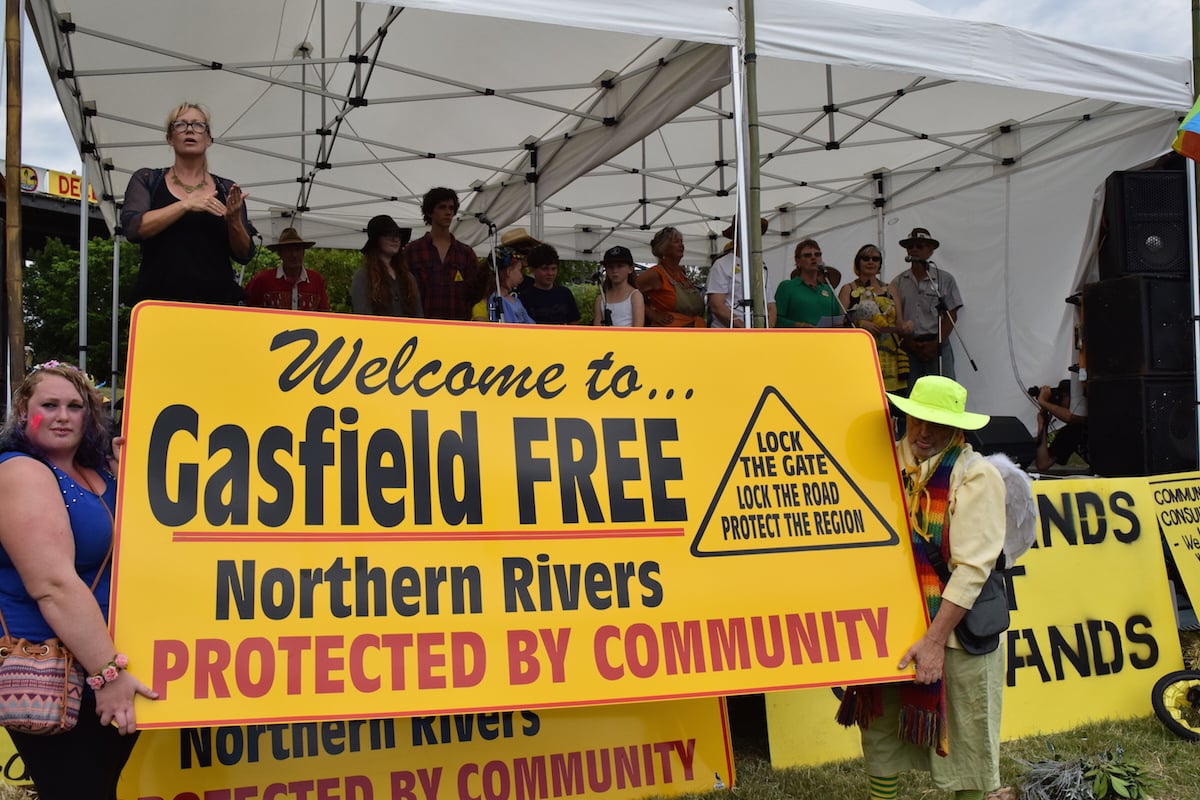
A new plan for the NSW north and mid coast has suggested that the potential coal seam gas (CSG) resource within the Clarence-Moreton Basin ‘may be able to support the development and growth of new industries and provide economic benefits for the region.’
Spearheaded by Nationals MP Chris Gulaptis (member for Clarence) and released by the NSW Department of Planning and Environment, the report examines growth predictions within housing, transport, tourism, health, education, and mineral and energy resource sectors.
The 100-page North Coast Regional Plan covers areas from Port Macquarie to Tweed Heads.
And while Mr Gulaptis told The Echo, ‘There will be no coal seam gas industry on the north coast,’ the comment does appear to leave the door open for CSG development for the mid north coast.
Even the plan’s stated aims on climate change are at odds with its own suggestion that CSG could benefit the region.
Climate change
Regarding climate change, the report aims to ‘address the implications of a changing climate and build resilience to natural hazards.’
It reads: ‘The 2014 North Coast Climate Change Snapshot estimates climate change will raise maximum temperatures on the north coast by 0.7 degrees by 2030, and by 1.9 degrees by 2070.’
‘This is projected to increase the number of severe fire weather days in spring and summer, decrease rainfall in winter, and increase rainfall in spring and autumn.’
It also says, ‘Land that is prone to hazards should not be developed unless the hazards can be managed appropriately.’
And while the report encourages ‘introducing policies that permit large-scale renewable energy projects,’ there appears no real plan to transition away from fossil fuels.
CSG mapping underway
Instead, the report states: ‘The NSW Department of Industry is mapping coal and coal seam gas resources in the region. Once completed, this information will inform future regional and local planning by providing updated information on the location of resources.’
Yet despite the clear move towards CSG expansion with mapping, Mr Gulaptis denies there is a future for the industry.
He said, ‘While the Clarence-Moreton Basin has potential coal seam gas resources, there are no current petroleum exploration licences after the NSW government spent $25 million buying out the last of the Metgasco licences.
‘The NSW government listened to the grassroots opposition to coal seam gas and responded accordingly.’
Another conflicting statement from Mr Gulaptis was his claim that ‘NSW is leading Australia in developing a strong renewable energy industry.’
Yet a 2014 Climate Council report on which states are winning and losing with renewables, claims the opposite. It says NSW, along with Victoria, ‘moved from leaders to laggards in Australia’s renewable energy race.’
Mr Gulaptis did say that ‘NSW leads the nation for large-scale solar installations and the state’s regional areas stand to gain the most from these developments with six of the solar projects located in the central west, one in the southeast and another in New England.’
Housing growth
Byron Shire has been left out for major future population expansion in the report, while Port Macquarie, Coffs Harbour and Tweed Heads have all been earmarked to grow. Tweed Shire is the focus of the most growth; currently it claims there are 41,300 homes and the report expects another 14,000. Ballina could potentially get 2,480 new lots.
Byron was also not included in the list for ‘land release priority’, but suggests that 3,750 to 4,500 new homes could be built by 2036. Kyogle has only 150–180 new homes earmarked for that time, while Bellingen has 250–300.
Transport
As for transport plans, it reads: ‘The Pacific Highway carries the second-highest level of freight of any road in Australia,’ and as such, the report aims to ‘limit development with direct access [to and from towns] to the Pacific Highway to allow the free flow of traffic and retain the travel time savings and safety benefits from the upgrade.’
Airports in the region are also earmarked for expansion.
As for rail, it says: ‘The Australian government is investigating opportunities for a high-speed rail network to reduce travel time between capital cities along the east coast. This may generate new opportunities for economic development in the region.
‘Another potential rail corridor for the longer term is located south of the Gold Coast along the coastal corridor.’
The disused Casino to Murwillumbah rail corridor is recommended to become a rail trail, but little analysis is provided.
‘Transport for NSW will work with bus operators to develop routes and timetables to improve bus services in the region’s major centres and their connections with regional communities. It will also work with local transport operators and councils to develop programs that focus on serving the unique characteristics of each town.’
What’s missing?
Key issues that have no mention within the report include the localisation of food production and reducing reliance on fossil fuels in the climate change era.
If anything, the report suggests fossil fuel use should expand. There is also no mention of light rail or public transport rail options and NBN or internet connectivity also do not yield search results with the report.
To have your say before the June 2 deadline, visit www.planning.nsw.gov.au/Plans-for-Your-Area/Region
 For four decades The Echo has printed the stories some people loved, some people hated, and some pretended not to read. If you want us to keep telling the truth, the real truth, not the sugar-coated version. We’ll need your support to keep the presses rolling.


