



Darren Coyne
After years of conducting sausage sizzles and garage sales to raise money to restore the 27-hectare ‘Duck Pond’ site in South Lismore, the volunteers behind the initiative have finally scored some serious cash to get on with the job.
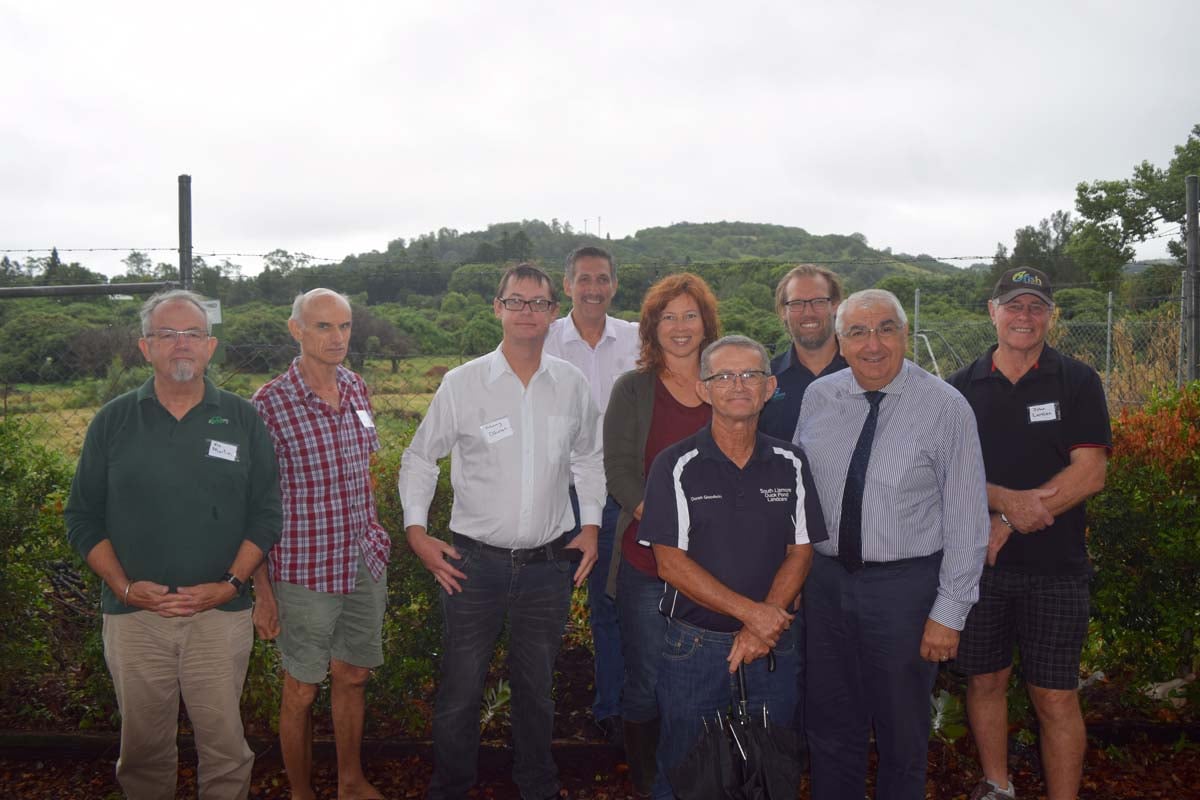
Lismore MP Thomas George met with members of the landcare group today to announce that NSW Fisheries was stumping up almost $22,000 for further work on the site.
That amount, combined with in-kind donations from the Lismore City Council and local businesses, means that the landcare group can get started with what amounts to a $60,000 project.
The focus of the project is to remove weed species such as coral tree, camphors, and various invasive vines that have gradually taken over the site in the past decade.
At this morning’s gathering, Lismore council’s environmental strategies officer Vanessa Tallon, who is also a founding member of the Duck Pond Landcare group, said the funds would be used to employ professional bush regenerators to work alongside Leycester Creek, and the small Duck Pond wetland area.
By removing weed species and planting native trees and vines, the site will eventually return to a state where native fish species will be able to ‘shelter’ during the frequent flood events that periodically inundate the site.
Ms Tallon explained that by repairing the riparian zones, between the land and the river, the debris from overhanging trees would provide shade and food for native species of fish.
And by improving the habitat for native species, it is hoped that pest species such as carp will eventually be eradicated.
Mr George praised the group’s work … especially long-serving president Derek Goodwin.
He recalled visiting the Duck Pond a few years back when ‘you couldn’t even get into the place’, where he found Mr Goodwin and former president Viv Martin sweating profusely as they worked to clear coral trees.
Mr George said the persistence of volunteers was transforming the site into what has become a popular meeting place for locals and visitors to Lismore.
Ozfish spokesperson John Larsson said improving fish habitat along rivers and creeks in the northern rivers was the best way to eradicate carp.
‘They (native fish) feed on carp larvae and juvenile carp. When you have a depletion of our native fish the carp are going to explode, which they have. We get our native fish back through projects like this and we can balance it up and eventually decline the carp stocks,’ he said.
Meanwhile, Ms Tallon explained that part of the grant would be used to conduct National Tree Day at the end of July, and Lismore City Council would be donating trees towards the project.
Already more than 2,000 native tree species have been planted; a staircase into the site from Union Street has been installed, a road from Ostrom Street has been created and a watering platform is in the process of being installed on Leycester Creek.
The Landcare group conducts regular working bees and fundraisers, and also gathers every second Monday from 5pm to mulch and mow the site, followed by a sausage sizzle.
Mr Goodwin said new members were more than welcome to come along.
 For four decades The Echo has printed the stories some people loved, some people hated, and some pretended not to read. If you want us to keep telling the truth, the real truth, not the sugar-coated version. We’ll need your support to keep the presses rolling.


