


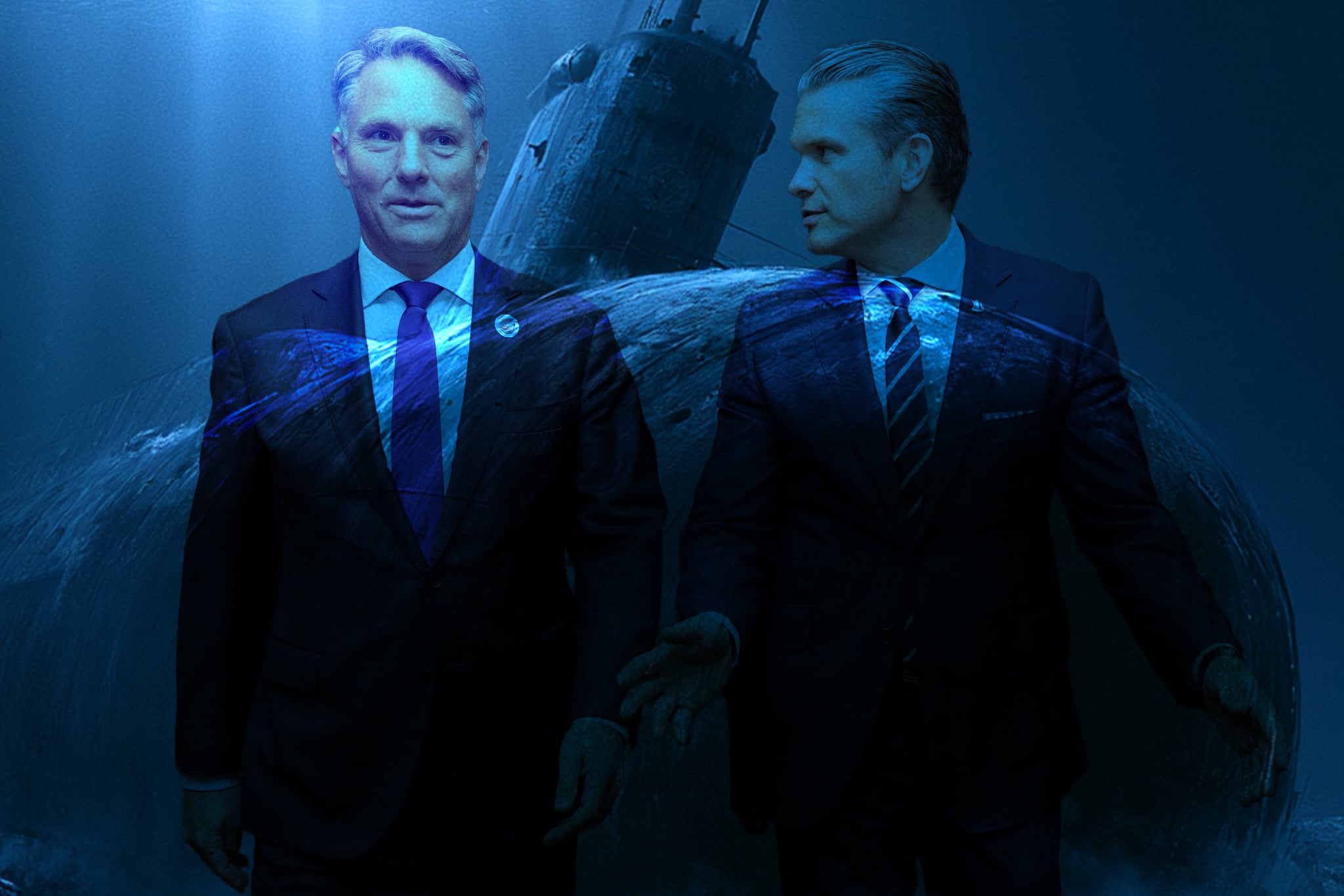
Senate Estimates descended into Yes Minister territory last week when the vexed subject of AUKUS came up, following the revelation from deputy PM and defence minister Richard Marles that Australia’s best case scenario was now that we would receive three second-hand submarines from the USA during the transition stage of this very expensive project, possibly between 2032 and 2038.
These will theoretically be Virginia-class nuclear submarines, designed to stealthily sink other subs, gather intelligence and launch cruise missiles.
Leaving aside the questions of whether Australia needs such capability (assuming the subs are under Australian control), where such submarines could potentially be used, and whether the whole platform will be hopelessly redundant in the face of new technologies, if it arrives at all, has Australia been sold a pup?
After a hang with hair product enthusiast and self-styled US War Secretary Pete Hegseth on the sidelines of another event in Singapore, Richard Marles sought to put a positive spin on the AUKUS situation via a Dorothy Dixer in the House of Reps last week, in which he acknowledged the whole thing had originally been Scott Morrison’s brilliant idea, but Labor was forging boldly ahead.

All-in on AUKUS
‘What was then an idea and a concept is today a great national project in full flight,’ Marles said.
‘On this day, there are 220 submariners working on Virginia class submarines serving in the US Navy. There are another 220 ASC workers at Pearl Harbor gaining invaluable experience in getting those same submarines out to sea.
‘There are 100 workers building the Skills and Training Academy at the Osborne Naval Shipyard in Adelaide, another 900 working on the submarine construction yard at Osborne and another 250 building facilities at HMAS Stirling in preparation for the Submarine Rotational Force-West, which begins next year. In total, this is more than a thousand high-skilled, high-paid jobs right now – union jobs – providing income and livelihoods and supporting families, and we are not about to do anything which disrupts that.’
Mr Marles said his government’s vision remained for Australia to eventually have eight nuclear-powered submarines, with three of those now being second-hand or ‘in-service’ as he preferred to put it, and part of a ‘good financial deal’.
He suggested that because Australia is surrounded by water, building submarine capability was also a way of building our national sovereignty. For Marles, buying nuclear subs from the USA somehow makes us ‘less reliant’ on that faltering ally.
Never mind that the issue has never been properly taken to the electorate, Richard Marles went on to say, ‘The Albanese government is utterly committed to Australia being a submarine nation. We are utterly committed to AUKUS and, through that, building a submarine capability which will keep Australians safe.’
Estimate this
It was left to Meghan Quinn PSM, Secretary of the Department of Defence, to explain the details to the people of Australia via Senate Estimates, where she was questioned by an increasingly incredulous Senator David Shoebridge.
She said that the ‘agreed optimal pathway’ had always been that Australia would receive three second-hand boats as the first stage of the deal, although the government had previously said one of these submarines would be new.
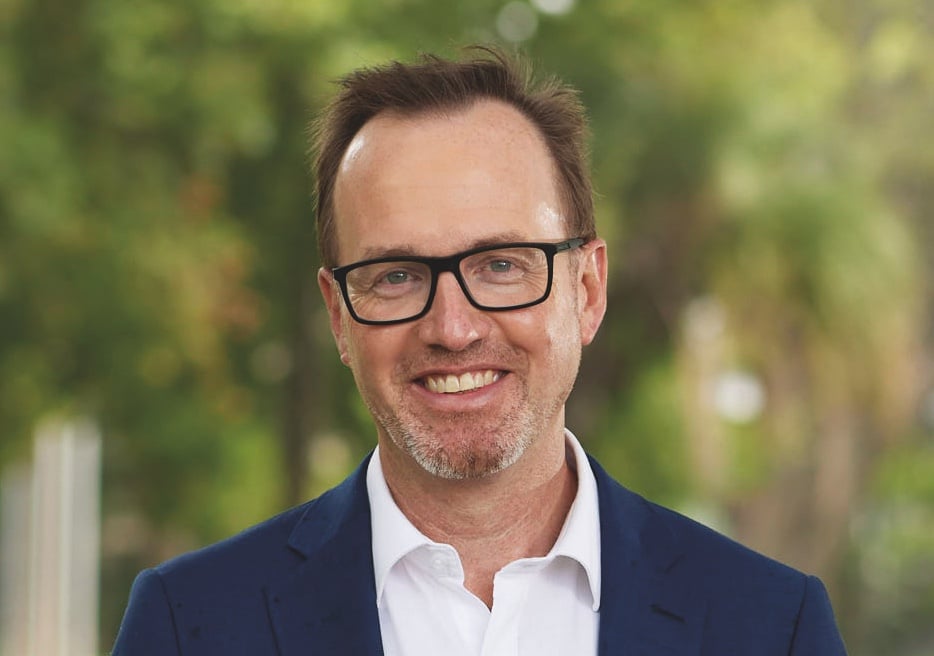
Senator Shoebridge said, ‘It’s only in AUKUS world that we get bizarre terms like “optimal pathway”. But it kind of has a standard English sense to it, doesn’t it…?
‘If the optimal pathway in March 2024 was two second-hand ones and one new one, how do we understand your evidence now that Australia’s position is that we would have always had a preference for three ‘in service’? How does that interact with the concept of an optimal pathway, which is contrary to that?’
Ms Quinn said, ‘There are lots of considerations that go into a complex program of this size. There was a joint decision – there’s no entirely free optimal path. Everything is always a constrained optimisation based on the evidence at the time, based on the cost-benefit analysis and all the other risks, which are more judgement based because of the speed and time–’
Senator Shoebridge: ‘You can’t have two optimal pathways.’
Ms Quinn: ‘You can absolutely have two constrained optimal pathways.’
Senator Shoebridge: You can? I’ve never heard the term “constrained optimal pathways” until tonight.’
Ms Quinn: ‘Constrained optimisation is absolutely core to policymaking.’
Senator Shoebridge: ‘So this is the new AUKUS term. We no longer have an optimal pathway. We now have a variety of constrained optimal pathways… AUKUS is not only doing damage to the Australian public purse; it’s now destroying the English language.
Ms Quinn : I don’t believe that’s the characterisation I would make. It’s always been the case in public policymaking when doing analysis that there’s a constrained optimisation…’
And so the brain-melting exchange went on, doing the spirit of Sir Humphrey Appleby proud.
US forces give the nod?
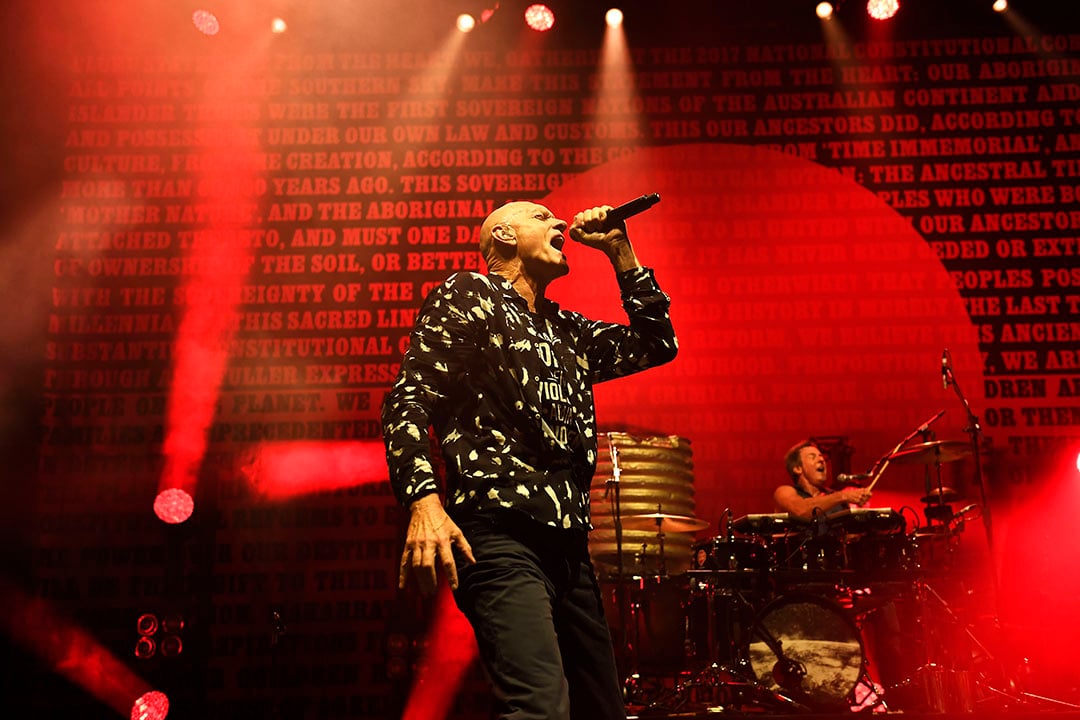
Outside the labyrinthine processes of parliament, also announced last week was a crowd-funded public inquiry into AUKUS, which will travel from state to state until September, led by former ALP minister and Midnight Oil frontman Peter Garrett, examining the situation from a public interest angle.
Commissioners leading this investigation include former Western Australian premier Carmen Lawrence and the former chief of the Australian Defence Force, Chris Barrie.
Discontent with AUKUS is also growing on the cross-bench and within Labor. Seen recently in a ‘Rebel Scum’ Star Wars shirt on 4 May, former industry minister Ed Husic has publicly said that a rethink of the $368 billion deal is in Australia’s national interest, considering the sluggish rate of US submarine production and ‘transactional nature’ of the Trump regime.
Is Husic simply bitter about being dumped by Richard Marles in a factional battle, or is he right?
Originally from Canberra, David Lowe is an award-winning filmmaker, writer and photographer with particular interests in the environment and politics. He’s known for his campaigning work with Cloudcatcher Media.
 For four decades The Echo has printed the stories some people loved, some people hated, and some pretended not to read. If you want us to keep telling the truth, the real truth, not the sugar-coated version. We’ll need your support to keep the presses rolling.


