


Chris Dobney
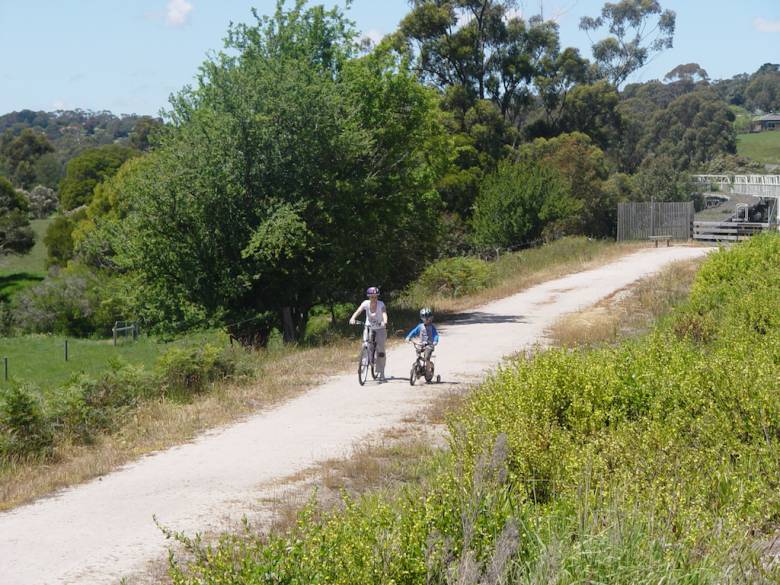
The management committee of Victoria’s Great Southern Rail Trail (GSRT) has quit, saying the job is ‘beyond the capacity of a volunteer group to continue to manage’ and calling for the South Gippsland Council to take it over.
As of next month, 16 of Victoria’s 17 rail trails will be managed by local councils.
But the group that is lobbying for the conversion of the Casino to Murwillumbah rail line into a rail trail says the same problem will not happen here.
GSRT committee secretary Robert Knight told Victoria’s Great Southern Star that he and fellow members are excited about what they have achieved with the trail but added the committee was on call 365 days a year and the work had become onerous since the trail was completed in 2016.
‘We believe council is the appropriate body to take over the rail trail’s management. Current committee members could become ‘friends’ of the trail at the end of their term,’ he told the publication.
‘[South Gippsland] Council has the skills and is already heavily involved,’ he added.
The committee said the cost to maintain the rail trail’s 77 kilometres is around $120,000 per year, plus additional capital works of around $30,000 annually.
Works are financed by a fund inherited by the committee and council’s contribution of $60,000 per year.
It also receives around $37,000 annually from licences along the trail, however the committee’s cash reserve will be mostly used by the time of handover.
Mr Knight told the publication, ‘The role of maintaining this $6 million asset is too much for a volunteer committee.’
Funding model
But spokesperson for the Northern Rivers Rail Trail (NRRT) Marie Lawton said the same situation would not happen here because its funding model will be more robust.
‘Once significant sections of rail trail are built, a central trust or governance body would be established to manage the entire trail,’ she told Echonetdaily.
‘Necessary funding to operate the trust could be provided by the state government, supplemented by income streams created by the rail trail, such as leasing railway station buildings.
‘On the Otago Rail Trail in NZ users purchase a $10 passport which they get stamped in each of the townships they go through. This money all gets put towards the management of the trail. ‘There are also thoughts along the line of local businesses that benefit from the trail, contributing in some way to the maintenance,’ Ms Lawton said.
She added the group hoped that $75,000 per year in state government funds currently allocated to maintaining the disused rail corridor ‘could be transferred to rail trail maintenance.’
‘It is likely some maintenance activities would be delegated to councils, with funding assistance.
Ms Lawton said ail corridor land that is surplus to rail trail requirements ‘could be leased to adjacent landowners in exchange for maintenance of these areas.’
‘Of course this is all a work in progress. We understand that councils would not be able to afford to manage the trail without funding assistance,’ Ms Lawton said.
Rail group wants equal time
Meanwhile pro-rail group Northern Rivers Railway Action Group (NRAG) is calling on Lismore City Council to give it ‘equal time’ with the rail trail group after a NRRT half-hour presentation resulted in a $50,000 grant to create a business plan.
NRAG spokesperson Beth Shelley said, ‘we suggest it’s time Lismore Council looked to the future. Byron Council has given $200,000 for a feasibility study into multi-use of the rail corridor.
‘Investors in Byron would like to extend the rail shuttle about to start operating from North Byron to run services from Bangalow to Byron and Mullumbimby,’ she added.
‘There are many privatised railways in Victoria. We wonder why the NSW government hasn’t tendered out the railway for private investment?
‘Won’t it be strange if there are rail services in the Byron shire while Lismore and Tweed have rail trails and no prospect of future rail services?’
‘The rail trails will not protect the corridor and generally councils have to pick up the costs. In the future we will need trains for passengers and freight. Let’s keep our tracks safe till then,’ Ms Shelley said.
 For four decades The Echo has printed the stories some people loved, some people hated, and some pretended not to read. If you want us to keep telling the truth, the real truth, not the sugar-coated version. We’ll need your support to keep the presses rolling.