


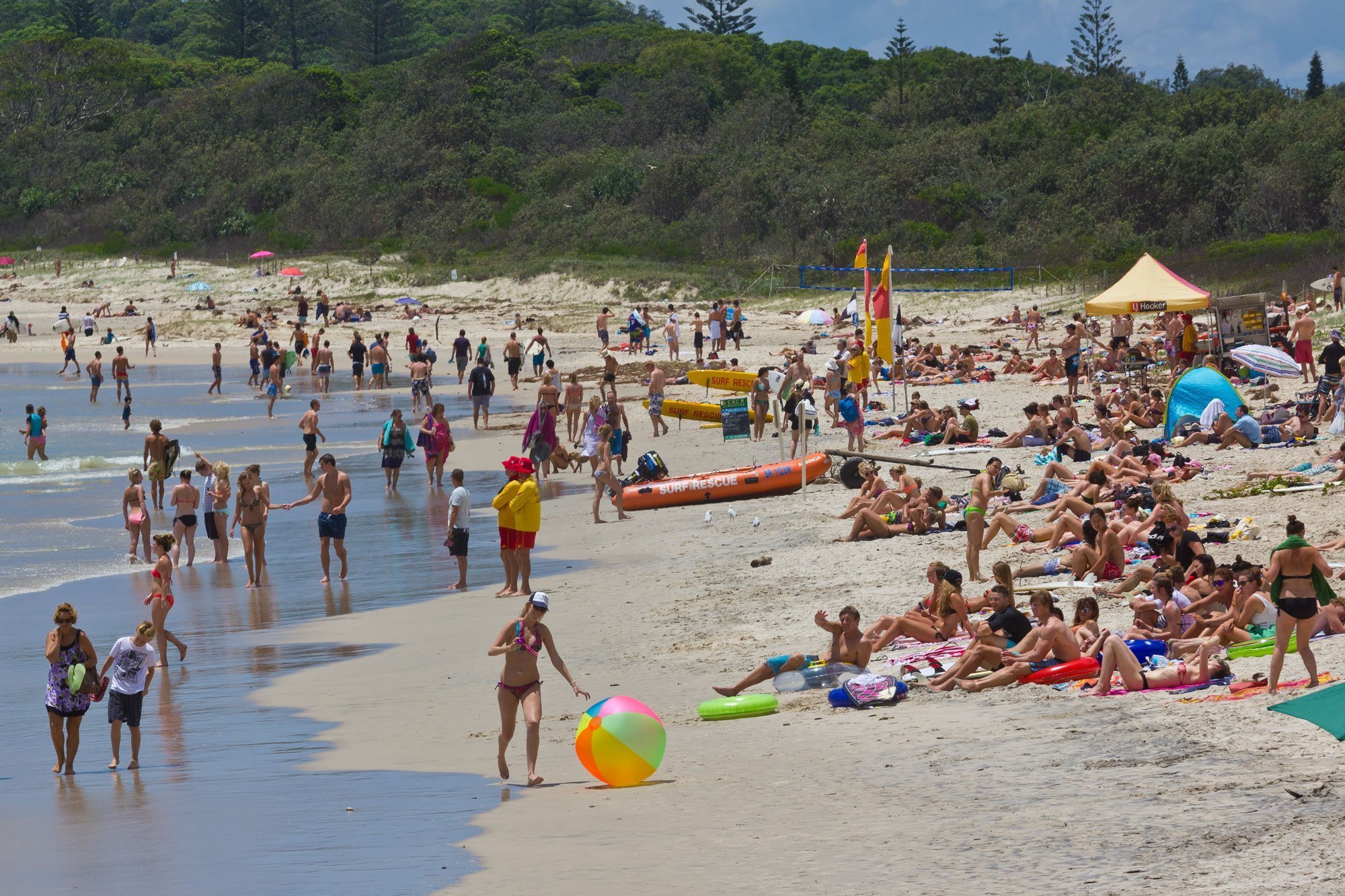
The latest action from the short-term rental accommodation (STRA) campaigners is an alarmist email exhorting recipients to ‘Join the fight to protect your right to stay in a holiday home in Byron Bay’. This somewhat misleading headline from Byron Bay Holiday Rentals (supporters of the ‘Byron Deserves Better’ campaign) targets previous or potential visitors to Byron Shire.

On 2 March, just a week after the community consultation by the Independent Planning Commission (IPC), the holiday rental agency sent an email out maintaining the 90-day cap on STRA would ‘diminish your enjoyment of Byron’s beauty and hospitality’ and ‘your feedback would help us ensure that your next holiday in this breathtaking town remains affordable and accessible’.
Reading it made me angry. What about the rights of locals who purchased in a residential area? The right to long-term rent, the right to live where we work, the right to a peaceful night’s sleep, the right to have neighbours and the right to feel safe? What about those rights? Surely a place to live and work is a higher priority than ‘The right to stay in a holiday home’?
Sitting through the public hearing of the IPC (held in Byron on 21/22 February) with many other concerned residents I witnessed our community speaking up for itself. There have been many intelligent and passionate arguments from residents about conserving the very essence of this community, and a fair amount of fiction from the STRA lobby about the impact of lowering the recently legislated 180-day cap to 90-days, as proposed by Byron Shire Council.

Byron showed up
The public hearing was an opportunity to hear the voices and see the supporters of the 90-day cap and for the half-truths of those against the proposal to be publicly aired. The Council didn’t have the money or the fancy barrister that Airbnb used to bolster its arguments. Byron showed up. Everybody in favour of the cap or requiring some balance in the STRA sector spoke with a belief in the greater good of our community.
Firefighters, feisty CWA women, architects, town planners, anthropologists, medical professionals, politicians, and developers spoke in support of Council’s proposal and about the impacts of unhosted STRA on different sections of the community. What struck me as I sat nervously waiting for my turn to speak was that the supporters of the 90-day cap were concerned about the broader interests of neighbourhoods and the wellbeing of our people.
Many speakers against the 90-day cap in residential areas chose to phone in. The crux of their arguments was that reducing the cap would ‘kill tourism’ and put cleaners, gardeners, and waste collectors out of work. Non-resident STRA owners were worried they would lose part of the income stream their ‘trustworthy’ real estate agent had promised them. One commissioner posed the question to several interstate property owners – ‘Why did they believe that buying a house in a residential area would be available to holiday let?’ The common answer was ‘Well, because the real estate agent told me so’.
Won’t ‘kill tourism’
Think about that for a moment. Unhosted STRA in residential areas only became legal in Byron Shire when the planning minister’s SEPP amendment came into force in January 2022. Most of the absentee landlords purchased when holiday letting was a prohibited activity in residential zones.
The 90-day cap is not stopping STRA in the Byron Shire. No one is trying to ‘kill’ tourism. Studies predict there will be sufficient visitor accommodation if a 90-day cap is introduced in June 2024. Approved accommodation providers (who pay business rates) such as hotels, guest houses and hostels have occupancy rates of around 65 per cent which is low for tourism hotspots. Four more hotels/apartment blocks are currently being built in Byron’s CBD.
Furthermore, under Council’s proposal, hosted STRAs anywhere, and all unhosted STRAs in 365-day proposed precincts, will have no restrictions. The hysteria being drummed up by STRA campaigners that the 90-day cap is anti-tourism is simply a beat-up designed to gas-light residents and visitors.
After listening to all the arguments against the 90-day cap, I’m still waiting for some cold hard facts. To the objectors to the proposal, please ‘own’ the simple truth that it is about money, money, money (as ABBA says) and do not pretend the focus is about Byron’s community, a family’s ‘right to an affordable holiday in Byron’, or that it will kill tourism.
University researcher Dr Sabine Muschter has extensively studied the impacts of STRA in Byron Shire and other communities. Numerous studies show a significant impact on a community’s well-being in tourism hotspots. The negative effects of STRA platforms include an increase in rent and property values, the reduction of long-term rental accommodation resulting in worker shortages and extensive mental stress for locals (particularly families), and the disruption for residents through the noise, traffic congestion, overcrowding, and loss of amenity.
Based on 2019 visitor numbers, Byron Shire has one of the highest visitor-per-resident per-year ratios’ in the world. Approximately 65–70 visitors per resident per year, and a high ratio of STRA to residential dwellings. To put this in context, the average of the most visited cities in Europe is between four to six visitors per resident.
 For four decades The Echo has printed the stories some people loved, some people hated, and some pretended not to read. If you want us to keep telling the truth, the real truth, not the sugar-coated version. We’ll need your support to keep the presses rolling.


