



A study published in Nature Climate Change has suggested we have seriously underestimated global warming, with the Earth already well over 1.5°C above preindustrial levels.
The research, which was based on the unusual ability of sea sponges to keep temperature records in their skeletons, finds that humans had already caused considerable amounts of warming before the 1850-1900 baseline that the Paris Agreement rests on.
This means, according to the research, that the earth has actually warmed 1.7°C above preindustrial levels.
Independent climate scientists have said that, while this study has valuable findings, it doesn’t invalidate the 1.5°C and 2°C goals of the Paris Agreement.
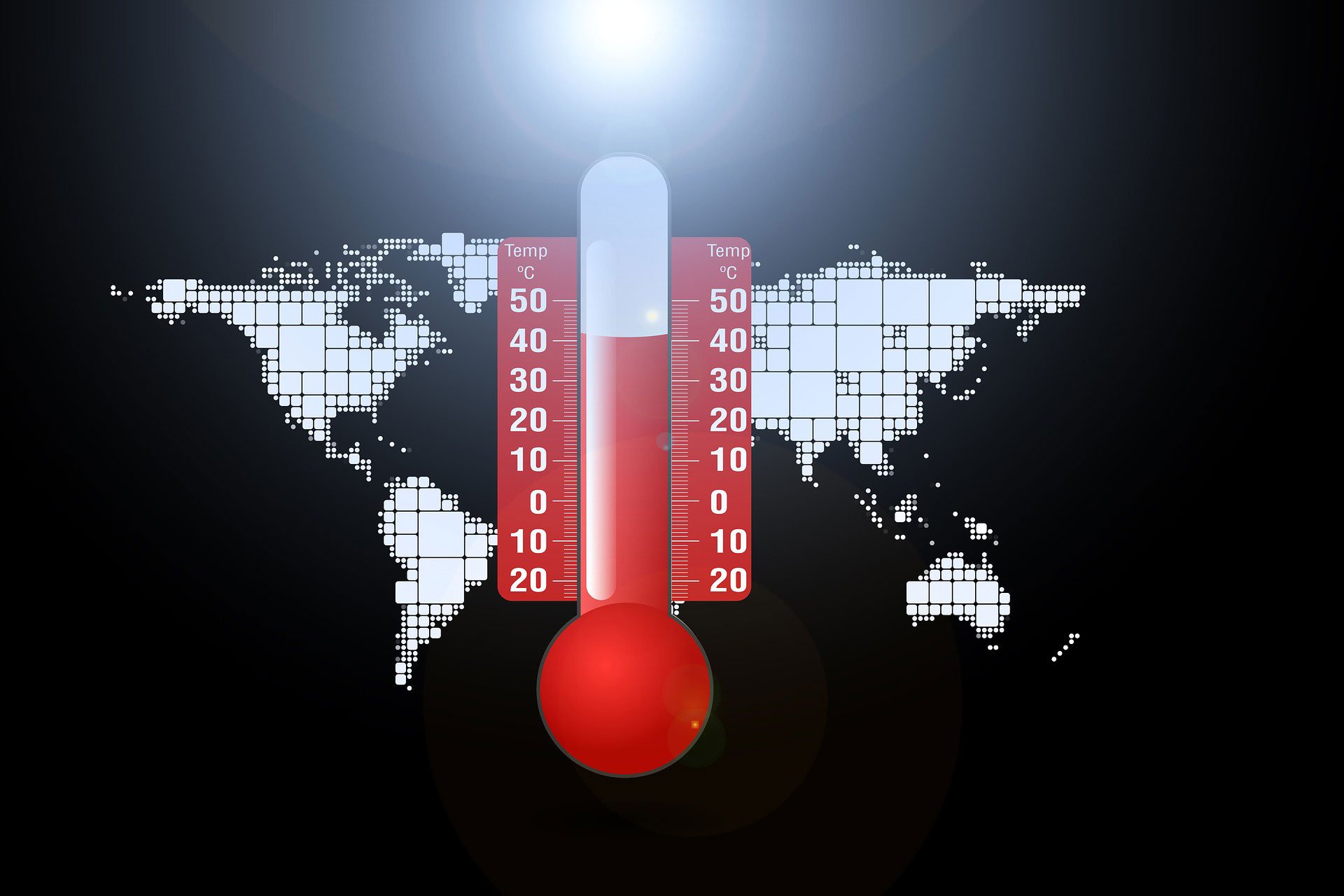
What has the sea sponge research found?
The study uses a dataset from the Caribbean to establish the total amount of warming that’s happened in the world’s oceans over the past 300 years.
‘You have to have a reference point from when global warming started,’ explains lead author Emeritus Professor Malcolm McCulloch, a researcher in coral reefs at the University of Western Australia. McCulloch spoke to journalists at a briefing run by the Australian Science Media Centre last week.
The Intergovernmental Panel on Climate Change (IPCC) – the global authority on climate science, whose modelling and projections the Paris Agreement relies on – sets its baseline as the years 1850-1900.
This period, referred to in IPCC reports as ‘preindustrial levels’, is used for ‘pragmatic’ reasons according to McCulloch. This is when sea surface temperatures started being collected consistently by ships.
But the industrial era started a century before 1850, with a small but noticeable change in atmospheric CO2 levels by the early 1800s.
McCulloch says the 19th century temperature records are complicated by a few other things.
First, they mostly come from the northern hemisphere, and particularly common shipping routes in the northern hemisphere. Second, sea surface temperatures can be quite variable, especially using crude 19th century techniques: ‘they often threw buckets over the side, pulled them up, and then dipped a thermometer in,’ says McCulloch. Third, volcanic eruptions in the early 19th century caused a small period of global cooling.
While human-collected records are more detailed, scientists have used other data like ocean core samples to deduce global temperatures. This is how we know about global temperatures thousands and millions of years in the past.
McCulloch and colleagues have used one such method: sea sponges in the eastern Caribbean. A species of long-lived sponge (Ceratoporella nicholsoni) keep temperature records in their carbonate skeletons: ocean temperatures influence chemical signatures in these skeletons as they grow.
Using this signature, the researchers have constructed a temperature record that goes back 300 years. Their record suggests that anthropogenic warming started in the 1860s, around 80 years before sea surface temperatures started showing an uptick.
‘The differences are quite profound,’ says McCulloch.
Their record shows that, relative to 1700, global temperatures have actually increased by 1.7°C. This is 0.5°C higher than the current established rise of 1.2°C. The researchers predict warming levels of 2°C by the end of the decade.
‘Half a degree is a large difference to find,’ says McCulloch.
While these things are very difficult to predict, McCulloch believes that this means the effects of climate change will be occurring sooner than previously thought.
‘In my mind, the way to think about it is that the clock of climate change has been brought forward by about a decade by our findings,’ he says.
What does it mean for the Paris targets?
The global Paris Agreement on climate change aims to keep temperature increases to ‘well below 2°C’, pursuing 1.5°C. This study suggests we’ve already blown the 1.5°C limit and are hurtling towards 2°C.
Does this mean the agreement has failed?
Well, no. This research could move the baseline that the Paris Agreement was based on.
‘This implied different baseline temperature does not mean that we have to recast the 1.5°C and 2°C temperature goals but it does emphasise the duration and magnitude of human impact on global systems,’ says Professor Mark Howden, director of the Institute for Climate, Energy & Disaster Solutions at the Australian National University, who was not involved in the research.
Professor Malte Meinshausen, a climate scientist at the University of Melbourne, who also wasn’t involved in the research, says that ‘the IPCC’s findings still stand strong’.
Meinshausen says that we are still ‘close to 1.5°C warming’.
‘We can keep our established global mean temperature records as the useful speedometer, which tells us that we have to step on the brakes in terms of emissions.’
Conversely, Dr Georgy Falster, a postdoctoral fellow at the Australian National University, also not involved in the study, says that ‘the new research also shows with the correction for the early-onset global warming, we have already overshot the 2015 Paris Agreement threshold of 1.5° above pre-industrial global temperature – and are on track to exceed 2° of warming by the late 2020s’.
McCulloch is of the opinion that the 1.5°C and 2°C targets are ‘slightly irrelevant’, and that they confuse the goals of climate policy. ‘The simpler answer is we have to reduce emissions,’ he says.
‘We now have to really work hard as a global community to not just stabilise the very high rate of emissions, we’ve got to get emissions down to net zero.’
How reliable is the research?
Independent experts say that the research is thorough, but it’s still one study compared to the reams of information pored over by the IPCC.
‘At first look, this single new study seems to say that the IPCC radically underestimated warming,’ says Meinshausen.
‘However, it is studies exactly like this that highlight the merit of the IPCC, in which hundreds of scientists comb through thousands of scientific studies to distil robust findings.
‘A single new palaeo record off the coast of Puerto Rico is a valuable addition to the large evidence of warming. But it is just that, one study among hundreds.’
Howden says that while this research ‘appears to be well-correlated with global surface temperature trends’ and reflects some other Australian findings, ‘it will be important to draw from other, similar, data sources beyond this one region to establish the global nature of these relationships’.
The study authors say there is now ‘even more urgent need to halve emissions by 2030’, and on this the independent researchers agree.
‘There is no reason for complacency on the path towards net zero emissions,’ says Meinshausen.

 For four decades The Echo has printed the stories some people loved, some people hated, and some pretended not to read. If you want us to keep telling the truth, the real truth, not the sugar-coated version. We’ll need your support to keep the presses rolling.


