


A new international study published in Austral Ecology warns the massive ‘broadcast baiting’ campaign currently used to combat red imported fire ants (RIFA) in South-East Queensland may be doing more harm than good.
The authors, Southern Cross University’s Professor of Entomology, Nigel Andrew and Professor Joshua King (University of Central Florida), argue that large-scale use of non-specific pesticides, known as insect growth regulators (IGRs), inadvertently enables fire ants to expand their territory.
They say, ‘Applications of IGRs on areas larger than 10,000 hectares have never been successful in eradicating fire ants; the current area that fire ants occupy in South-East Queensland is now over one million hectares’.
Last week, fire ants were detected at Binna Burra in the Scenic Rim, on the Qld/NSW border, west of Tweed Heads.
Personnel from National Fire Ant Eradication Program (NFAE) say eradication and surveillance activities are underway at the site.
‘Everyone in Binna Burra and surrounds is encouraged to look for, and report, suspect fire ants online or by calling 132 ANT (13 22 68)’.
Fire ants rebound quicker than natives
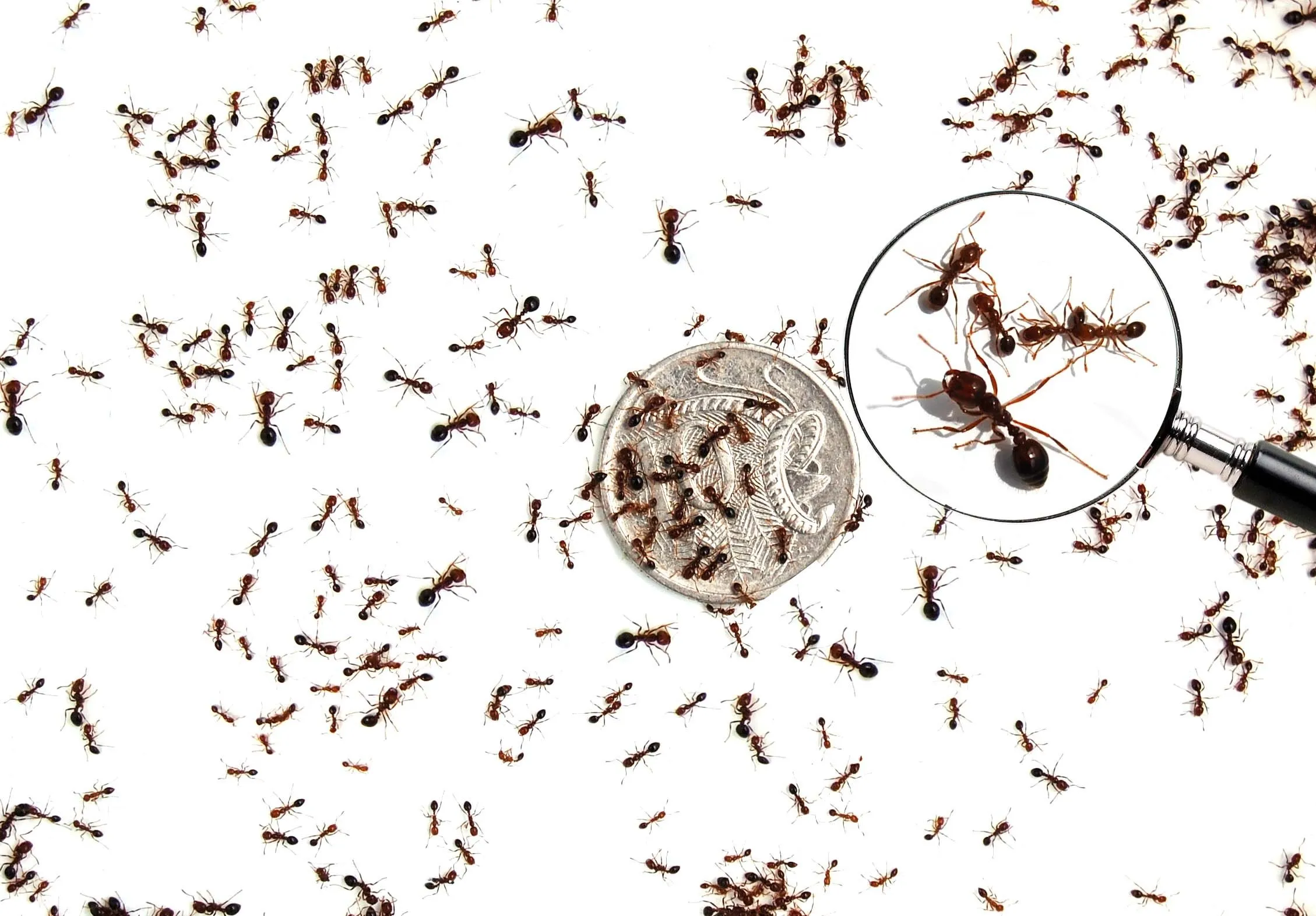
Professors Andrew and King say invasive species, such as fire ants, rebounded quicker than native invertebrate species after being exposed to pesticides such as IGRs at large scales, enabling them to recolonise areas baited and to colonise areas where native competitors and predators have been removed via baiting.
The researchers recommend moving from a one-size-fits-all eradication approach to precision, fire ant-specific strategies.
They highlight a critical ‘ecological vacuum’ effect.
‘By spreading insect pesticides such as IGRs over areas of South-East Queensland, current programs are killing off the native invertebrate competitors and predators that serve as the first line of defence against fire ant queens’.
‘We are essentially clearing the neighbourhood for the fire ant invader when we mass-release IGRs into the environment over large areas,’ says Professor Andrew.
‘Because RIFA are faster at recolonising recently treated areas than our native invertebrate species, the current strategy may be facilitating a faster spread rather than achieving eradication.’
Study rejected by federal govt
A spokesperson from NFAE rejected the findings, but told The Echo, ‘The NFAE welcomes research into fire ants and eradication methods’.
‘Strong science underpins effective and efficient biosecurity responses, and we continue to collaborate with researchers to strengthen outcomes and achieve eradication by 2032.
‘Our eradication strategy works. It is informed by independent assessments, strict regulatory frameworks, and robust Australian and international science.
‘Our broadscale treatment prevents fire ant queens from producing viable offspring, leading to colony collapse. It remains the only proven eradication method effective at the scale required in Australia’.
Professor Nigel Andrew replied: ‘This is factually incorrect. There is no data or evidence to show that eradication of Solenopsis invicta has occurred when infestations are greater than 10 000 hectares anywhere in the world – current infestation is over one million hectares’.
The NFAE spokesperson continued, ‘There is no local evidence to support claims that eradication treatment enables fire ants to expand their territory’.
‘Australia has eradicated eight of nine fire ant incursions – significantly slowing their spread. Other countries are now looking to our approach. We recently hosted delegates from Colorado, Guam, and Hawaii to share our methods and support their response efforts.
Professor Nigel Andrew replied: ‘The eight fire ant incursions that Australia has eradicated have all been less than 10,000 hectares – the South-East Queensland infestation is now at one-million hectares’.
The NFAE spokesperson continued, ‘Without our intervention, fire ants could have spread as far north as Townsville, west past Longreach and south to Albury.
‘Fire ants pose a serious threat by outcompeting and displacing native ant species. Our treatment specifically targets fire ants, which prefer foods high in oil and protein.
‘The low concentration of IGRs reduces the likelihood of impacts on non-targeted invertebrates that may encounter the treatment product incidentally’.
Professor Nigel Andrew replied: ‘[Regarding the claim] “Fire ants pose a serious threat by outcompeting and displacing native ant species”, This is true once fire ants has established their nests. However, newly mated Queens on the edge of the infestation range are highly vulnerable to competition and predation by other invertebrates.’
‘[Regarding the claim] “Our treatment specifically targets fire ants”, This is factually incorrect – other ants and invertebrates will eat the bait in its current form, especially if fire ants are not found in the local areas in which the baits are released’.
‘The baits are also attractive to competitors ant species, native grasshoppers, cockroaches and beetles. The only way that the bait would specifically target fire ants is if it was contained in containers that fire ants could enter. The exact same chemicals are used to control fleas on domestic pets, termites and cockroaches around houses, and this is identified on the NFEAP website: https://www.fireants.org.au/treat/treatment-types/granular-treatment
‘From the NFEAP website: “Insect growth regulator (IGR) treatment contains 5 grams per kilogram of Pyriproxyfen or S-methoprene. These ingredients are used in household and agricultural pest control products, such as fly spray and pet flea tablets”.
‘Science currently has no data on the non-lethal effects of these pesticides at a landscape scale and our native invertebrates. We do know from overseas experiences that IGRs can reduce the predation rates and offspring numbers of affected invertebrates’.
The NFAE spokesperson continued, ‘Our science team continues to study fire ants and explore new eradication tools. We work with universities to assess treatment products, methods, and impacts. We have also assessed hot water treatment and found it is not a feasible large-scale eradication method.
Professor Nigel Andrew replied: ‘No one method used in isolation will eradicate fire ants – an integrated approach using a variety of methods that can bring the whole community in is required. There is no evidence that broadcast baiting can be used to eradicate fire ants at the scale 100 times of that used by Insect Growth Regulators in the past’.
The NFAE spokesperson continued, ‘The 2021 independent strategic review confirmed eradication by 2032 is possible, and Australia remains uniquely positioned to succeed under the fire ant response plan 2023–27. Ongoing community support and property access to undertake treatment remains critical to our success’.
Professor Nigel Andrew replied: ‘A report from five years ago is no longer relevant to the current outbreak. We need agencies to develop honest, curious and adaptable mindset – not be fixated on methods that when used in isolation, will not achieve eradication by 2032’.
Biological pivot
Both researchers suggest identifying unique physiological and behavioural traits – such as specific odorant receptors – to create baits that only fire ants will take.
They also suggest using natural landscape features and invertebrate competitors to create ‘resistance zones’ that naturally suppress RIFA movement.
Direct nest injection with chemicals or hot water (FASO method); and targeted baiting (e.g. subterranean bait stations) which leave the surrounding ecosystems intact are also recommended by the professors.
 For four decades The Echo has printed the stories some people loved, some people hated, and some pretended not to read. If you want us to keep telling the truth, the real truth, not the sugar-coated version. We’ll need your support to keep the presses rolling.


