


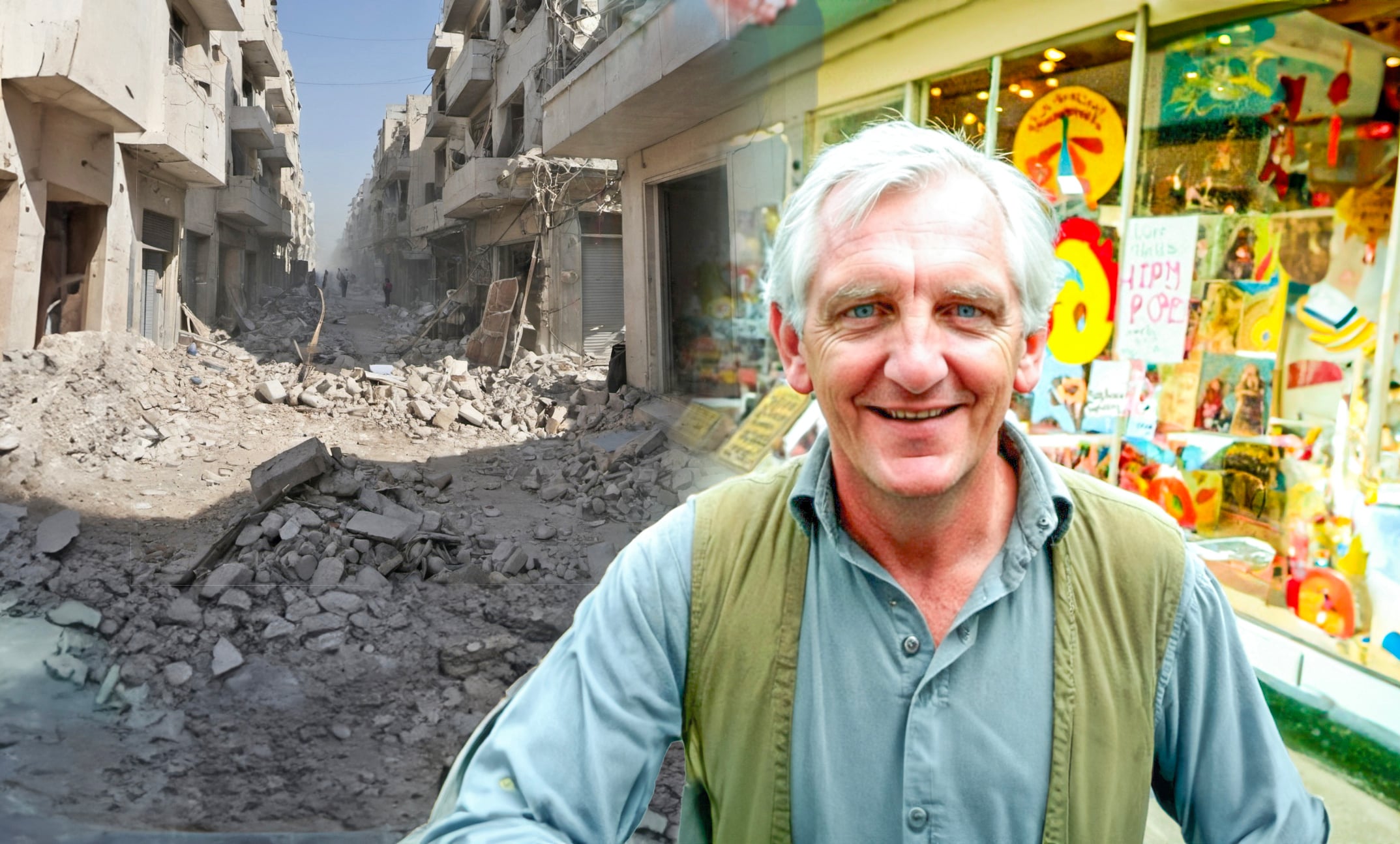
Sitting across the dining table in his Murwillumbah home, I asked Roger, a 40-something ex-teacher with an impressive goatee, about his relationship with mobile phones and digital technology.
Quietly spoken and bright, Roger told me he had no mobile phone and no interest in computers. His only technological link to the outside world was a corded telephone from the late 1980s.
‘I don’t want anything to do with the tech stuff,’ he said. ‘I have no intention of being dragged into the digital world by greedy, manipulative corporations.’
He claimed he was perfectly happy. ‘If I want to talk to someone, I pop around to see them or I call them up for a chat.’
Mullumbimby resident Karen was, until recently, also a digital refusenik. Her daughter eventually bought her a mobile phone, but it remains idle on a side table.
‘I don’t need it,’ she told me. ‘I talk to people directly, I write letters, I sometimes call people on the phone, and I read a lot. I don’t feel I’m missing out at all.’
Given my occasional bouts of FOMO and dependence on computers, I found all this oddly liberating. For years I’ve felt like a technological serf, beholden to increasingly unhinged tech oligarchs hellbent on catapulting the world into a digital-libertarian dystopia.
Roger and Karen came across as sensible people who had made careful, life-affirming choices. Not for them the illusion of hyper-connectivity or immersion in the hyped worlds of social media and artificial intelligence.
The reality, of course, is more complicated. Digital technologies have delivered extraordinary benefits and transformed modern life. Yet Roger and Karen seem to grasp that these same technologies have also exacted a heavy social and personal toll. They have deepened loneliness and social isolation, eroded our capacity for empathy and sustained attention, and exposed us to tribalism, rage, bullying and anonymous cruelty while reinforcing hyper-individualism.
Meanwhile, ethically dubious corporations have engineered addictive platforms that harvest data, shape behaviour and reap massive profits.
Artificial intelligence seems set to amplify these trends, dumbing some of us down even further while plundering our thoughts, preferences and habits on an unprecedented scale. Far from being just another technology, AI represents a paradigm-shifting development under the watch of what Gil Duran calls the ‘Nerd Reich’.
Yet there are signs of resistance.
Joining Roger and Karen are growing numbers of young resisters and refuseniks. They might not be ready to abandon their smartphones or Gemini and Claude, but they are making some interesting choices. Part of this shift reflects growing awareness of the damage these technologies can inflict on mental health. It also stems from deep suspicion of those driving the digital revolution: anti-government, libertarian billionaires whose interests diverge sharply from the public good.
Young people are pushing back, using apps such as Cold Turkey, Opal, ScreenZen and One Sec to block websites, limit screen time and interrupt addictive digital habits. Others are purchasing minimalist phones restricted to calls, messages and essential functions, or using timed lockboxes and phone safes to prevent easy access to their devices.
The resistance extends beyond personal behaviour. Communities around the world are questioning the rapid expansion of data centres, the environmental costs of AI, threats to jobs, and the concentration of power in the hands of a few Big Tech corporations. They are also aware of AI’s growing role in warfare, targeting and surveillance.
Movements such as the Luddite Club in the United States challenge the assumption that every new technology represents progress. They insist that communities should have a genuine say in decisions that affect their lives.
Technology, they argue, should serve people rather than the other way around.
Call me a doomster if you like, but I remain convinced that unchecked digital technologies, despite their obvious benefits, can diminish lives, fracture communities and weaken democracy itself.
The real question is whether enough of us are prepared to reclaim some measure of control before it is too late.
 For four decades The Echo has printed the stories some people loved, some people hated, and some pretended not to read. If you want us to keep telling the truth, the real truth, not the sugar-coated version. We’ll need your support to keep the presses rolling.



