

20.3 C
Byron Shire
October 20, 2026

The staggering impact of air pollution

Latest News

Cinema: NAZA

A must-see, award-winning documentary investigating AI warfare in Gaza. Fresh from winning the Special Jury Prize at the 2026 Venice International Film Festival, NAZA, the latest documentary from Academy Award-winning filmmakers Yuval Abraham and Rachel Szor (No Other Land), examines artificial intelligence and surveillance in Israel’s military operations in Gaza.

Other News

Call for the community to join the Mullumbimby clean up

The Mullumbimby Chamber of Commerce and Community (MCCC) are calling on local businesses and the community to join them in cleaning up the main street of town on Sunday, 25 October from 8am to 10am.

The price of ignorance

What often gets described as ‘racism’ in Australia is often based on plain old ignorance. People lacking the interest...

Culvert remediation works

Byron Shire Council says repairs to the damaged culvert on Coolamon Scenic Drive, between Dudgeons Road and Synotts Lane, will commence tomorrow (20 October 2026). The remediation works will address damage that has restricted traffic to one lane through the affected section.

Fish kill follows Belongil Creek opening as Council reviews protocols

A fish kill at Belongil Creek has prompted warnings to avoid the affected area, with Byron Shire Council and government agencies investigating the incident following an artificial opening of the creek.

Spring into summer with local Dorper Lamb

As we move from spring into summer, it’s time to fire up the barbecue, enjoy long lunches with family and friends, and make the most of fresh, local produce. I recently spoke with Warren from Boorabe Dorper Lamb about the different cuts of lamb and how to get the best out of them.

Thirty-six unmissable films

The 2026 Russell Hobbs British Film Festival features an unmissable line up 36 films, including five retrospectives which will screen from 28 October to 29 November at Palace Byron Bay and Ballina Cinemas.

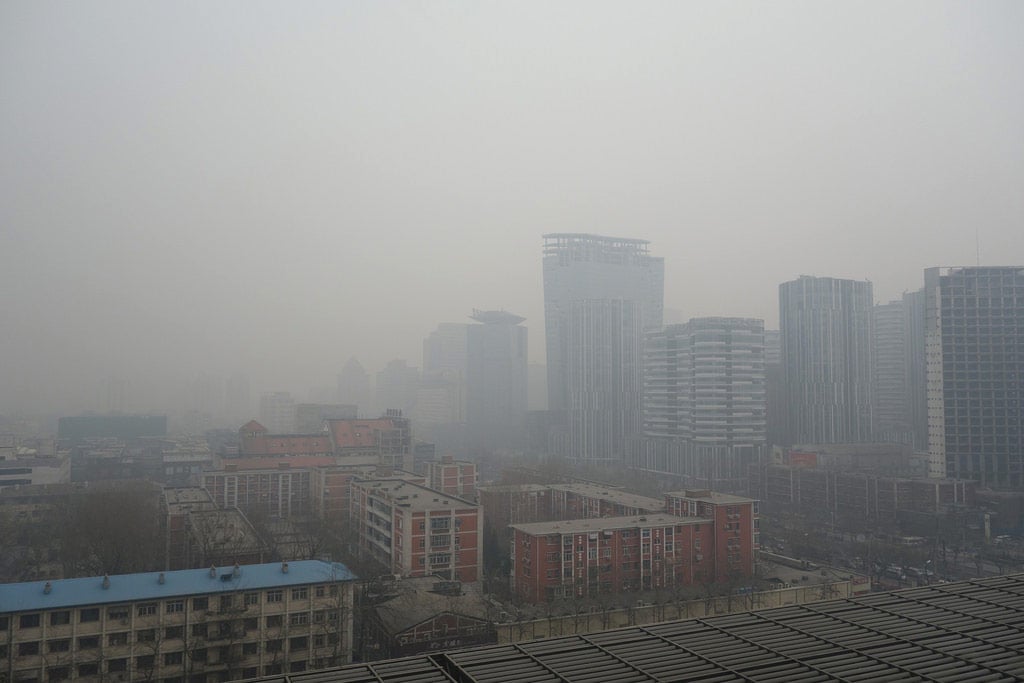
Researchers found that 2.5 billion people were living in urban areas where the air pollution was higher than World Health Organisation guidelines. Photo Kentaro IEMOTO / Flickr.com

Brought to you by The Echo and Cosmos Magazine


It causes nearly two million asthma cases, and a similar number of excess deaths, per year.

New research in The Lancet has provided more grim estimates for the impact of air pollution. It may be causing an additional 1.85 million cases of asthma in children per year, as well as 1.8 million excess deaths.

One paper, focusing on the pollutant nitrogen dioxide, estimates that the gas is responsible for 1.85 million paediatric asthma cases per year.

‘Our study found that nitrogen dioxide puts children at risk of developing asthma and the problem is especially acute in urban areas,’ says study author Professor Susan Anenberg, a researcher in environmental and occupational health at the George Washington University, US.

‘The findings suggest that clean air must be a critical part of strategies aimed at keeping children healthy.’

Read more: Air pollution may impair cognitive function

The researchers examined an existing dataset that looked at nitrogen dioxide concentrations in 58 countries during 2010–12.

They then compared these concentrations to data on asthma diagnoses, determining baseline levels of asthma and excess cases.

They used this comparison to estimate that there were over a million excess asthma cases per year globally, rising from 1.22 million cases in 2000 (out of a total of over 6.14 million cases) to 1.85 million cases in 2019 (out of a total of 7.73 million cases).

Pollution particles could be linked to diseases. (File pic)

A second paper, by the same group of researchers, also estimates that in the year 2019 alone, 1.8 million excess deaths could be linked to air pollution.

This paper examined global levels of PM2.5 matter – air particulates that are less than 2.5 micrometres in diameter (or less than a 10th of the width of thin human hair). This data was compared with mortality data from 13,160 urban centres around the world between 2000 and 2019.

While PM2.5 concentrations had dropped globally over the past decade, the effects of this weren’t even. In Europe and the Americas, PM2.5-attributable deaths dropped in this period, but rose everywhere else. In some places, because of demographic changes, PM2.5-attributable deaths rose even as overall PM2.5 pollution dropped.

Read more: Closing the worst power stations could save 6 million lives

In total, the researchers found that 2.5 billion people were living in urban areas where the air pollution was higher than World Health Organisation guidelines, leading to 1.8 million excess deaths in 2019 alone.

This estimate is lower than a paper published in Nature last year, which predicted four million annual premature deaths from air pollution, with consumption in G20 nations being responsible for roughly half of the deaths. Both studies have used different methods, datasets, and definitions of air-pollution related deaths. The true annual death toll from air pollution may not be easy to find precisely, but it’s likely in the millions.

‘Reducing fossil-fuel-powered transportation can help children and adults breathe easier and may pay big health dividends, such as fewer cases of paediatric asthma and excess deaths,” says Anenberg.

‘At the same time, it would also reduce greenhouse gas emissions, leading to a healthier climate.’


This article was originally published on Cosmos Magazine and was written by Ellen Phiddian. Ellen Phiddian is a science journalist at Cosmos. She has a BSc (Honours) in chemistry and science communication, and an MSc in science communication, both from the Australian National University.

Published by The Echo in conjunction with Cosmos Magazine.


For four decades The Echo has printed the stories some people loved, some people hated, and some pretended not to read. If you want us to keep telling the truth, the real truth, not the sugar-coated version. We’ll need your support to keep the presses rolling.


If you are a local business owner help us and in turn we help you. All The Echo asks for is advertising, not a free ride. It is every advert in The Echo and on www.echo.net.au, which creates the space for all the stories and coverage of community events, happenings and concerns.

If you are a reader you can become a sponsor of The Echo. Your support keeps the us independent.

Even a small one-off or regular donation from you will help keep the echo’s independent voice alive and strong.

Support Us

Become one of the supporters who helps keep independent, local journalism alive in the Byron Shire by contributing anything from as little as the cost of a coffee each month.

You're Wonderful, Thank you for supporting independent journalism in the Byron Shire

You’re supporting The Echo, thank you

Your contribution is keeping independent, local journalism alive in the Northern Rivers.

Because of supporters like you, we can keep every story free for everyone — no paywall, no exceptions. Your money goes directly to funding our newsroom of 40-odd local workers covering the stories that matter to this community.

Tell us what you think, give us your opinion

The Echo loves your letters and comments and is proud to provide a community forum on the issues that matter most to our readers and the people of the NSW north coast. So don’t be a passive reader, email us your epistles at editor@echo.net.au.

The letters deadline for The Echo is noon Friday. Letters longer than 200 words may be cut. The publication of letters is at the discretion of the letters editor. Please remember to include your full name, address and telephone number.

Online comments are no longer available.

Interview with Genevieve Clay-Smith, director of Boss Cat showing at the Byron Bay Film Festival

When Sonja (Olivia Hargroder) loses her mother without warning, the only steady presence left in her life is her grandmother, Doris. But Doris’s idea of stability means dismantling everything Sonja has built. For Sonja, who lives with Trisomy 21 (Down syndrome) and has spent her life fighting to be underestimated by no one, Doris’ plan feels less like protection and more like erasure. Directed by Genevieve Clay-Smith, Boss Cat is a vibrant, big-hearted Australian dramedy about independence, family and self-determination, anchored by a fearless lead performance.

Something for everyone at the Picture House

From Australian superstar musos, to brand new documentaries, to comedians at the top of their game, there really is something for everyone at the Brunswick Picture House.

Thirty-six unmissable films

The 2026 Russell Hobbs British Film Festival features an unmissable line up 36 films, including five retrospectives which will screen from 28 October to 29 November at Palace Byron Bay and Ballina Cinemas.

A timeless story of self-discovery

A husband with a promotion, two adorable children and a lovely new house. Nora thought she had it all. But did she? What was the discontent that was whispering to her in the shadows?
