


By Giles Parkinson, reneweconomy.com.au
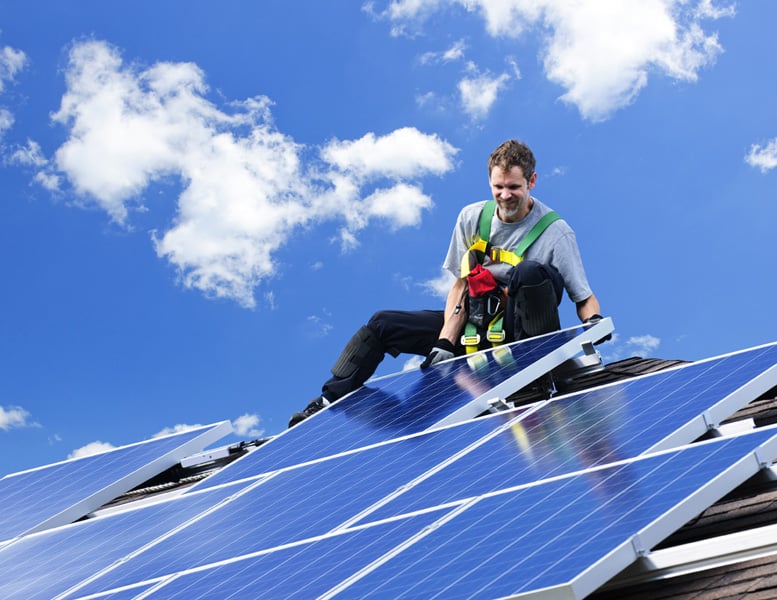
The market for large-scale renewable energy projects may well be at a standstill in Australia, but at the community level, things are happening quickly.
Dozens of projects have emerged as state governments tap into local ideas, offering grants for innovative projects that allow solar and other renewables to be developed at a local level, for innovative financing packages, and even the development of localised smart grid.
It’s a crucial step. Australia has nearly two million homes with some sort of solar appliance – rooftop PV arrays or solar hot water – and is probably leading the world in residential solar, with some 4,000MW of rooftop arrays, penetration rates of more than 25 per cent. It is at the forefront of the rise of the so-called ‘energy prosumer’.
The CSIRO last year predicted that up to one-half of total electricity needs will be generated locally, either on households rooftops, by business, or in community-owned or sponsored arrays.
What has been missing from the emergence of this ‘decentralised’ energy system – which will ultimately turn the current centralised economic model on its head – has been concrete action at community level.
This is important because it will not just build up scale, it will also offer solutions to those not yet able to take part in the solar revolution, including low-income housing, apartment dwellers and renters.
And it will allow whole communities to look after their own energy needs, as some network operators are even encouraging.
And, as pointed out by Beyond Zero Emissions’ Stephen Bygrave last week, ‘all revolutions need to start from the bottom up,’ as they had in Germany and Denmark in the energy space. There’s not much hope of leadership at the federal level in Australia.
Apart from a few groundbreaking projects, such as the Hepburn wind farm and a few smaller community-funded solar arrays, little has been done so far in Australia, although there have been plenty of ideas and aspiration of how to match the achievements in Europe, where much of the renewable energy is owned at community level in some form.
That is now starting to change rapidly. Numerous towns in Australia are now looking to make themselves either zero net carbon, zero net energy, or 100 per cent renewables; or to create community owned electricity retailers that focus on renewables.
These include Byron Bay, Lismore, and Uralla in northern NSW, along with a small village called Tyalgum that could soon be take off grid. The Victorian towns of Newstead and Yackandandah are in an unofficial race to be the first 100 per cent renewable energy towns in that state.
Other towns, such as Ravensthorpe in WA, are likely to leave the grid because the grid operator thinks it’s the cheapest and safest thing to do.
Councils such as Fremantle and Sunshine Coast are planning their own large-scale arrays – of between 10MW and 15MW – while groups of towns in western NSW are looking to pool their solar resources.
New housing estates may not be connected to the grid at all because of the possibilities offered by battery storage and other enabling technologies.
The scale and breadth of ideas has been further underlined by the new series of community energy grants announced by the NSW government.
They include a 1MW solar project in Goulburn, which would be the biggest community owned solar project in the country, solar arrays that will bring solar to low income housing and rentals, and a plan to take a whole village off grid, and a renewable energy ‘smart’ grid that will allow an ‘eco-village’ to generate and swap electricity among the 120 or so housing lots.
In the town of Manilla, which lost out to Uralla in a bid to become the first zero net energy town, one major energy consumer plans to use solar and biogas to cut its connection to poles and wires.
The community-owned smart grid idea has attracted $70,000 from the NSW government to help the Narara Eco Village on the central coast develop the plan.
‘Increasing the capacity of community owned clean energy production is crucial to empower communities and provide clean sustainable energy for the benefit of the environment,’ environment minister Rob Stokes said.
‘This project will demonstrate that community operated small-scale renewable energy grids can reduce carbon emissions and relieve pressure on existing electricity infrastructure.
The next step will be the corporate market, which many people believe is on the point of ballooning. It is just holding tight to work out how much damage the federal coalition will do to the renewable energy target, and what level of certainty can be brought to the market to allow investment decisions to go ahead.
Numerous Australian companies – including some big retailers and property groups – are looking to install solar at a major scale.
Some major national franchisees are looking at how they can use localised generation to cut their dependence on the grid, in much the same way as IKEA is doing.
Others are looking to follow in the footsteps of Apple and Google (and IKEA) and make a commitment to 100 per cent renewable energy.
 For four decades The Echo has printed the stories some people loved, some people hated, and some pretended not to read. If you want us to keep telling the truth, the real truth, not the sugar-coated version. We’ll need your support to keep the presses rolling.


