

16 C
Byron Shire
June 27, 2026

Corporate welfare gone mad? $10.3 billion to prop up fossil fuels

Latest News

Casino Suspension Bridge opens

Minister For Small Business, Recovery and North Coast Janelle Saffin joined Mayor Robert Mustow and Member for Page Kevin Hogan to officially opening the Casino Suspension Bridge today (Saturday).

Other News

Byron Council signs MoU with Homes NSW

Byron Council has formally partnered with Homes NSW in a bid to accelerate social and affordable housing projects across the Shire, with the former Mullumbimby Hospital site identified as a key priority.

Men’s XV: Byron Shire Rebels vs Lismore

The Rebels Men’s XV put in a dominant attacking display of rugby to see off Lismore 42-17, racking up...

NT Intervention

I refer to the NT Intervention article, Echo page 4, 17 June. Recent events in the Northern Territory (NT) would...

Six dwellings proposed on flood-prone Mullum block

Six units are proposed at the eastern end of New City Road, Mullumbimby, on a site that was inundated during the 2022 floods. Submitted by Duncan Band's Kollective, Development Application (DA) 10.2026.269.1 at 73 New City Road is on public exhibition with Byron Shire Council, and sits within the Shire's flood planning area.

BSC moves closer to special rate rise

Byron Shire Council has moved a step closer to seeking a special rate rise, unanimously endorsing a community engagement program that will form a key part of any future application to increase rates above the state-imposed cap.

Economics of rail trail

Byron Shire and the North Coast is one of the fastest-growing regions on NSW’s east coast with millions of...

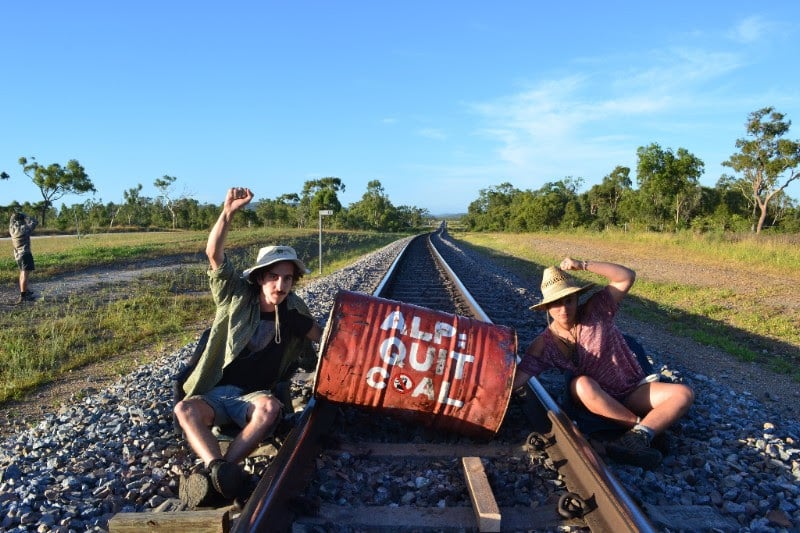
Natan Shlomo (L) and Lilli Barto blocking the path of a coal train near Bowen. Photo supplied.

According to new research from the Australia Institute, fossil fuel subsidies cost Australians a staggering $10.3 billion in financial year 2020-21, with one Commonwealth tax break alone exceeding the $7.82 billion spent on the Australian Army.

In fact, $10.3 billion in government subsidies means that in 2020, every minute of every day $19,686 was effectively given to coal, oil and gas companies and major users of fossil fuels.

State governments spent $1.2 billion mainly through subsidising exploration, refurbishing coal ports, railways and power stations and funding ‘clean coal’ research.

State governments also continued to pour money into coal ports and railways, despite Queensland Treasury advice that ‘spending on mining related infrastructure means less infrastructure spending on hospitals and schools’.

$8.3 billion in assistance is already committed to longer term fossil fuel subsidies, led by the NT government’s $3.8 billion gas purchase from Italian oil and gas company Eni.
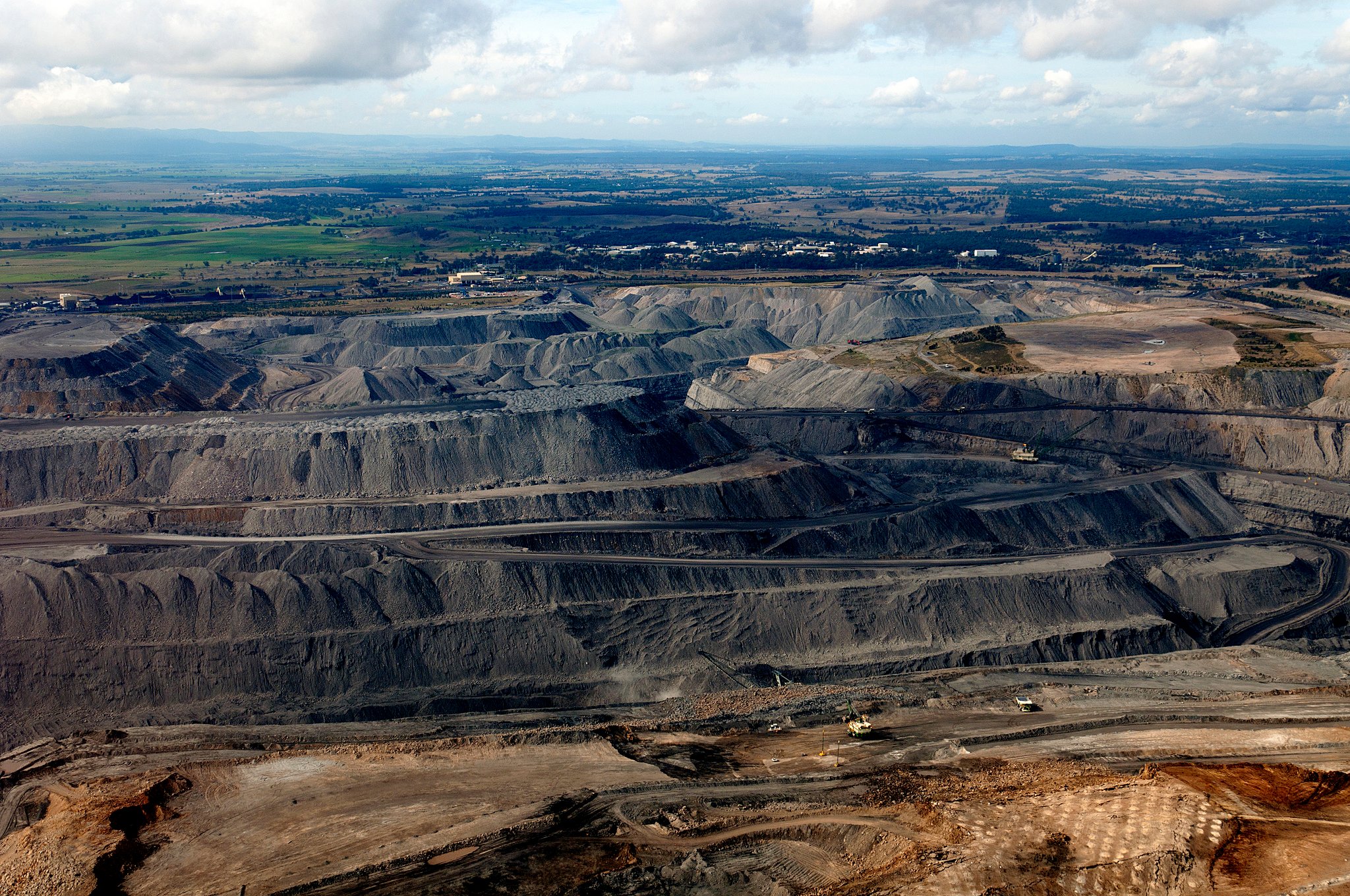
The once-beautiful Hunter Valley in NSW. Photo Max Phillips

Leaners not lifters

‘Coal, oil and gas companies in Australia give the impression that they are major contributors to the Australian economy, but our research shows that they are major recipients of government funds,’ said Rod Campbell, Research Director at The Australia Institute.

‘From a climate perspective this is inexcusable and from an economic perspective it is irresponsible. The major subsidies are Commonwealth tax breaks that mean the largest users of fossil fuels get a refund worth $7.8 billion on a tax that the rest of the community has to pay.

‘This tax break not only funneled $1.5 billion to the coal and gas industries last year, but it made it cheaper for them to export fossil fuel to the rest of the world,’ he said.

‘A few years ago such subsidies would have been announced quietly, but now they’re central to government policy. Australia is increasing fossil fuel subsides, while the Biden administration is committing to phase them out.

‘Yet again, Australian governments are going against the tide of global trends and good climate policy,’ said Mr Campbell.

Further examples of state subsidies

Queensland upgraded its coal and gas power stations, ran a ‘mine dozer replacement program’ and provided other assistance measures worth $744 million last year, only slightly less than the $818 million spent on Fire and Emergency Services.

Over the longer term, the Northern Territory is the biggest backer of the gas industry, with almost $4 billion committed to an offshore gas project and $1 billion for pipelines.

Western Australia is spending hundreds of millions on fossil fuel-fired power stations, including $93 million on a gas-fired power station in a town of 848 people in partnership with Chevron.

New South Wales is putting $100 million into ‘coal innovation’, but much of the research remains mysteriously unpublished, such as a cost benefit analysis of carbon capture and storage in the state.

Victoria is spending $8.8 million to re-start an onshore gas industry and develop a ‘gas roadmap’, spending dwarfed by the $100 million going to turn brown coal into hydrogen and export it to Japan.

South Australia put $10.5 million into a program that aims to accelerate gas exploration and has also budgeted $30 million for a jetty mainly used by gas company Santos.

Tasmania’s 2020-21 budget has no clear assistance for fossil fuels, although $73,000 was given to coal companies in 2019.

The ACT is the only jurisdiction in Australia with no subsidies for fossil fuels, along with the most ambitious climate targets in the country.

Find out more here.


For four decades The Echo has printed the stories some people loved, some people hated, and some pretended not to read. If you want us to keep telling the truth, the real truth, not the sugar-coated version. We’ll need your support to keep the presses rolling.

If you are a local business owner help us and in turn we help you. All The Echo asks for is advertising, not a free ride. It is every advert in The Echo and on www.echo.net.au, which creates the space for all the stories and coverage of community events, happenings and concerns.

If you are a reader you can become a sponsor of The Echo. Your support keeps the us independent.

Even a small one-off or regular donation from you will help keep the echo’s independent voice alive and strong.

Support Us

Become one of the supporters who helps keep independent, local journalism alive in the Byron Shire by contributing anything from as little as the cost of a coffee each month.

You're Wonderful, Thank you for supporting independent journalism in the Byron Shire

You’re supporting The Echo, thank you

Your contribution is keeping independent, local journalism alive in the Northern Rivers.

Because of supporters like you, we can keep every story free for everyone — no paywall, no exceptions. Your money goes directly to funding our newsroom of 40-odd local workers covering the stories that matter to this community.

Tell us what you think, give us your opinion

The Echo loves your letters and comments and is proud to provide a community forum on the issues that matter most to our readers and the people of the NSW north coast. So don’t be a passive reader, email us your epistles at editor@echo.net.au.

The letters deadline for The Echo is noon Friday. Letters longer than 200 words may be cut. The publication of letters is at the discretion of the letters editor. Please remember to include your full name, address and telephone number.

Online comments are no longer available.

Byron’s Winter Whales raise $43,000

The Byron Bay Winter Whales (BBWW) took to the ocean for the 39th time this year on the first Sunday of May and raised $43,000 for local organisations and charities.

When it comes to real estate, everyone can use an advocate

With 45 years combined experience across both sales and property management, husband and wife team Mark and Michelle Errichiello have recently moved to the Northern Rivers and teamed up with Byron Property Search to provide advocacy services for people looking to buy or sell across the region.

Savour The Tweed returns, 22 October

Food and drink event, Savour The Tweed, returns to excite tastebuds this spring, from Wednesday 22 October to Sunday 26 October.

Conservationists welcome carbon credit scheme to protect forests

Today’s release of the government’s proposed Improved Native Forest Method, which allows governments to claim carbon credits in return for stopping logging has been welcomed by the North East Forest Alliance and North Coast Environment Council as "providing a way to end native forest logging on public land".

