


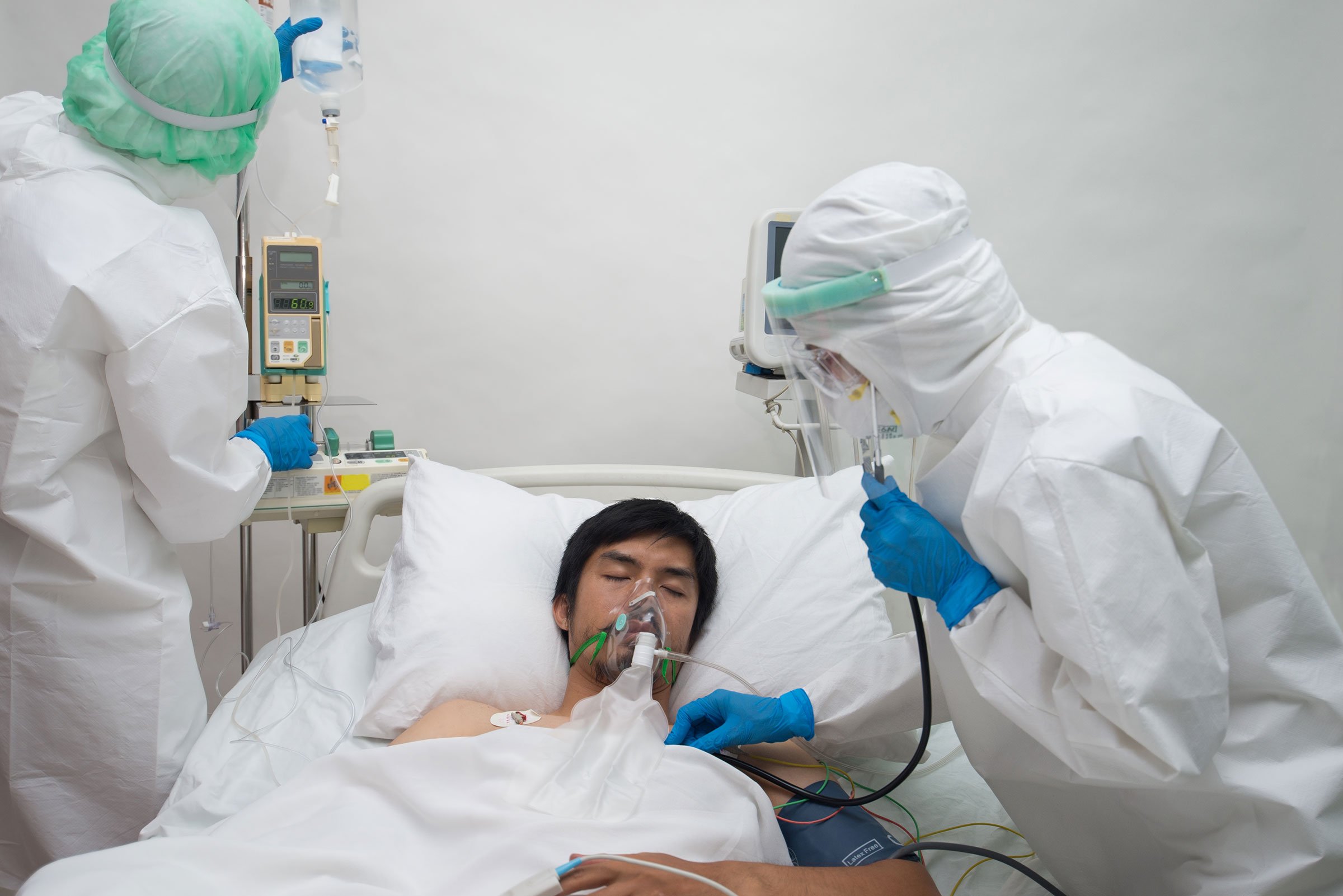
Before the latest free for all approach to the management of the COVID-19 virus a big part of the conversation was about flattening the curve; that is keeping admissions to hospital low to ensure that the health system wasn’t overwhelmed.
A key part of the strategy was encouraging vaccination because if you are vaccinated it is scientifically proven that you are less likely to get seriously ill and end up in hospital if infected with the COVID-19 virus. As of 2 January 2022, 91.6 per cent of the NSW population 12 and over were fully vaccinated according to NSW Health’s COVID-19 Monitor.
The number of COVID-19 patients in hospital at 2 January were 1,204 with 29.9 per cent unvaccinated and 67.4 per cent vaccinated.
‘While the number of vaccinated people hospitalised is greater than those unvaccinated, this is because we have such a high vaccination rate (91.6 per cent), local Byron Shire GP Dr Joel Hissink told The Echo.
‘It is more informative to consider the difference in hospitalisation/ICU rates as follows (per one million people): The hospital rate among unvaccinated / fully vaccinated population (aged 12+) is (at 2 January) 578.2 / 83.4. The ICU rate among unvaccinated / fully vaccinated population (aged 12+) is 82.5 / 4.7 (COVID Monitor 2 January).
‘This translates to unvaccinated people being seven times more likely to require hospitalisation for COVID and 17.5 times more likely to require admission to ICU at this point in time,’ he said.

No vaccine perfect
‘Of course if we had a 100 per cent vaccination rate then 100 per cent of hospitalisations and ICU admissions would be of vaccinated patients. There are a few reasons for this. One is that no vaccine cover is perfect. The COVID vaccines have quite good efficacy, around 70–80 per cent early on, influenza vaccine efficacy is around 30–60 per cent, while measles vaccine efficacy is 99 per cent.
‘Other reasons for vaccinated people still requiring hospitalisation are that some people may not develop an adequate immune response to the vaccine because of immunosuppression thus remain vulnerable to the disease. Their immunosuppression may be due to them receiving life-saving treatment for cancer or other comorbidities. This is one of the reasons why it is so important to aim for a high vaccination rate, in order to reduce the spread of disease to protect those in our community who do everything they can to stay safe, including getting themselves vaccinated, but still remain at high risk of the disease.’
Infection rates grow
In the Northern Rivers we are continuing to see an increase in infections of COVID with another 1,154 cases reported to 8pm, 9 January. This is having a significant impact on the health systems ability to respond and businesses being able to open and operate as people are being required to isolate and test to help reduce infection transmission.
‘Continuing to apply and adhere to public health measures is critical to minimising case numbers to reduce the pressure on our health services and the impact on delivery of routine and life-saving medical and surgical services for non-COVID related medical conditions,’ Dr Hissink told The Echo.
‘Each of us doing everything we can to help reduce the spread of COVID disease is also critical to support our local community organisations and businesses to continue to operate. Yes, some public health measures impact businesses and they also limit our ability to do the things that we want to do but as is clearly the case right now, the widespread burden of COVID disease is severely impacting many businesses, causing death and disability and pressuring an already fragile health system.’
Recent stories, information and updates regarding COVID-19
New data from the Australian Bureau of Statistics Life shows life expectancy in Australia has decreased slightly for the second year in a row. An international team of researchers has found more evidence that COVID-19 came from animals in a Wuhan food market. The lab-leak theory that Covid-19 came from the Wuhan Institute of Virology – instead of a nearby wet market – was thrashed about in public recently, with the US Senate Homeland Security Committee holding a hearing into Covid-19. Eighteen schools in the Northern Rivers division of Richmond have received $25,000 each as part of the federal government’s School Upgrade Fund, Labor Member for Richmond Justine Elliot said last week. COVID-19 reversed earlier trends toward longer life expectancies. During the pandemic, life expectancies globally dropped by 1.6 years according to a new study published in the Lancet medical journal. Let’s not forget that Covid-19 is still a big issue in our community with 31,935 cases reported across Australia in the last week – an average of 4,562 cases per day. The Global Carbon Budget is about to be refreshed, giving the world a critical insight into how efforts to reduce greenhouse gas emissions are (or are not) progressing. Masks will no longer be mandatory on public transport from tomorrow, Wednesday 21 September. SW Police are urging festival-goers at this weekend’s music festival to celebrate in a safe and responsible manner, whilst also being aware of COVID-Safety measures. The Northern NSW Local Health District reports that to 4pm yesterday, Sunday May 22, there were 40 COVID-19 positive patients in hospital in Northern NSW, with one of these in ICU.
COVID-19 reduces Australian life expectancy
Wuhan market increasingly likely origin point for COVID-19

Editorial – There’s a bat in my lab!
Fresh air federal funds for Northern Rivers schools in need

COVID-19 pandemic has cut life expectancy globally
COVID-19 update for New South Wales
Five graphs you need to see before the Global Carbon Budget...
Public transport mask mandate to end

NSW Police: be COVID-vigilant at Splendour in the Grass

COVID-19 update for the NNSWLHD – May 23
 For four decades The Echo has printed the stories some people loved, some people hated, and some pretended not to read. If you want us to keep telling the truth, the real truth, not the sugar-coated version. We’ll need your support to keep the presses rolling.


